
Why You Should Choose Blastocyst Transfer

Have you ever found yourself anxiously staring at an embryo photo, wondering if this tiny cluster of cells could finally bring you the baby you have hoped for? Perhaps you have already been through the emotional rollercoaster of failed cycles, each time left wondering: was it my uterus, my eggs, the lab, or just plain bad luck? If you are reading this, you might be searching for some clarity in a world that feels anything but clear. Let us talk honestly about blastocyst transfer, why it matters, and how making the right choices can give you more control—and more hope—over your fertility journey.
What Is a Blastocyst, and Why Does It Matter?
In IVF, after eggs are retrieved and fertilized, embryos are typically grown in the lab for a few days before being transferred back into the uterus. Traditionally, clinics would transfer embryos on day two or three, when they have just a handful of cells. But thanks to advances in lab techniques and culture media, it is now possible to grow embryos for five days, until they become what is known as a blastocyst.
A blastocyst is an embryo at its most advanced stage before it is ready to implant in the uterus. By day five, the embryo has formed hundreds of cells and developed two important parts: the inner cell mass (which becomes the baby), and the outer layer called the trophectoderm (which forms the placenta).
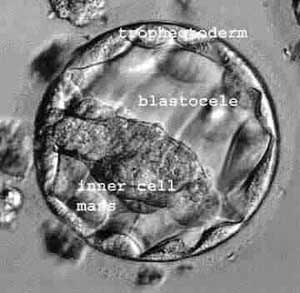 A beautiful blastocyst on Day 5.
At this stage, the embryo is much closer to what would naturally reach the uterus in a normal monthly cycle. This is a crucial detail—because timing really does matter when it comes to implantation and pregnancy success.
Blastocyst vs. Day 2/3 Embryo Transfer: What’s the Real Difference?
Many couples are surprised to learn that transferring embryos on day five (blastocyst stage) offers several significant advantages over earlier transfers:
- Better embryo selection: Not all embryos will make it to day five. Growing them to the blastocyst stage helps identify which ones are truly viable and gives you more confidence in the embryos being transferred.
- Higher implantation rates: Because blastocysts are more developed, they are better equipped to implant and become a healthy pregnancy.
- Lower risk of multiples: Doctors can confidently transfer fewer embryos—sometimes just one—without compromising success rates. This reduces the risk of risky twin or triplet pregnancies.
- More information for you: If none of the embryos survive to day five, it is painful in the short term, but you get valuable answers. Rather than hoping for a miracle from embryos that might not have survived anyway, you now have clarity to guide your next steps.
 This is a schematic of how we grade blastocysts.
You can see more images of what good and bad blastocysts look like at http://www.advancedfertility.com/blastocystimages.htm
Choosing a blastocyst transfer is not just about increasing your chances this cycle—it is about understanding what is really happening, so you do not waste time or hope chasing the wrong answers.
Why Do Some Clinics Still Do Day 2 or 3 Transfers?
Despite the clear advantages, many clinics in India still routinely transfer embryos on day two or three. Why? The honest answer is that growing embryos to day five is technically demanding. Not every lab or embryologist is equipped to nurture embryos for that long with consistent success. Some clinics might tell you that “the uterus is a better environment than a machine,” but often, this is a way to avoid the challenge of extended culture.
But here is the truth that most clinics will not tell you: putting embryos back too early leaves you and your doctor in the dark about embryo quality. If your IVF cycle fails, you are left wondering whether the embryo stopped growing inside you, or if your uterus was somehow “the problem.” This uncertainty can lead to unnecessary treatments, misplaced blame, and even recommendations for surrogacy that are not rooted in evidence.
Who Benefits Most from Blastocyst Transfer?
For every couple, but especially for women who have a lower egg count or are in their late 30s or early 40s, blastocyst transfer can be a game-changer. If you have already had failed cycles, or if you have only a few embryos each time, you might hear that transferring earlier is “safer.” But this is often about protecting the doctor’s statistics—not your outcome.
Allowing embryos to reach the blastocyst stage means you are not left guessing. Yes, sometimes it means heartbreak if none make it to day five. But this pain is honest. It tells you the real story about your eggs and embryos. It gives you and your doctor the clarity to decide whether to try again, consider donor eggs, or explore other options—without wasting precious time or money.
- Women with fewer eggs (poor ovarian responders)
- Older women (higher chance of embryos arresting before day five)
- Couples with unexplained repeated IVF failures
Short-term disappointment from no embryos to transfer is far better than months or years of false hope and wasted treatments.
The Courage to Choose Clarity Over Comfort
There is a kind of courage needed to insist on a blastocyst transfer—for both you and your doctor. It means facing the truth, even when it is hard. But that clarity is the first step to making smarter, more empowered decisions about your fertility.
At Malpani Infertility Clinic, we believe patients deserve honest answers, not comforting half-truths. Our lab is designed for extended embryo culture, and our team is deeply experienced in supporting embryos all the way to the blastocyst stage. We do not shy away from tough conversations or difficult outcomes, because we know real progress only happens when you see the full picture. If you have questions about whether blastocyst transfer is right for you, or want to discuss your unique situation, you can always reach out for expert guidance. Your next decision deserves all the clarity you can get.
Read more: Oopause - poor ovarian response
Frequently Asked Questions
Q: What exactly is a blastocyst?
A: A blastocyst is a five- or six-day-old embryo that has grown in the lab to a stage where it is ready to implant in the uterus. It has developed distinct cell types: one part will become the baby and the other will form the placenta.
Q: Why does transferring a blastocyst increase the chances of pregnancy?
A: Blastocysts are more developed and robust, making them more likely to implant in the uterus and result in a successful pregnancy. The extra days in the lab help select the strongest embryos.
Q: Are there risks with blastocyst transfer?
A: The main risk is that not all embryos reach the blastocyst stage, especially if you have fewer eggs to begin with. This can mean that sometimes, no embryos are available for transfer. While difficult, this information is valuable for planning your next steps.
Q: Why do some clinics not offer blastocyst transfer?
A: Growing embryos to the blastocyst stage is demanding and requires an experienced embryology team and advanced lab conditions. Some clinics may not have the expertise or resources, so they stick to earlier transfers.
Q: Can I still freeze blastocysts for future use?
A: Yes, extra blastocysts can be safely frozen using a process called vitrification, allowing you to try again without repeating the entire IVF cycle.
Q: Is blastocyst transfer suitable for everyone?
A: While beneficial for many, especially those with multiple embryos, it may not be ideal for every case. Your specific situation—such as age, egg count, and previous IVF history—should be considered with your doctor’s guidance.