
Chemical Pregnancy: Symptoms, Causes & Recovery

You finally see those two pink lines after weeks (maybe months or even years) of waiting, hoping, and testing. For a moment, your whole world shifts — you imagine the future, the excitement bubbles up, and maybe you even tell your partner. But just as suddenly, the hope is snatched away: your period starts, or the test turns negative just days later. If this has happened to you, know this: you are not alone, and you are not broken. The pain and confusion you feel are real. At Malpani Infertility Clinic, we see couples every day who face this heartbreak. We want you to know what is really happening, and how to move forward with hope and clear information.
What Is a Chemical Pregnancy?
A chemical pregnancy is a very early type of miscarriage that happens before anything can be seen on an ultrasound. Medically, it means that an embryo has implanted just enough to trigger your body to produce the pregnancy hormone (HCG), but then, for reasons usually beyond your control, the pregnancy stops developing — often before the fifth week.
One cruel twist is that you can get a positive pregnancy test (because HCG is present), but as the embryo stops growing, your HCG levels drop. Before long, the test turns negative or you get your period, sometimes a bit late or heavier than normal. The whole experience can feel like a cruel trick.
Chemical Pregnancy vs. Clinical Pregnancy: What’s the Difference?
It is easy to feel lost with the medical terms. Here is a simple breakdown:
- Chemical pregnancy: Only picked up by a pregnancy test (blood or urine) because of the HCG hormone. It ends before an ultrasound can show a pregnancy sac or heartbeat.
- Clinical pregnancy: Confirmed on an ultrasound — you can see the sac or even a heartbeat, and HCG levels keep rising.
Many people never learn they had a chemical pregnancy, mistaking it for a late or heavier period.
How Common Is a Chemical Pregnancy?
If you have had this experience, you may feel like it is rare or your body is failing. But the truth is, chemical pregnancies are surprisingly common — even more than most couples realize.
- About 25% of all pregnancies end in the first 20 weeks.
- Of these, 80% happen very early, often before anyone knows they are pregnant.
- If you are going through IVF or fertility treatments, chemical pregnancies are detected more often simply because we are monitoring so closely.
of miscarriages happen in the very early weeks, often before you even realize you are pregnant.
What Are the Signs and Symptoms?
Most chemical pregnancies happen so early that symptoms are subtle or even absent. This can make the experience even more confusing. Some people only notice because their period is late or heavier than usual, or because of a roller-coaster with home pregnancy tests.
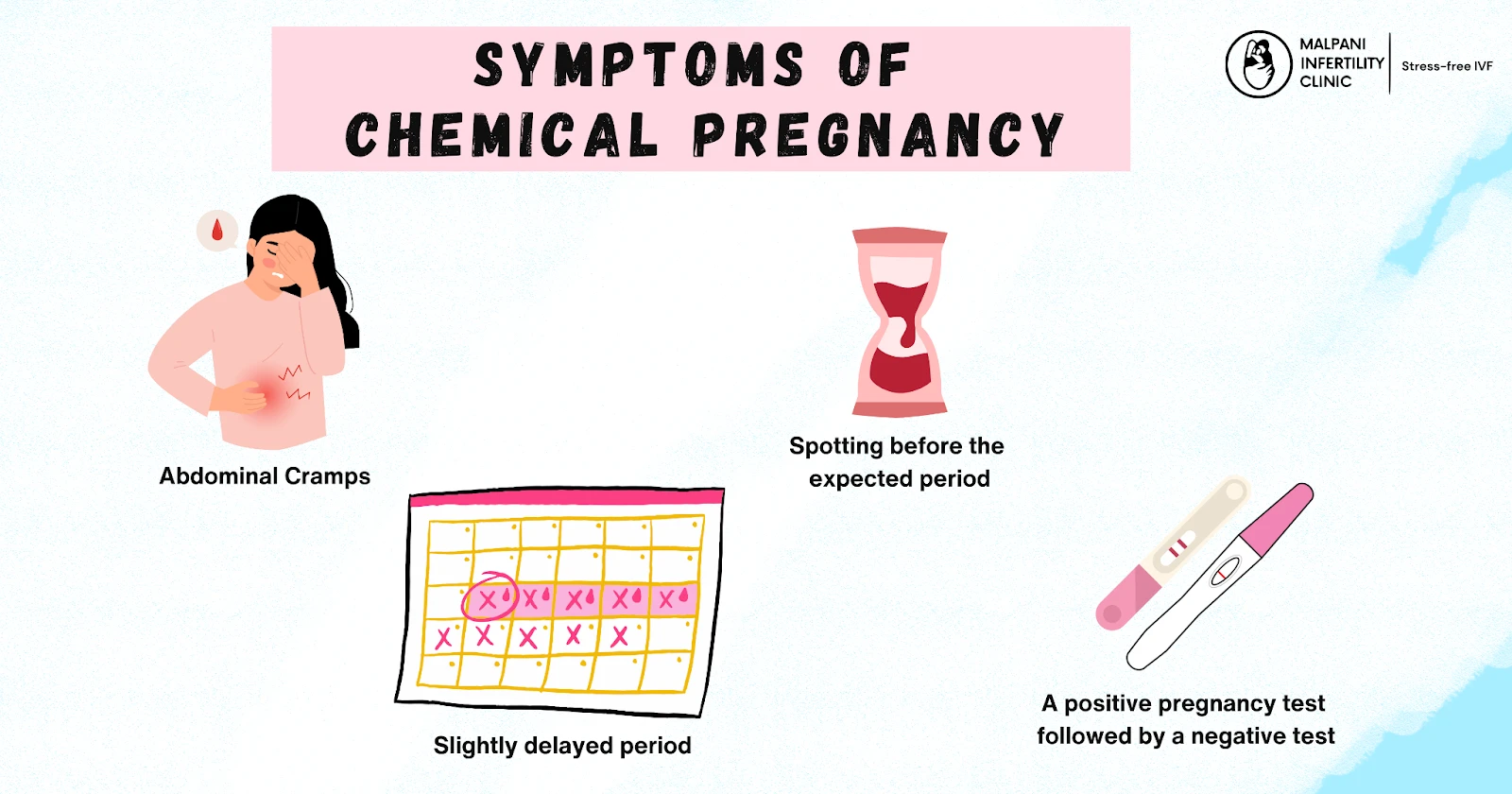
- Mild stomach cramps
- Light spotting before your period is due
- A heavier or delayed period
- Positive pregnancy test that becomes negative after a few days
It is normal to feel lost: Was it implantation bleeding? Is this a miscarriage? Is my body rejecting pregnancy? These are questions we hear every day at Malpani Infertility Clinic.
Why Does a Chemical Pregnancy Happen?
The hardest part for most couples is not knowing the “why.” In most cases, the cause is completely out of your hands: the embryo simply had a genetic problem that made it unable to keep growing. It is not your fault. Nothing you did or did not do caused this.
- Genetic abnormalities in the embryo are the most common reason.
- Other possible factors: hormone issues, unusual shape of the womb, infections (like chlamydia), problems with blood clotting or thyroid, or age (especially over 35).
A chemical pregnancy almost never means your body is rejecting embryos or that you are destined for repeated loss.
How Is a Chemical Pregnancy Diagnosed?
If you suspect a chemical pregnancy, especially after a positive test, your doctor will usually:
- Ask about your periods and medical history
- Order blood tests to measure HCG and watch if it drops quickly
- Sometimes do an ultrasound (mainly to rule out a later miscarriage or ectopic pregnancy)
Because these losses are so early, an ultrasound cannot usually show anything — that is why blood tests are the main tool.
Is There Any Treatment? What Happens Next?
There is no treatment to stop or reverse a chemical pregnancy. Your body usually resolves it naturally, and you will get your period soon after. The most important medical step is to make sure your HCG levels fall to zero — this rules out ongoing problems or an ectopic pregnancy.
- No medical intervention is needed for most chemical pregnancies.
- If you have repeated early losses, your doctor may suggest further tests and possibly treatments.
For most couples, the main “treatment” is time, honesty, and support — both emotional and practical. At Malpani Infertility Clinic, we always encourage couples to ask questions and seek clear, science-based answers, not false hope or blame.
The Emotional Weight No One Talks About
If you are feeling heartbroken, shocked, or even angry, you are not overreacting. The emotional impact of a chemical pregnancy can be huge, especially if you have been struggling to conceive. Many couples say the sudden swing from joy to loss is more painful than a simple negative test.
- Hope, then sudden devastation
- Confusion and self-doubt: “Was I really pregnant?”
- Pain that can feel invisible to others, since the loss happened so early
Even celebrities like Lauren Burnham Luyendyk (wife of Arie Luyendyk Jr.) have spoken openly about this grief — how the loss set back their family plans, how they took time to reset before trying again (YouTube, E! News). This is a real loss, and you are allowed to grieve it, no matter how early it was.
But here is the hidden truth: A chemical pregnancy means your body can get pregnant. It is painful, but it is also a sign that conception is possible — and for most couples, the chance of a healthy pregnancy next time is still high.
When Can You Try Again?
One of the most common questions we get at Malpani Infertility Clinic is: “How soon can we try again?” The answer is usually reassuring:
- Most people can try again after their next normal period.
- Ovulation can return as soon as two weeks after a chemical pregnancy.
- If you are undergoing IVF or other fertility treatments, discuss your next steps with your doctor to individualize your plan.
There is no evidence that a single chemical pregnancy lowers your chances the next time. In fact, many women conceive successfully within a few months.
When Should You Contact a Doctor?
Most chemical pregnancies resolve safely on their own, but you should reach out to a doctor if you have:
- Very heavy bleeding or severe pain
- Signs of infection (fever, unusual discharge)
- Repeated early losses
- Symptoms that could suggest an ectopic pregnancy (pain on one side, pain in your shoulder, feeling faint)
If you are worried or unsure, do not wait — getting the right advice early can provide peace of mind and prevent serious complications.
Frequently Asked Questions
Q: Was I really pregnant if it was a chemical pregnancy?
A: Yes. Even though it ended very early, a chemical pregnancy is a real pregnancy. The embryo started to implant and triggered HCG production.
Q: Does having a chemical pregnancy mean I am infertile?
A: No. In fact, it shows your body can conceive. Most people who experience this go on to have healthy pregnancies.
Q: Can I prevent a chemical pregnancy?
A: Most of the time, no. The causes are usually random genetic problems in the embryo. Living a healthy lifestyle and managing any medical conditions can help overall fertility.
Q: How soon can I try again after a chemical pregnancy?
A: For most, you can try after your next normal period. Your fertility is not reduced by a single chemical pregnancy.
Q: Should I see a specialist after one chemical pregnancy?
A: Usually, no extra tests are needed after a single loss. If you have repeated early miscarriages, it may be time to consult a fertility expert.
Q: Can stress or exercise cause a chemical pregnancy?
A: No. Everyday activities, exercise, or minor stress do not cause this type of early loss.