

Understanding what Fallopian Tubal Recanalisation Is
There is nothing quite like the frustration and heartbreak of trying to conceive month after month, only to be told your fallopian tubes are blocked. If you have heard words like "proximal tubal occlusion" or "cornual block" after countless doctor visits, you are probably feeling overwhelmed, isolated, and desperate for answers. You are not alone. Many women who walk into our clinic carry this same burden: the hope for a child, weighed down by medical terms and uncertainty. If you are searching for real clarity and straightforward guidance, you are in the right place.
Why Do Fallopian Tubes Get Blocked?
Your fallopian tubes are delicate passageways connecting your ovaries to your uterus. Each month, an egg travels through these tubes, hoping to meet sperm and start a pregnancy. But sometimes, these tubes get blocked—often right at their starting point, near the uterus (the "cornual" or "proximal" end).
Blockages can happen for several reasons:
- Debris or mucus plug: Sometimes, a plug of mucus or leftover debris can clog the opening of the tube. This is actually quite common and is not always a permanent problem.
- Fibrosis (scarring): Previous infections, inflammation, or even endometriosis can cause the tube walls to scar and close off. This type of block is much harder to treat.
- Other causes: Past surgeries, tuberculosis, or chronic conditions sometimes damage the tubes beyond simple repair.
When the tubes are blocked, the egg and sperm can never meet, making natural conception impossible. Understanding exactly where and why the tube is blocked is the first step to finding a solution.
Most women with blocked fallopian tubes have no symptoms at all—until they start trying to have a baby and realize something is wrong.
How Do We Find Out If Your Tubes Are Blocked?
The first question we get is: "How do you know if my tubes are really blocked?" At Malpani Infertility Clinic, we rely on two main tests:
- Hysterosalpingogram (HSG): An X-ray where a dye is injected into the uterus and tubes to check for blockages or leaks. This is often the first test done because it is simple and gives a clear picture.
- Laparoscopy: A keyhole surgery where a camera is inserted through the belly to look directly at the tubes. This is more invasive, usually reserved for complex cases.
During an HSG, sometimes the pressure of the dye alone can dislodge a simple plug. But if the tube remains blocked, especially at the uterine end, we start considering more advanced options.
What Is Fallopian Tube Recanalisation?
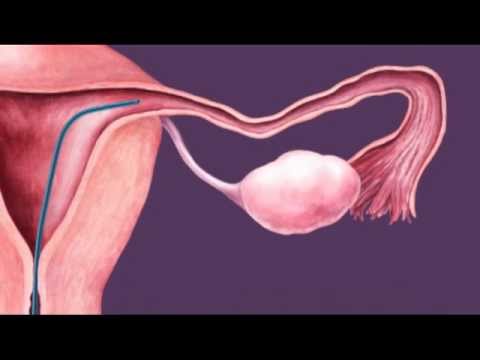
If your tube is blocked at the corneal (proximal) end, fallopian tube recanalisation (FTR) might be the answer you have been hoping for. Think of it as gently "unclogging" a blocked pipe, but much more precise and gentle.
Here is how it works at our clinic:
- We use a specialized X-ray machine (image intensifier) to guide tiny instruments through the cervix and into the uterus.
- A dye is injected to confirm exactly where the block is located.
- If a plug or debris is seen, a very thin wire or balloon is gently threaded into the blocked tube to clear the obstruction.
- If the blockage is cleared, the dye flows through, confirming the tube is now open and ready for an egg and sperm to meet naturally.
This procedure is done without any cuts or stitches, and most women can go home the same day. It is quick, relatively painless, and does not require a long recovery.
Who Can Benefit from This Procedure?
FTR is not for everyone. It works best for women whose tubes are blocked due to debris, mucus plugs, or non-permanent causes. If the tube is blocked because of scarring (fibrosis) or infections like tuberculosis, FTR is much less likely to help. Similarly, if your blockage is in the middle or end of the tube, or if you have a condition called hydrosalpinx (where the tube fills with fluid), this procedure will not be effective.
At Malpani Infertility Clinic, we always take the time to check if you are a good candidate. We refuse to waste your time or money on treatments that have little chance of working for your specific situation.
There is no one-size-fits-all solution in infertility, and you deserve honest advice about what can—and cannot—help you.
This is the approximate success rate for reopening a blocked proximal tube with recanalisation, if the cause is a soft plug or debris.
What about pregnancy rates? About 20-30% of women who have a successful recanalisation will conceive naturally within six months. That means for many couples, this simple outpatient technique can make a dream come true—without the need for IVF.
When Does Fallopian Tube Recanalisation Not Work?
We want to be completely honest with you: FTR is not a magic fix. There are some important limitations:
- If the tube is blocked due to thick scarring or chronic infection, the procedure will not work.
- It cannot help with blockages caused by tuberculosis, hydrosalpinx, or blockages in the middle or further down the tube.
- Sometimes, even after a successful procedure, the blockage can return after a few months.
- If pregnancy does not happen within six months after FTR, we usually recommend exploring other options such as IVF.
We believe in giving you the full picture—no false promises, just a clear explanation of what is possible for your unique case.
What Makes Malpani Infertility Clinic Different?
Our team knows how tough and emotional the journey through infertility can be. We never treat you like “just another case.” We listen, we explain, and we are committed to helping you make empowered decisions. At Malpani Infertility Clinic, you will always get transparent advice and access to the most advanced, evidence-based techniques—without pressure or upselling.
If your fertility journey has left you feeling lost, anxious, or unsure where to turn, maybe it is time for a second opinion with someone who will truly listen and guide you—every step of the way.
Are you not happy with the attention you are getting from your current clinic? Need more information about your situation? Please fill out your details at www.drmalpani.com/free-second-opinion and let Dr. Malpani help you with honest, personalized guidance.
Frequently Asked Questions
Q: What is fallopian tube recanalisation?
A: It is a minimally invasive procedure to reopen blocked fallopian tubes, especially when the block is near the uterus and caused by a plug or debris. This can restore natural fertility for some women.
Q: How do I know if my tube blockage can be treated with recanalisation?
A: The best candidates are women with a blockage at the uterine end (proximal/corneal) caused by debris or mucus, not by scarring or infection. An HSG test can help determine this.
Q: What is the success rate of fallopian tube recanalisation?
A: Success rates for reopening the tube are about 50 percent, and about 20-30 percent of women will conceive naturally within six months if the procedure is successful.
Q: Are there risks or side effects?
A: The procedure is generally safe and done without surgery. Some women may experience mild cramps or spotting afterward, and rarely, the tube may become blocked again.
Q: If recanalisation does not work, what are my options?
A: If you do not conceive within six months after a successful procedure, IVF is usually the next best step. The team at Malpani Infertility Clinic can guide you through your options honestly and clearly.
Q: Can both tubes be recanalised at once?
A: Yes, if both tubes are blocked at the proximal end and suitable for the procedure, both can be treated in the same session.
Q: Will the blockage come back?
A: Sometimes, especially if the underlying cause remains. Regular follow-up and timely decision making can help you move forward efficiently.