

IVF Procedure with Donor Eggs – Who is an Appropriate Candidate?
It starts as a quiet ache: you watch friends announce pregnancies, your social feeds fill with baby photos, and you feel increasingly isolated and frustrated with every failed cycle. If you are a woman in your late thirties or forties, or someone who has heard the words "low ovarian reserve" or "premature ovarian failure" from your doctor, you might already be asking yourself: Is using donor eggs my only real chance at having a baby?
Why Some Women Need IVF with Donor Eggs
The truth is, you are not alone if you are considering this path. Years ago, women who lost their ovarian function or struggled with poor-quality eggs had very limited options. Now, with IVF using donor eggs, many women who once thought motherhood was out of reach are holding their babies at last.
But who exactly needs donor eggs? Let us break it down:
- Women with premature ovarian failure: This condition, where the ovaries stop functioning before age 40, affects about 1% of women. The egg supply is exhausted, making pregnancy with your own eggs impossible.
- Women with very low ovarian reserve: Even if your periods seem normal, your ovaries might not have enough healthy eggs left for IVF to work with your own eggs.
- Women over 40: As you age, not only does the number of eggs drop, but their quality declines too. This makes successful pregnancy with your own eggs much less likely.
- Women with certain genetic conditions: If you carry a serious hereditary disease, using a donor's egg can help prevent passing it on to your child.
- Repeated failed IVF cycles: If you have had several IVF attempts with poor embryo quality or failed implantation, your doctor might suggest donor eggs as your best next step.
Many women reach out to us after years of heartbreak, hearing for the first time that using donor eggs is not a defeat, but a powerful option for building the family they dream of.
Learn more about what Premature Ovarian Failure means and how it can affect your fertility.
The Emotional Side: Is Donor Egg IVF Right for You?
Let us be brutally honest: deciding to use donor eggs is not easy. It is normal to feel grief, confusion, or even guilt. These feelings are valid. But here is another truth: choosing to use donor eggs is not a sign that you have failed. It is a sign that you are brave enough to explore every path to parenthood, even the ones you never imagined you would take.
What makes someone an appropriate candidate for donor egg IVF?
- You have run out of good-quality eggs of your own, either because of age, early menopause, or a medical condition.
- Your doctor finds very low ovarian reserve on tests like AMH or antral follicle count, or you have had several failed cycles.
- You want to avoid passing a known genetic illness to your child.
- You are emotionally ready to accept the idea that your child will not share your DNA, but will share your heart, your home, and your love.
How Does IVF with Donor Eggs Actually Work?
The steps are surprisingly similar to traditional IVF, with one big difference: instead of using your own eggs, we use eggs from a carefully screened donor. Here is a simplified look at the process:
- Choosing a donor: At Malpani Infertility Clinic, we use frozen eggs from our egg bank. This allows us to match donors to your physical preferences (height, complexion, eye color, blood group, and more) while maintaining the highest safety standards.
- Donor screening: Every donor goes through extensive medical and psychological checks. We ensure they are healthy, have no major genetic risks, and are emotionally prepared for donation.
- Fertilization: Your partner provides a sperm sample, which is used to fertilize the donor's eggs in the lab. If there are any sperm issues, we will discuss options to optimize success.
- Embryo transfer: The best embryos are selected and gently transferred into your uterus.
- Pregnancy testing and follow-up: About two weeks after transfer, we check for pregnancy. If successful, you continue with supportive care just like any expectant mother.
For women worried about physical resemblance, rest assured: with frozen egg banks, we can match you to a donor whose traits align closely with yours. Our team at Malpani Infertility Clinic is dedicated to making this process as personal and comfortable as possible.
What Tests Do You Need Before Donor Egg IVF?
Even with donor eggs, your body needs to be ready to carry a pregnancy. Here is what we check before you start:
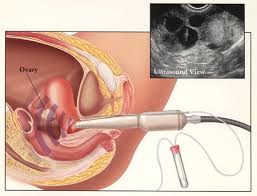
- Uterine assessment: We use ultrasound to look at your uterus, checking for fibroids, polyps, or any other issues that might interfere with embryo implantation.
- General health screening: Your overall health matters. We run basic blood tests, screen for infections, and ensure you are fit for pregnancy.
- Semen analysis: Your partner's sperm is tested for count, motility, and shape. If there are problems, we will guide you through solutions.
If we find anything that could reduce your chances or affect your health, we address it first. Our goal is to give you the highest possible chance of a healthy pregnancy.
Is Donor Egg IVF the Right Next Step for You?
This is a deeply personal decision. Some women need time to process. Others feel instant relief at finally having a real chance. Both reactions are completely normal. What matters is that you have the right information and support as you make this choice.
At Malpani Infertility Clinic, we believe in giving you honest, clear advice. We will never rush you, and we will always lay out all your options, risks, and chances in plain language—no false promises, no sugarcoating. Our experts have helped thousands of couples who once felt hopeless find the courage and clarity to move forward, whether with their own eggs, donor eggs, or even exploring other paths to parenthood.
The decision to use donor eggs is not about giving up your dream of a family. It is about choosing the path that gives you the best chance to make that dream real.
The typical success rate for IVF with donor eggs at top clinics, including Malpani Infertility Clinic.
Learn more about when and why to approach an egg donor.
Frequently Asked Questions
Q: What exactly is premature ovarian failure?
A: Premature ovarian failure means that a woman’s ovaries stop working before age 40, causing her to lose her supply of eggs much earlier than normal. This makes natural conception very difficult without donor eggs.
Q: How are egg donors chosen at Malpani Infertility Clinic?
A: We use frozen eggs from our own egg bank, allowing us to match donors to your physical features and preferences. Every donor is thoroughly screened for health, genetics, and psychological readiness.
Q: Is the IVF process with donor eggs different from regular IVF?
A: The main difference is that the eggs used are from a donor, not the intended mother. Otherwise, the steps—fertilization, embryo culture, transfer—are very similar.
Q: Will my child look like me if I use donor eggs?
A: While the child’s DNA comes from the donor and your partner, we work to match donors based on your preferred traits. Many parents find their bond is based on love and upbringing, not just genetics.
Q: What should I do if I am unsure about using donor eggs?
A: It is normal to have doubts. We encourage you to have an open, honest conversation with a fertility expert who will respect your feelings and help you weigh your options without pressure.
Q: Are there any health risks to using donor eggs?
A: The medical risks to the mother are similar to regular IVF. The eggs are tested to minimize risks to the baby, and we thoroughly prepare your body for a healthy pregnancy.