

IVF vs ICSI: Which Fertility Treatment is Right for You?

You might have sat across from a doctor or googled late into the night, wondering if IVF or ICSI is the answer for you. Maybe your test results left you more confused than comforted. Maybe you have faced failed cycles, or your partner’s sperm analysis has you worried. If you are asking yourself, "Which treatment gives us our best shot at a baby?", you are not alone. That question haunts countless couples, and it is exactly what we will clear up here—with honesty, clarity, and real support.
IVF and ICSI: What Do They Really Mean for Your Family?
Let us start simple. Both IVF (In Vitro Fertilization) and ICSI (Intracytoplasmic Sperm Injection) are ways to help sperm meet egg in the lab, but the way they do it—and why you might need one over the other—matters deeply.
IVF is like setting up a room for the sperm and egg and letting them mingle, hoping the best sperm reaches the egg, much as it would inside your body. The embryologist watches quietly, and nature does the work.
ICSI, however, is hands-on. The embryologist carefully selects a single healthy-looking sperm and gently injects it into the egg with a fine needle. It is more like a matchmaker making sure the introduction is impossible to miss.
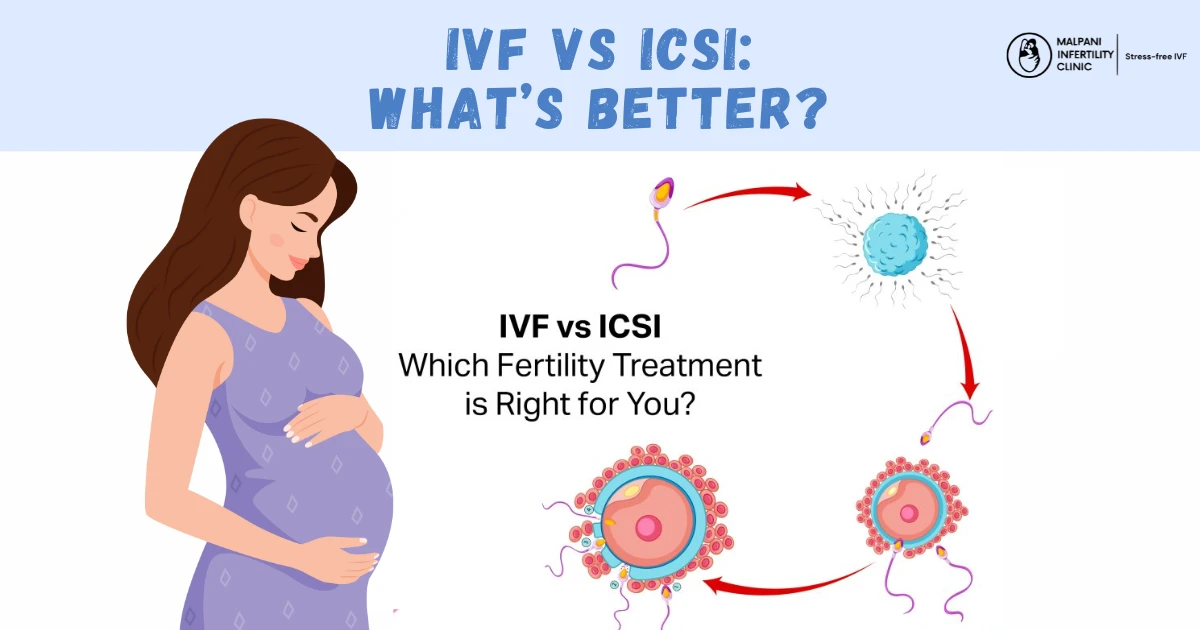
From your side as a patient, the process—hormone injections, ultrasounds, blood tests, egg collection, and embryo transfer—feels the same, whether you choose IVF or ICSI. The only real difference happens behind the scenes, in the lab.
Think of IVF as letting fate play its part and ICSI as the method that leaves nothing to chance.
When Does ICSI Make More Sense Than IVF?
Not every couple needs ICSI. But sometimes, it is the difference between hope and heartbreak. At Malpani Infertility Clinic, we recommend ICSI in these situations:
- Male factor infertility: If your partner’s sperm count is very low (azoospermia), or sperm quality is poor—meaning they do not swim well, or have an unusual shape (low sperm count or oligospermia), IVF alone often cannot overcome these barriers.
- Previous IVF cycles failed to fertilise: If you have gone through IVF and ended up with no embryos, even when sperm counts seemed normal, ICSI can prevent another devastating disappointment.
- Using frozen or surgically retrieved sperm: If sperm is obtained through surgery or has been frozen, ICSI is usually required for fertilisation to happen.
- Unexpectedly poor fertilisation in past cycles: Sometimes, everything looks fine but eggs just do not fertilise with IVF. ICSI can solve this mystery.
- When embryo genetic testing (PGD/PGS) is planned: For certain genetic conditions, we do ICSI to ensure only one sperm fertilises each egg, making genetic results more reliable (PGD/PGS).
IVF vs ICSI: Is One Really More Successful Than the Other?
Here is something most clinics do not say out loud: once you have healthy embryos, your chances of pregnancy are virtually the same, whether they were created with IVF or ICSI. The method in the lab does not change how your uterus welcomes an embryo.
- Your age matters most
- The quality of your eggs and sperm
- Your overall health
- The skill and experience of your clinic
Average fertilisation rate for ICSI, compared to 64.9% for IVF (based on UK registry data). Both lead to similar chances of pregnancy when embryos are healthy.
What does this mean for you? If there is no sperm problem, standard IVF is usually enough. If sperm is the issue, ICSI can help more eggs fertilise, reducing the risk of a complete blank cycle.
For couples with unexplained infertility, there is no magic in choosing ICSI over IVF—unless sperm is the real hurdle.
Common Myths That Cause Unnecessary Worry
- Myth: ICSI damages eggs.
Truth: Modern ICSI, done by an experienced embryologist, damages fewer than 2% of eggs. At Malpani Infertility Clinic, our lab protocols keep this risk extremely low.
- Myth: IVF always picks the best sperm.
Truth: In IVF, sperm compete as they would naturally. In ICSI, an embryologist selects the healthiest-looking sperm. Both methods can lead to healthy babies.
- Myth: ICSI babies are less healthy.
Truth: Large studies show the risk of birth defects is not higher with ICSI itself. Any difference is usually due to the underlying reason for needing ICSI, not the technique.
If anyone tells you that one method is always "safer" or "better," ask for evidence. The real answer is about matching the treatment to your biology and your history.
Why Malpani Infertility Clinic Often Recommends ICSI (and When We Do Not)
Patients often ask, "Why not just do ICSI for everyone and avoid the risk of failed fertilisation?" That is a fair question. Our answer is honest: We lean toward ICSI when there is any sign that IVF might not work, especially if you have already faced disappointment. But we do not push ICSI for every single couple, because it is not always necessary.
- Better insight into egg quality: ICSI lets us examine eggs individually, which helps us give you feedback about your own fertility, especially if you are older or have few eggs.
- Prevents heartbreak: Even with normal sperm, IVF can sometimes result in zero embryos. ICSI makes this risk much lower. For couples who cannot afford to waste precious cycles—emotionally or financially—ICSI can be a huge relief.
- Predictable lab results: We have more control with ICSI, so you get the best possible use of every egg retrieved.
Watch this video, showing injection of sperm into egg (ICSI treatment)
The choice between IVF and ICSI is not about which is "best"—it is about what is best for you, right now, with your unique story.
How Do You Make the Right Choice for Your Situation?
What you need is not another generic list. You need a clear, practical way to decide. Here is what we actually look at during your consultation at Malpani Infertility Clinic:
- Your partner’s semen analysis—are there issues with count, movement, or shape?
- Your own treatment history—have you had failed cycles, poor fertilisation, or were there surprises last time?
- Your age and egg reserve—do you have enough good-quality eggs to try IVF first, or does every egg matter?
- Any special medical or genetic concerns—are you using frozen sperm, or planning embryo testing?
ICSI usually costs a little more because of extra lab work, but for many couples, that extra investment means peace of mind. No one wants to spend money (and emotional energy) on a cycle that fails for reasons that could have been avoided.
If you feel lost, that is normal. The right decision is not about what worked for someone else. It is about what will give you the best shot, with the least wasted time and heartache.
FAQs About IVF and ICSI: What Patients Want to Know
Frequently Asked Questions
Q: Is ICSI more painful or difficult than IVF?
A: No. The patient experience is the same for both. All the injections, egg retrieval, and embryo transfer steps feel identical. The difference—injecting sperm into the egg—happens in the lab while you are not even aware of it.
Q: Can we start with IVF and switch to ICSI if needed?
A: It is possible, but if sperm issues are already known, many couples go straight to ICSI to avoid a failed cycle. If you try IVF first and it fails to fertilise eggs, it means losing a cycle and the emotional toll that brings. We discuss this openly with our patients and help you weigh your options with your specific results in mind. For more about treatment choices, see here.
Q: How do I know if my partner's sperm quality requires ICSI?
A: A semen analysis checks sperm count, movement, and shape. If any results are poor—or previous IVF cycles have failed—ICSI is usually the safer bet.
Q: Are babies born after ICSI different from IVF babies?
A: No. There is no difference in health, intelligence, or happiness between IVF and ICSI babies. Both groups of children are just as healthy as any other, and the science behind their conception does not affect their future.
Q: Does age affect IVF or ICSI success?
A: Yes. Women under 35 generally have higher success rates, but we have seen many older women have healthy babies too. Your plan will be personalised based on your age and egg reserve, with honest advice about your realistic chances.
Q: What if IVF or ICSI doesn’t work the first time?
A: It is common to need more than one cycle. The main factors—egg quality, sperm health, and embryo development—can vary. If your first attempt does not work, we will review every detail and adjust your care, never giving up until we have explored every option.