
How to Induce Your Period Fast & Safely

When your period is late and you have plans, appointments, or are preparing for IVF, every single day of waiting can feel endless. The anxiety can be heavy: Will my cycle mess up my treatment schedule? Is something wrong with my body? Why is this happening to me again? If you’re reading this, you probably recognize that uneasy feeling of not being in control of your body’s timing. At Malpani Infertility Clinic, we see women every day who face this same uncertainty. You are not alone, and you do not have to manage it in silence or confusion.
Why Might You Want to Induce Your Period?
There are countless reasons someone might want to bring on their period sooner. For many patients at our clinic, cycle timing is crucial for:
- Planning IVF or fertility treatments: Most protocols begin on Day 1 of your period, so delays can disrupt the entire cycle.
- Travel and events: Trips, weddings, and big days are easier to enjoy without the unpredictability of your period looming over you.
- Work or academic schedules: Some want to avoid heavy days during critical exams or meetings.
- Irregular cycles: Conditions like PCOD (Polycystic Ovarian Disease) or perimenopause can make periods unpredictable and frustrating.
- Peace of mind: The uncertainty itself is stressful, and sometimes you just want the reassurance of knowing when your period will arrive.
If you’ve ever counted days, rearranged plans, or worried about your cycle making you miss out, you’re not the only one—this is a common (but rarely discussed) struggle.
Natural Ways to Encourage Your Period
Many women hope for a “quick fix” to get their period overnight, but the truth is: no natural method can guarantee instant results. That said, supporting your body’s natural rhythm can help bring on your period safely and gently, especially if your cycle is only a few days late.
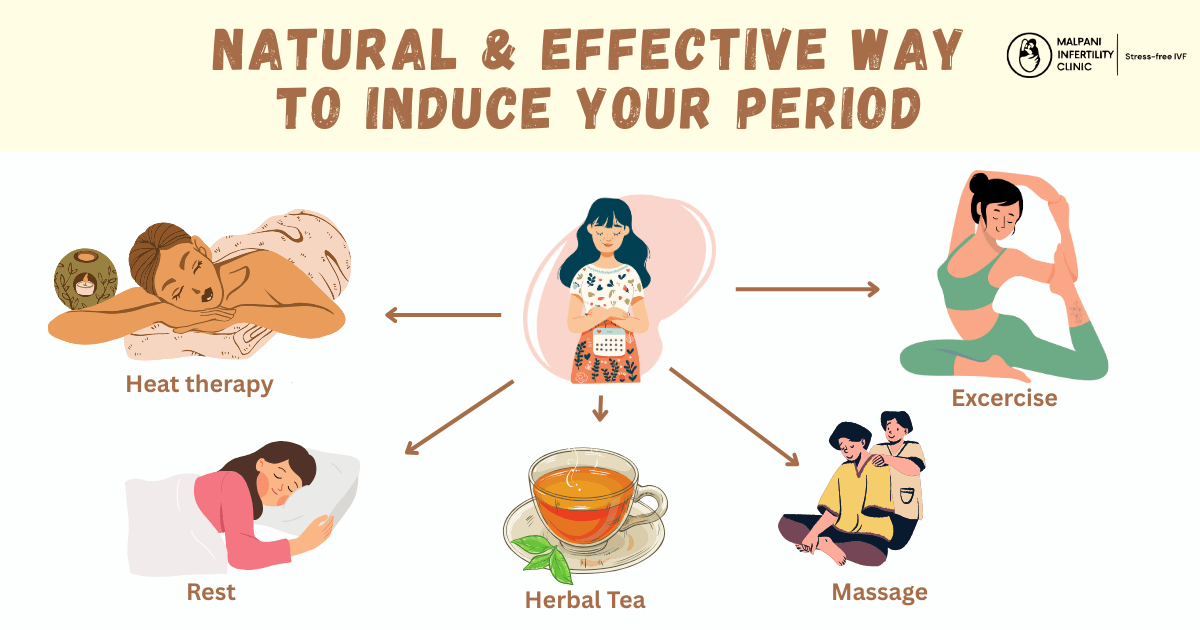
- Warm compress or heating pad: Applying gentle heat to your lower abdomen for 15-20 minutes relaxes uterine muscles, boosts blood flow, and eases tension that could delay your period.
- Light exercise: Brisk walks, yoga, or swimming at a moderate pace can support circulation and reduce stress. Avoid intense workouts—they can sometimes delay periods further.
- Stress reduction: Meditation, deep breathing, or simply taking a warm bath can help lower cortisol (the stress hormone) that can disrupt your cycle.
- Dietary support: Papaya, pineapple (rich in bromelain), ginger, turmeric, and vitamin C-rich foods (like oranges and leafy greens) are popular choices. They are thought to gently nudge hormonal balance, but remember—these are supportive, not instant fixes.
- Good sleep: Aim for 7-8 hours nightly. Irregular sleep patterns can throw off hormonal signals that regulate your period.
While these approaches can help, it’s important to have realistic expectations. Most women find that if their body is ready, gentle encouragement can help periods start within a few days—but not hours. If your cycle is weeks late or this happens frequently, it’s time to look deeper.
Medical Options: When You Need Reliable Timing
If natural methods aren’t working, or you have a strict timeline (such as for IVF), medical options can help bring on your period more predictably. At Malpani Infertility Clinic, we explain every option clearly so you can make the best decision for your body and goals.
Here’s what you should know:
- How periods work: Your period starts when levels of estrogen and progesterone drop. Medical methods mimic this natural “withdrawal” to trigger bleeding.
- For PCOD and perimenopause: These conditions cause hormonal imbalances, making periods irregular or absent.
To learn more about how your menstrual cycle works and its connection to fertility, read this detailed guide.
Hormonal Methods to Induce Your Period
- Hormone Replacement Therapy (Sequential Method): Mimics the natural hormonal cycle by giving you estrogen for the first phase, then adding progesterone. Example: CycloProgynova (commercially available in some countries).
- Estrogen phase (Day 1-25): Choose from Ethinyl estradiol (Lynoral) 0.05 mg daily (affordable), Premarin 1.25 mg daily, or Progynova (estradiol valerate) 2 mg x 2 tablets daily.
- You may notice mild nausea or bloating—these are common and usually temporary.
- Progesterone phase (Day 16-25): Add Provera (medroxyprogesterone acetate) 10 mg, twice daily.
- Birth control pills: These provide both estrogen and progesterone. Most come in 28-day packs (21 “active” pills, 7 “inactive” pills). Take the active pills for 21 days—your period usually starts 3-5 days after the last active pill. If you miss a pill, take two the next day.
- For PCOD: If you have PCOD, you may only need progesterone. Take Provera 10 mg twice daily for 5 days; your period typically starts within 3-8 days after the last tablet.
Watch a video here by Dr Malpani to learn why PCOD patients must induce a period.
Sometimes, stronger medications like Mifegest (mifepristone) may be needed, especially if standard options don’t work, but these are only used after a careful ultrasound and medical evaluation by your doctor.
Safety First: When to See a Doctor
- Always check with your doctor before starting any hormone therapy.
- Never use these methods if you might be pregnant—take a test if you have any doubts.
- Do not use hormonal methods if you are breastfeeding, unless cleared by a doctor.
- If you experience periods that are more than 7 days late, have no period for 3 months, or notice severe pain, very heavy bleeding, or sudden changes in your cycle, seek medical advice.
- Red flags that need urgent attention: severe abdominal pain, soaking a pad every hour, unusual discharge with strong odor, or bleeding between periods.
If you’ve been told to “wait and watch” for months or felt dismissed about your irregular cycles, know that you deserve clear answers and a plan that fits your life.
What to Expect: Timelines and Real Experiences
- Natural methods: May take several days to weeks depending on your body’s readiness.
- Hormonal methods: Most women bleed 3-6 days after stopping medication.
- Withdrawal bleeds are sometimes lighter than your natural period, and mild cramping or mood changes may occur.
- If you’re new to these methods, try them 2-3 months in advance (if possible) to see how your body responds—especially if you’re planning fertility treatments or travel.
Practical Tips for IVF & Fertility Planning
At Malpani Infertility Clinic, we understand how critical timing is for successful fertility treatments:
- Begin regulating your cycle 2-3 months before your intended IVF cycle or egg retrieval.
- Keep detailed notes on how your body responds to different medications or timings.
- If donor eggs or surrogacy is involved, both parties can synchronize cycles by starting birth control pills from Day 1, taking them for at least 20 days, and stopping together for a perfectly coordinated schedule.
- Always discuss your plans with your fertility doctor so they can advise you on the safest, most effective approach.
of women with irregular periods find their cycles become more predictable when they use a tailored medical protocol under clinical supervision.
FAQs
Frequently Asked Questions
Q: Can I induce my very first period?
A: No, your first period (menarche) is controlled by your body’s natural growth and hormone patterns. This process cannot be artificially started—it’s your body’s way of showing it’s ready for menstruation.
Q: Are these period-inducing methods safe for everyone?
A: Most are safe for healthy women, but it’s essential to check with a doctor first. If you are pregnant, breastfeeding, or have health concerns, always get personalized advice before starting any medication or supplement.
Q: How quickly will my period start after using hormonal methods?
A: With hormonal medications (like birth control pills or progesterone), bleeding usually begins 3-6 days after the last dose. Natural approaches are less predictable and may take several days or even weeks.
Q: What if none of these methods work for me?
A: If you don’t bleed even after trying recommended options, consult your doctor. You may need an ultrasound or blood tests to check for conditions like PCOD, thyroid issues, or other hormonal imbalances, and stronger medications may be considered.
Q: Can I use these methods every month to control my period?
A: Frequent use of cycle-manipulating methods should only be done under medical supervision. Regular unsupervised use can disrupt your hormonal balance or mask underlying health issues.
Q: Does using natural remedies like papaya or ginger really work?
A: These foods may gently support hormonal balance but can’t guarantee immediate results. They are best used as part of a healthy lifestyle rather than as a single solution for delayed periods.
Q: When should I be worried about a missed period?
A: If your period is late by more than 7 days, absent for over 3 months, or accompanied by severe pain, heavy bleeding, or other symptoms, see a doctor. Pregnancy is also a possibility if you’re sexually active.