
Should I Choose Vitrification for My Eggs?

When you hear the words "egg freezing" or "embryo freezing," does your mind immediately fill with questions and anxieties? Maybe you are in the middle of IVF and you are told there are "extra" embryos, or perhaps you are considering preserving your eggs for the future. You might wonder: which freezing method is safest for my future chances? Will my embryos or eggs survive the process? Will they be just as healthy as if they had never been frozen at all? If these thoughts keep you up at night, you are not alone. Many couples and women in your position feel the same uncertainty, and deserve honest, clear answers.
Understanding Your Options: Vitrification vs. Slow Freezing
At Malpani Infertility Clinic, we believe in empowering you with the facts, not just medical jargon. There are two primary methods to freeze (the medical term is "cryopreserve") your embryos or eggs:
- Slow programmable freezing (the traditional method)
- Vitrification (the latest, ultra-rapid method)
Knowing the pros and cons of each can help you feel more in control of your fertility journey—and make choices you will not regret later.
Why Freezing Is Sometimes Needed
During IVF, we often stimulate your ovaries to produce multiple eggs. This way, you have the best chance of a successful pregnancy. But this also means you may have "extra" embryos left after your transfer. At our clinic, we never transfer more than three embryos at a time because your safety and the risk of multiple pregnancies matter.
Instead of discarding the remaining embryos, we can freeze them for future use. Sometimes, we even recommend freezing all your embryos in a cycle, especially if:
- You are at high risk for ovarian hyperstimulation syndrome (OHSS)
- Your endometrial lining is not optimal
- You want to delay pregnancy for personal or medical reasons
Frozen embryos are stored in liquid nitrogen at -196 degrees Celsius, which puts them into a deep "sleep" where no biological activity happens. They can be safely stored for years. When you are ready, we simply thaw them and use them in a future embryo transfer—without you having to go through another round of hormone injections and egg collection.
Egg freezing is also a strong option for women who are not ready to become mothers yet, or who need to undergo treatments (like chemotherapy) that might harm their eggs. But not all freezing methods are equally safe for eggs and embryos.
What Is Slow Freezing—and Why Is It Falling Out of Favour?
Slow programmable freezing, the older method, cools embryos gradually—about one degree per minute—after adding special "antifreeze" solutions called cryoprotectants. The goal is to avoid damaging ice crystals inside the cells. The process is meticulously controlled by a programmable freezer.
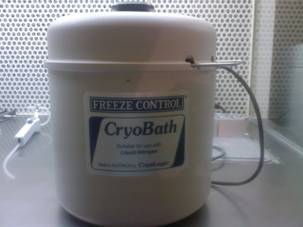
This method works reasonably well for embryos, but not so much for eggs. Eggs are larger, with more water inside, and are more fragile. Unfortunately, even with careful control, ice crystals can still form, potentially damaging the delicate cells and reducing their chances of surviving after thawing. In practice, only about 50 percent of embryos survive the freeze-thaw process using slow freezing, even in the best labs.
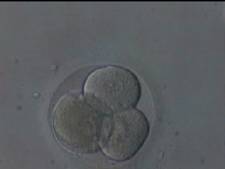
Here is a real example: The picture above shows an embryo after slow freezing and thawing. Out of four cells, one has turned dark—damaged beyond repair by ice crystals. This is not just a technical detail; it can mean the difference between a potential pregnancy and heartbreak.
Other drawbacks of slow freezing:
- It takes about two hours to freeze embryos, making it much more tedious for you and the lab team.
- Pregnancy rates are lower because of poor embryo survival.
- It is unsuitable for freezing eggs, which are even more sensitive to damage.
Vitrification: The Game-Changer in Fertility Preservation
Vitrification is the new gold standard. Think of it as "flash freezing"—the process happens so rapidly that ice crystals simply do not get the chance to form. Instead, the cell contents solidify into a glass-like state. This method uses higher concentrations of cryoprotectants, but the exposure is very brief, so the cells are not harmed.
At Malpani Infertility Clinic, we have been using vitrification for years for both embryos and eggs. We are able to freeze embryos at any stage: from the earliest (pronuclei, Day 1) to multicellular (Day 2 and 3) to blastocyst (Day 5 or 6).
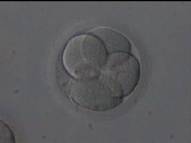
Here, you see a healthy 4-cell embryo, just before vitrification. After thawing, the embryo looks just as perfect as it did before freezing—no dark or damaged cells.
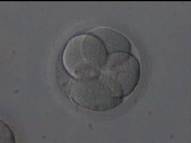
This is the same embryo after thawing from vitrification. All cells are intact, and it is ready for transfer.
- Vitrification is incredibly fast—about 30 minutes for 10 embryos.
- Survival rates are excellent: over 95 percent of embryos and eggs survive the freeze-thaw process in our hands.
- Pregnancy rates using vitrified embryos or eggs are as good as with fresh ones.
of embryos and eggs survive vitrification and thawing at Malpani Infertility Clinic
Vitrification dramatically improves your chances of a successful pregnancy after freezing—without sacrificing safety.
Comparing Slow Freezing and Vitrification: What Really Matters
| Slow Programmable Freezing | Vitrification |
|---|---|
|
|
Is Vitrification Right for You?
Vitrification is not just a technical upgrade. It is a real reassurance for anyone worried about losing precious eggs or embryos to outdated freezing methods. If you are thinking about egg freezing for fertility preservation (for instance, to delay childbearing or because of a medical diagnosis), vitrification is the method you want. If you are in an IVF cycle and have spare embryos, vitrification ensures they will be ready and healthy for future transfers.
At Malpani Infertility Clinic, our experienced team—including Dr. Saiprasad Gundeti, our Senior Embryologist—handles every case with the same care we would want for ourselves or our loved ones. We are open with patients about their options, and we will never push you into a decision that is not right for you. We encourage you to ask questions, get a second opinion, and take your time to make the choice that feels safest and most hopeful.
If you are unsure whether to freeze, or which method is right for you, you can always speak to an expert fertility advisor at Malpani Infertility Clinic. Sometimes, just hearing the no-nonsense truth from someone who cares can make all the difference.
Frequently Asked Questions
Q: What is the difference between slow freezing and vitrification?
A: Slow freezing gradually cools eggs or embryos, which can cause damaging ice crystals to form. Vitrification is an ultra-rapid process that turns cells glass-like, preventing ice crystals and giving a much higher survival rate.
Q: Are pregnancy rates with vitrified eggs or embryos as good as with fresh ones?
A: Yes. Studies and our own clinic experience show that pregnancy rates with vitrified eggs or embryos are comparable to those using fresh ones, provided the freezing and thawing process is done correctly.
Q: Is vitrification safe for my eggs and embryos?
A: Vitrification is considered very safe when performed by an experienced team. Over 95 percent of eggs and embryos survive the process without damage at our clinic.
Q: How long can frozen eggs or embryos be stored?
A: Eggs and embryos can be stored safely for many years in liquid nitrogen. There is no evidence that longer storage affects their quality or success rates.
Q: Can I use frozen eggs if I have irregular cycles or medical issues?
A: Yes. Frozen eggs can be thawed and fertilized later, and embryo transfers can be timed to suit your body's needs, even if your cycle is irregular or affected by medical treatments.
Q: Is there any increased risk of birth defects from using frozen eggs or embryos?
A: Research and decades of clinical experience show that babies born from frozen eggs or embryos have the same risk of birth defects as those from fresh cycles.
Q: How do I know if freezing my eggs or embryos is the right step?
A: The decision is personal and depends on your age, fertility diagnosis, and future plans. Our team at Malpani Infertility Clinic is happy to discuss your unique situation and help you make an informed choice.