
What You Need to Know About Hysteroscopy
It starts with a nagging worry: Why is getting pregnant so hard for us, when for others it seems so easy? Maybe you have faced months or years of trying, only to be met with disappointment. Perhaps doctors have suggested tests, and now you are hearing the word “hysteroscopy.” If you are feeling anxious, confused, or even a little scared, you are not alone. Many couples facing infertility find themselves on this path, and at Malpani Infertility Clinic, we know the mix of hope and fear that comes with every new procedure.
What Is Hysteroscopy, and When Does It Help?
Hysteroscopy is a simple, minimally invasive procedure that lets your doctor look directly inside your uterus using a tiny telescope, called a hysteroscope. This is done to check for problems in the uterine lining that might be interfering with fertility or causing symptoms like unusual bleeding. “Hystero” means uterus, and “scopy” means to look—so, quite simply, it is about seeing what is happening inside your womb.
- Submucous (internal) fibroids
- Scarring (adhesions or synechiae)
- Endometrial polyps
- Uterine septa and other congenital malformations
It is natural to wonder if you really need a hysteroscopy. Today, many uterine problems can be found using non-surgical tools like a hysterosalpingogram (HSG)—an X-ray of the uterus and fallopian tubes—or a good quality 3-D vaginal ultrasound. These tests are less invasive, less costly, and often provide enough information for many women. So, at Malpani Clinic, we only recommend hysteroscopy when it is truly necessary for diagnosis or treatment—not as a default step.
What Happens During a Hysteroscopy?
Let us walk you through what actually happens during this procedure:
- Your doctor may first gently stretch and open the cervix with small dilators to make room for the hysteroscope.
- The hysteroscope—a slender, lighted tube—is carefully inserted through the cervix into the uterus.
- A harmless liquid or sometimes gas is used to gently expand the uterus for a clearer view. This helps wash away blood or mucus and gives the doctor a close look at the uterine lining.
- Your doctor examines the inside of the cervix, uterus, and the openings of the fallopian tubes (the tubal ostia).
- If anything looks abnormal—like a polyp, fibroid, or scar tissue—small instruments can be passed through the hysteroscope to take samples or remove the growths.
- Sometimes, a gentle scraping (curettage) of the uterine lining is done, and the tissue is sent for further testing.
Most diagnostic hysteroscopies are quick and can be done with local or general anesthesia. It usually takes less than 30 minutes, and you can often go home the same day.
Hysteroscopy is not about “just doing another test”—it is about finding and fixing what could be silently sabotaging your chances to conceive.
Read more: Hysteroscopy prior to IVF does not help
Operative Hysteroscopy: Treating Problems as They Are Found
Sometimes, the real value of hysteroscopy is not just in diagnosis, but in treatment. Operative hysteroscopy means your doctor can treat many findings immediately, without making cuts in your belly. This includes removing:
- Fibroids (tiny, benign muscle growths inside the uterus)
- Endometrial polyps (small, soft growths from the uterine lining)
- Scar tissue (adhesions or synechiae)
- Uterine septa or other minor birth differences in the uterus
Imagine being able to solve a problem the moment you see it. That is what makes hysteroscopy so powerful for women struggling with infertility or repeated miscarriages. At Malpani Clinic, we use advanced, gentle techniques to ensure you get the most precise, least traumatic care. Watch Dr. Anjali Malpani perform a hysteroscopic adhesiolysis for Asherman syndrome in this video:
One special technique is hysteroscopic tubal cannulation. If your fallopian tubes are blocked near where they meet the uterus (a common problem called proximal or cornual block), it may just be a plug of mucus or debris. Using a fine guidewire through the hysteroscope, your doctor can often gently clear the blockage—no major surgery required. This can restore tube function and open new possibilities for natural conception.
There is also falloposcopy, where a tiny flexible telescope is passed into the tube through the hysteroscope, providing a direct look inside the fallopian tube itself. This is still a specialized procedure, but it shows the direction fertility treatment is heading: less guesswork, more precision.
What to Expect After Hysteroscopy: Recovery and Risks
Most women feel cramping, much like period pain, for a day or two after hysteroscopy. Some light bleeding or spotting can be expected. You can usually return to work and normal activities in a day or two, but it is best to avoid sex until any bleeding has stopped and your doctor says it is safe.
Complications are rare, especially in skilled hands. The risks include:
- Infection of the uterus or fallopian tubes
- Bleeding
- Allergic reactions to medications or solution
- Rarely, a tiny hole in the uterus (perforation), which usually heals on its own
When more complex procedures are planned, a laparoscopy (a camera placed into your belly) may be done at the same time to make the procedure even safer.
Risk of serious complications with hysteroscopy when performed by an experienced doctor.
If you experience heavy bleeding, fever, severe pain, or foul-smelling discharge after the procedure, contact your doctor right away.
Polyps, Fibroids, and Fertility: What Should You Know?
Many couples are shocked to learn that a small growth inside the uterus—like a polyp or fibroid—could be the reason for their infertility or recurrent miscarriages. These are issues that can go undetected for years but can be easily treated once found.
Polyps are soft, finger-like growths of the uterine lining. They often grow in response to hormones and may be missed on a routine ultrasound unless the scan is done at the right time in your cycle. Polyps can act as barriers to embryo implantation, but they are usually simple to remove during hysteroscopy.
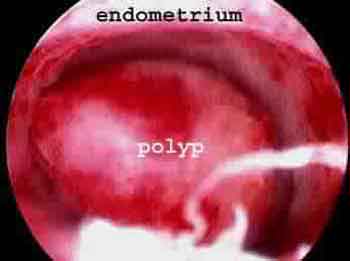 Fig 1. Uterine polyp as seen during hysteroscopy
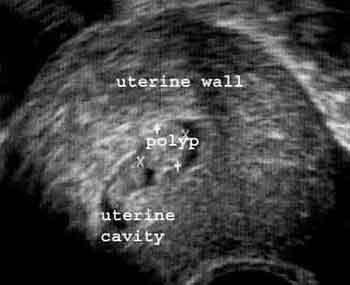 Fig 2. Uterine polyp seen during ultrasound scan after infusion of saline, which outlines the polyp in the cavity
Fibroids (or myomas) are extremely common, especially in women over 35. Most fibroids are harmless and do not affect fertility—especially those in the muscle wall (intramural) or on the outer surface (subserous). In fact, unnecessary fibroid surgery can sometimes do more harm than good by creating adhesions or even leading to loss of the uterus. Only fibroids that protrude into the uterine cavity (submucous fibroids) need to be removed, as they can interfere with embryo implantation. These are best treated via operative hysteroscopy, which is both safe and effective in skilled hands.
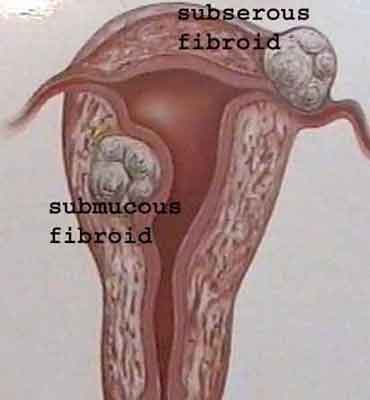 Fig 3. Schematic showing a submucous fibroid and a subserous fibroid compressing the right fallopian tube
After fibroid removal, especially if the surgery involves deep incisions or complications, some women are advised to consider cesarean delivery in future pregnancies to avoid the small risk of uterine rupture. But for most, life after hysteroscopic surgery is back to normal—just with a better chance at a successful pregnancy.
Do You Really Need a Hysteroscopy? Making the Right Choice
With so many tests and treatments, it is easy to feel overwhelmed or pressured. At Malpani Infertility Clinic, Dr. Malpani believes in no-nonsense, evidence-based advice. Not every woman needs a hysteroscopy. If your ultrasound and HSG are normal, and you have no symptoms like abnormal bleeding or repeated IVF failure, you might not need it at all. Sometimes, “just in case” surgeries are pushed by clinics, but unnecessary procedures mean extra cost and risk, with no added benefit.
There are also new, expensive tests like the ERA (Endometrial Receptivity Assay) that are being marketed aggressively. But there is no good evidence these add real value in most cases. At Malpani Clinic, we do not treat patients like guinea pigs. We help you focus on what truly works—and avoid what is a waste of time and money.
If you are unsure whether a hysteroscopy is right for you, or want a clear, honest second opinion, you can always speak with us for guidance tailored to your story.
Read more: Do you need a hysteroscopy before doing IVF?
Frequently Asked Questions
Q: Is hysteroscopy painful?
A: Most women feel only mild to moderate cramping, similar to a period, during and after the procedure. Anesthesia is used to make you comfortable, and recovery is usually quick.
Q: How long does it take to recover from a hysteroscopy?
A: You can usually get back to normal activities within one to two days. Some spotting or mild cramps are common for a few days.
Q: When is hysteroscopy really needed?
A: Hysteroscopy is best for women who have signs of a uterine problem on ultrasound or HSG, unexplained infertility, repeated miscarriages, or symptoms like abnormal bleeding that cannot be explained by other means.
Q: Are there any serious risks with hysteroscopy?
A: Serious complications are rare, especially with experienced doctors. Infection, bleeding, or uterine perforation can occur but are very unlikely.
Q: Can polyps or fibroids really stop me from getting pregnant?
A: Yes, if they are inside the uterine cavity (submucous fibroids or endometrial polyps), they can block embryo implantation. Removing them can improve your chances of conceiving.
Q: Should I have a hysteroscopy before IVF?
A: Not always. If your uterine cavity looks normal on ultrasound and HSG, and you have no other risk factors, you likely do not need hysteroscopy before IVF. Always ask your doctor to explain the reason for recommending it.
Q: What warning signs should I look for after hysteroscopy?
A: Contact your doctor if you have heavy bleeding, severe pain, fever, or foul-smelling discharge after the procedure.