

Why Did My Eggs Fail to Fertilize?

You have just received the call you dreaded most. After weeks of injections, check-ups, anxiety, and hope, your eggs have been retrieved. You went to sleep dreaming of becoming a parent. But today, the embryologist tells you: none of your eggs fertilized. Your mind races: What went wrong? Did we do something wrong? Are we out of options? If this sounds painfully familiar, you are not alone. Many couples walk this confusing and heartbreaking road, and at Malpani Infertility Clinic, we believe you deserve honest answers and real guidance—without sugarcoating, but with hope and clarity.
Why Not Every Egg Becomes an Embryo: The Real Story
Many people expect that science can guarantee results: if you retrieve 10 eggs, you will get 10 embryos, right? Sadly, human reproduction—whether in your bedroom or in a high-tech IVF lab—is far less predictable. Sometimes, even after everything seems right, eggs simply do not fertilize. Let’s break down why this happens and what it means for you.
Most people are shocked to learn that even in the best labs, not all eggs will fertilize or become healthy embryos.
Let’s look at how nature works, both inside your body and inside the IVF lab, to understand why fertilization sometimes fails.
How Fertilization Works: Inside the Body and the Lab
Normally, your egg is fertilized by sperm inside your fallopian tube, within about 24 hours after ovulation. Out of millions of sperm, only a handful even reach the egg. They surround the egg, and each releases special enzymes to break through the egg’s shell (called the zona pellucida). But only one lucky sperm gets in. The moment this sperm enters, the egg changes its surface, blocking all the other sperm. This amazing process—called the cortical reaction—ensures that only a single sperm fertilizes the egg.
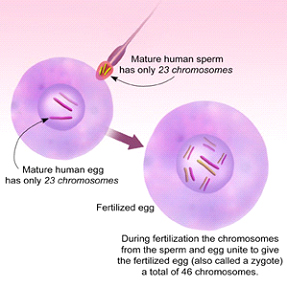
Both the egg and sperm carry half the genetic material needed for a baby: 23 chromosomes each. Once fertilized, these join to create a cell with 46 chromosomes—a zygote. This one cell divides into two, then four, then eight, and so on, eventually forming an embryo. But every step can face hurdles.
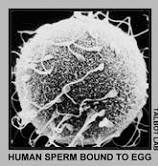
In the IVF lab, we try to mimic nature as closely as possible. The eggs are placed in a special dish with thousands of healthy, active sperm. The sperm still have to do their job: swim, bind, and penetrate the egg. Only one will succeed. When their genetic material merges, we see two small spheres (pronuclei) inside the egg—the first sign of fertilization.
Why Eggs Sometimes Do Not Fertilize: The Hidden Reasons
Even when everything seems perfect, eggs might not fertilize. Here are the main reasons:
- Sperm issues: If sperm do not swim well or are abnormally shaped, they may fail to bind or penetrate the egg. In such situations, standard IVF often fails. That’s why we recommend ICSI (Intracytoplasmic Sperm Injection) for patients with low sperm count, poor motility, or high rates of abnormal sperm.
- Egg maturity: Not all eggs retrieved are mature. Only eggs at the right stage (called metaphase II, or M2) can be fertilized. Immature eggs lack a polar body (a small round structure next to the egg), and cannot accept the sperm.
- Technical problems: Rarely, issues in the lab—such as incubator malfunction or contamination—can harm eggs or sperm. But these are very uncommon in experienced clinics.
- Uncommon genetic issues: Sometimes, the sperm or egg may have rare genetic or structural problems that make fertilization impossible, even with advanced methods like ICSI.
For eggs that do not fertilize after standard IVF, we sometimes attempt rescue ICSI—injecting sperm into the eggs the next day. This may work for some, but not all, and the resulting embryos are usually frozen for later transfer. However, if ICSI was already performed and fertilization still failed, rescue options are very limited.
What Happens During ICSI—and Why It Sometimes Fails
ICSI is a powerful tool: a skilled embryologist injects a single sperm directly into each mature egg under a microscope. This bypasses most hurdles that sperm face in nature. Over 70% of mature eggs should fertilize in a high-quality lab.
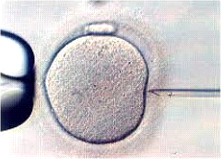
INTRA CYTOPLASMIC SPERM INJECTION
The timeline is precise: the day of egg collection is Day 0. About 18 hours after IVF or ICSI, we check for fertilization (Day 1). We look for the presence of two pronuclei, confirming that the sperm and egg have merged their genetic material.
But sometimes, even with ICSI, eggs still do not fertilize. This can happen if:
- The eggs are not mature (no polar body seen under the microscope).
- The eggs have internal defects (such as problems with the “machinery” that supports fertilization).
- There is a rare sperm defect, like globozoospermia, where sperm lack the structures needed to activate the egg.
- Technical errors during ICSI, such as not properly injecting the sperm or damaging the egg (this is extremely rare in experienced hands).
Even in the best labs, not every egg will become an embryo. This does not mean your body or your efforts have failed.
Fertilization Failure: What Does It Mean for Your Future?
Hearing that none of your eggs fertilized can feel like the end of the road. But in most cases, this is just another challenge—not a full stop. Sometimes, changing the stimulation protocol, improving sperm quality, or adjusting the lab technique in a new cycle can lead to better results. Many couples who face fertilization failure go on to have healthy embryos and successful pregnancies in later attempts.
of mature eggs typically fertilize after ICSI in a high-quality IVF laboratory.
At Malpani Infertility Clinic, we believe in full transparency. If fertilization fails, we will review every detail with you: Was the problem with sperm, eggs, or technique? Is further testing needed? Are there rare genetic issues at play? We do not believe in hiding behind jargon or false hope. You deserve to know the truth, and you deserve a plan for what comes next.
How Malpani Infertility Clinic Can Help You Move Forward
Dealing with failed fertilization is emotionally exhausting. It can feel isolating, and you might even blame yourself or feel hopeless. Please know: you are not the cause, and you are not alone. Fertility is unpredictable for everyone, no matter how hard you try or how much you care. At our clinic, we are committed to giving you clear answers and honest advice. We will:
- Help you understand the likely reasons for failed fertilization in your case
- Discuss whether further tests—such as checking for rare sperm or egg problems—might be useful
- Review your stimulation protocol and suggest changes for future cycles
- Support you emotionally as well as medically, so you feel less alone in this journey
If you feel lost or overwhelmed, consider booking a consultation with Dr. Malpani for a detailed, personalized review of your case. Sometimes a fresh perspective and a thorough review can open doors you did not know existed.
Frequently Asked Questions
Q: Why did none of my eggs fertilize even though everything seemed fine?
A: Fertilization can fail due to sperm problems, egg immaturity, rare genetic issues, or, very rarely, technical issues in the lab. Even in the best clinics, not every egg will fertilize.
Q: Does failed fertilization mean I can never get pregnant?
A: Not at all. Many couples who experience total fertilization failure go on to have healthy embryos and pregnancies in subsequent cycles, often with some tweaks in protocol or further testing.
Q: What is ICSI and how is it different from IVF?
A: In ICSI, a single sperm is injected directly into each mature egg, bypassing most natural barriers. This is especially helpful in cases of male infertility or failed fertilization with standard IVF.
Q: Can anything be done if eggs fail to fertilize after ICSI?
A: Options are limited if fertilization fails after ICSI, but sometimes further genetic or functional testing of sperm and eggs, or changes in stimulation protocols, can help in future cycles.
Q: How many eggs usually fertilize in a typical IVF or ICSI cycle?
A: On average, about 70-80% of mature eggs fertilize after ICSI in a good lab, but this number can vary based on age, egg quality, and sperm factors.
Q: Is total fertilization failure my fault?
A: Absolutely not. Fertilization depends on many biological factors that are out of your control. Blaming yourself is not only unfair, but also untrue.