

Why IVF patients get confused
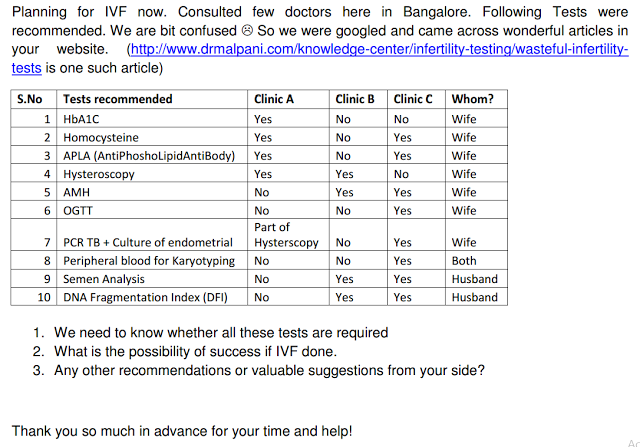
If you have ever walked out of a fertility specialist's office feeling more confused than comforted, you are not alone. Maybe you are a couple in your late thirties, or perhaps a software engineer who likes to research every option, but still you find yourself buried under a pile of different test results and conflicting advice. One doctor recommends a full panel of hormone tests. Another tells you only one number matters. The next says something else entirely. You want answers, but the deeper you dig, the more lost you feel. Why does this happen? Why is IVF advice so different from one clinic to the next?
Why Fertility Advice Feels So Inconsistent
So many patients come to us after visiting multiple clinics, carrying thick stacks of reports and even thicker stacks of doubts. You may notice that almost every doctor seems to have their own favourite set of tests and protocols. Sometimes, you are told to repeat expensive blood tests, or are pressured into scans and procedures you do not fully understand. The truth is: there is no single, universally agreed-upon playbook for IVF. Some tests are genuinely useful, while others are simply unnecessary.
Too many couples are burdened with tests that add more confusion than clarity.
For example, when assessing a woman's ovarian reserve (her egg supply), Anti-Müllerian Hormone (AMH) is a reliable test. But many clinics will order additional hormone profiles, Day 2, Day 21 blood tests, even repeated ultrasounds, which rarely change the big picture. These extra tests do not improve your chances. Instead, they drain your energy, savings, and hope.
The Hidden Cost of Unnecessary Testing
When you are already feeling vulnerable, every new test can feel like a step forward. But if you look closely, only a handful of results truly matter for creating a plan that works. Many couples spend months, and lakhs of rupees, chasing test results that never translate into action or improvement.
- AMH: Tells us about your remaining egg supply.
- Semen analysis: Shows sperm count and quality.
- Ultrasound: Reveals uterine and ovarian health.
Beyond these, most other routine blood tests and scans add little value for the majority of IVF cases. Even so, patients are often sent for thyroid panels, prolactin, random hormone levels, and even genetic screening, regardless of whether their history suggests a need for them.
This avalanche of testing does something worse than just emptying your wallet. It creates a sense of false urgency and sometimes even panic. Each “abnormal” number can trigger anxiety, even when it has nothing to do with your real fertility chances.
Why So Much Variation? The Real Reasons
Why do different clinics give such different advice? Sometimes, it is a matter of training or habit. Some doctors stick to outdated protocols. Others genuinely want to leave no stone unturned but end up overwhelming you with too much data. In rare cases, it is simply about generating more business.
At Malpani Infertility Clinic, we believe in transparency. We will tell you clearly which tests you need and why. If a test is not going to change the treatment plan or improve your chance of success, we will not recommend it. That is not just our philosophy, it is the right thing for you. The best decisions are based on evidence, not on fear or confusion.
of routine fertility tests add no actionable value for average IVF patients.
How to Make Sense of Conflicting Advice
When you get different opinions from different clinics, it is natural to feel stuck. But here is what you can do to regain control:
- Ask why: For every test or procedure, ask, “Will this change our treatment plan?”
- Focus on key results: AMH, semen analysis, and ultrasound findings are usually enough to make informed decisions for most patients.
- Get a second opinion: If you are unsure, do not hesitate to ask another experienced fertility specialist to review your reports. A good clinic welcomes questions.
Remember, you can always send your details to Dr. Malpani for a free second opinion, no strings attached. Sometimes, just a fresh and honest perspective is all you need to see the way forward.
You Are Not Alone in This Confusion
The world of fertility treatment can feel like a maze. There are real stories of couples who spent months chasing test results, only to find that their basic fertility problems remained unsolved. Some even lost valuable time and hope because no one explained what really mattered.
We have helped thousands of couples sift through the noise, understand their real chances, and focus on what gives them the best shot at a healthy pregnancy. At every step, we encourage you to ask questions, seek clarity, and never settle for vague or generic answers. Your path is unique. You deserve honest, evidence-based advice that puts your well-being first.
Frequently Asked Questions
Q: Why do different IVF clinics suggest different tests?
A: Each clinic has its own protocols and preferences. Some doctors stick to older routines, while others adapt newer evidence. Not all tests are necessary for every patient. The right clinic will explain which tests are truly needed and why.
Q: Which fertility tests are actually necessary before IVF?
A: For most patients, AMH (to check egg supply), semen analysis (to check sperm health), and a pelvic ultrasound (to check uterus and ovaries) are the most important. Other tests are only needed if your history suggests a specific issue.
Q: Can too many tests slow down my IVF treatment?
A: Yes. Unnecessary tests can delay starting treatment, lead to anxiety, and even result in extra costs without improving your chances of success.
Q: I have been told my results are abnormal. Should I worry?
A: Not always. Many minor “abnormalities” on blood tests do not impact your real fertility chances. It is important to discuss what each result truly means with a doctor you trust.
Q: How can I get a clear second opinion on my reports?
A: You can share your details with Dr. Malpani by filling out the form at www.drmalpani.com/free-second-opinion for honest, personalised guidance.