

Bouncing back after a failed IVF cycle

Your period is late, your heart is pounding, and you check your phone every few minutes, hoping for a call from the clinic with good news. But instead, the test is negative. If you have been through IVF, you know this moment. If you are reading this now, you may be staring at a failed IVF cycle, feeling lost, angry, numb, or just completely exhausted. You are not alone in this. This pain is real, and it can feel like your world has paused. But there is a way to move forward, one step at a time, and you deserve kindness and clarity as you find it.
When IVF Fails: More Than Just a Medical Outcome
IVF is not just a sequence of medical steps. It is hope, anxiety, injections, waiting, and the dreams you dare to allow yourself. When a cycle fails, it can hit you on every level: physically, emotionally, and even in how you see yourself and your future.
Let us get one thing clear: a failed IVF cycle is never a personal failure. Biology is unpredictable, and even when everything looks ideal, sometimes things do not work out as we hoped. That does not mean you did anything wrong, or that you are not meant to be a parent. It means that some things are out of human control.
The hardest part about a failed IVF cycle is not just the negative test, but the sudden loss of the future you imagined.
Why IVF Cycles Fail: What Really Happens
Understanding what went wrong is not about blaming yourself or anyone else. It is about learning, adapting, and reclaiming a sense of control for your next step. IVF cycles can fail at various stages, and knowing where things got off track can help you and your doctor make better decisions next time. Here are some reasons an IVF cycle may not succeed:
- Egg quality: Eggs may not develop properly, especially as women age. This can lead to embryos that do not implant or develop.
- Sperm quality: Low sperm count or movement can make fertilization difficult.
- Embryo development: Sometimes, embryos do not grow as expected, even if they look good at first glance.
- Uterine factors: The lining of the uterus might not be ideal for implantation, or there may be polyps, fibroids, or scar tissue.
- Timing: The window for implantation is very narrow, and even small mismatches can affect the result.
- Hormone levels: If your body’s hormones do not respond as expected, the whole process can be thrown off.
- Random chance: Sometimes, all the factors seem right, but it just does not work. This is the hardest to accept, but it is a reality in fertility treatment.
When you come to Malpani Infertility Clinic, Dr. Malpani will review every stage of your cycle with you: your ovarian response, egg and embryo development, and the details of your transfer. This helps you get the honest answers you need and a tailored plan for what comes next.
The Emotional Fallout: Grief, Anger, and Moving Forward
It is completely normal to feel devastated, to cry, to be angry at the world, or even at your own body. Many people describe the aftermath of a failed IVF cycle as a kind of grief, and that is exactly what it is: the loss of a hoped-for future, of possibility.
You might find yourself replaying every step: “Was it the food I ate? Should I have rested more? Should we have waited another month?” It is easy to fall into self-blame, but the truth is, most of these outcomes are out of your hands. IVF success rates depend on so many factors, and sometimes, even your doctor will not have a clear answer. That is frustrating, but it is not your fault.
One thing that helped me was preparation—mentally mapping out what I would do if things did not go as planned. It did not prevent the sadness, but it meant I was not stuck for long in shock or anger. I could move to action and ask: what now?
Practical Steps After a Failed IVF Cycle
After you receive a negative test result, your mind may go blank, or it may race with questions. Here are some practical steps to consider:
- Review the cycle with your doctor. Ask specific questions: How did my ovaries respond to stimulation? What was the quality and development of my eggs and embryos? Was my uterine lining optimal? When was the transfer done? What, if anything, can be changed or improved?
- Consider further testing if needed. Sometimes additional tests, like genetic screening of embryos or a closer look at the uterus, can provide more answers for the next cycle.
- Give your body time to recover. It is normal to experience bloating, tenderness, mood changes, and a heavier period after stopping IVF medications. Most women feel physically back to normal within a few weeks, but emotional healing can take longer.
- Build your support system. Find an IVF buddy, join a support group, or speak to a counselor who understands fertility-specific grief. Even an online friend who has walked this path can make a world of difference.
- Take care of your relationship. Partners can grieve in different ways, and misunderstandings can add to the pain. Be honest about what you need, and try not to shut each other out.
- Plan your next steps—when you are ready. You do not have to decide right away whether to try again, switch protocols, or take a break. Give yourself the gift of time and information.
Finding Silver Linings and Building Resilience
Even in disappointment, there can be small victories. Maybe you are less afraid of injections now, or you feel stronger emotionally. Maybe you learned something new about your body or your relationship. The first IVF failure is not the end. In fact, many couples succeed after adjusting their protocol or simply trying again.
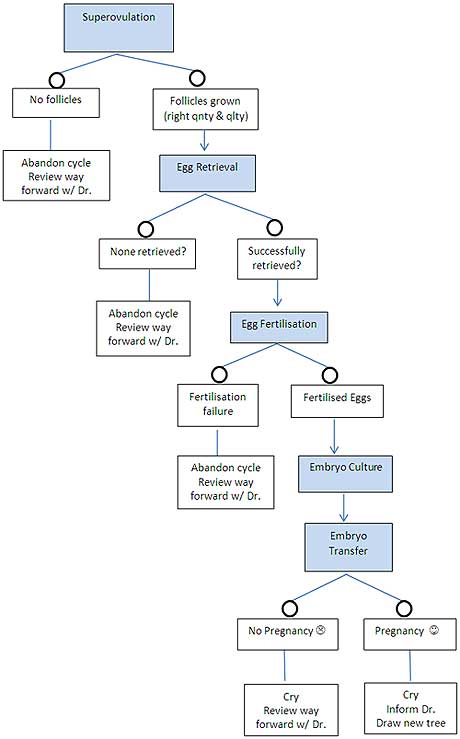
At Malpani Infertility Clinic, we believe in sharing the real story: the ups, the downs, and the honest truth about what you can control and what you cannot. We will help you map out your decision tree—identifying the key milestones, possible outcomes, and your plan for each. This way, even when the outcome is uncertain, you are never unprepared.
Below is an example of a decision tree that helped me and my partner prepare for both the best and worst outcomes at each stage. Planning does not remove the pain, but it can shorten it and help you recover faster.
If you want to talk to someone who truly understands, you can email me at Sueds78@yahoo.com. Or, if you want expert advice on your specific case, the doctors at Malpani Infertility Clinic are always ready to listen and guide you.
Frequently Asked Questions
Q: Does a failed IVF cycle mean I did something wrong?
A: No. IVF outcomes are influenced by many biological and medical factors beyond your control, such as egg and sperm quality, embryo development, and the timing of the transfer. Feeling disappointed is natural, but self-blame is not helpful or accurate.
Q: How soon can I try again after a failed IVF cycle?
A: Most doctors recommend waiting at least one or two menstrual cycles before starting another round. This allows your body to recover and gives you time to discuss possible adjustments with your fertility specialist.
Q: What should I ask my doctor after a failed cycle?
A: Ask about your ovarian response, egg and embryo quality, uterine lining, and whether any additional tests (like genetic screening or uterine evaluation) are recommended. Review what was successful and what could be changed next time.
Q: Are there ways to improve my chances in the next IVF cycle?
A: Yes. Based on your cycle review, your doctor may suggest changes in your medication protocol, lifestyle adjustments, or additional tests to improve outcomes. Sometimes, using donor eggs or sperm, or advanced embryo screening, can be considered.
Q: Is it normal to feel sad or angry after a failed IVF cycle?
A: Absolutely. Many people experience grief, anger, guilt, or numbness after a failed cycle. Reaching out for support—whether from friends, family, support groups, or professionals—can help you process these emotions and feel less alone.