

AMH Levels Explained: Normal Values, Results & AMH Conversion

You’re staring at your AMH test report, heart pounding, and wondering: what does this number mean for me? Will I ever have a baby? If you’re feeling anxious or lost, you’re not alone. Every day, women and couples walk into Malpani Infertility Clinic with the same fears and questions. The truth is, understanding your AMH levels is not about labels or doom—it’s about finding clarity, control, and real hope for your fertility future.
What Is AMH and Why Does It Matter?
AMH stands for Anti-Mullerian Hormone. It’s a hormone produced by the tiny cells in your ovarian follicles—the “sleeping” eggs waiting for their chance. Think of AMH as your ovaries’ way of sending a message about how many eggs they have left in reserve. The higher your AMH, the more eggs you likely have available; lower AMH means your egg supply is running lower than average for your age.
You might also hear AMH called MIS (Mullerian Inhibiting Substance)—don’t let the names confuse you. The important part is what this hormone can tell you about your fertility story today.
For a detailed, no-nonsense explanation, you can watch Dr. Malpani’s video on AMH levels here.
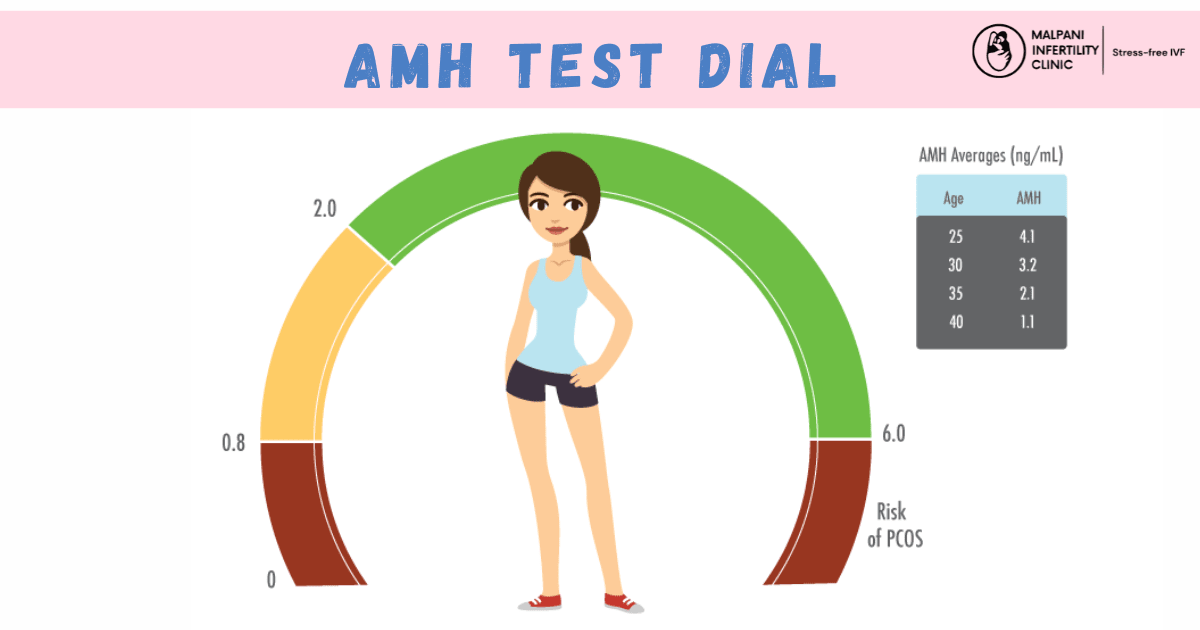
Normal AMH Levels by Age: What Do the Numbers Mean?
AMH levels naturally decline as you get older. This is normal, and it happens to everyone. But there’s no single “normal” number—your age, medical history, genetics, and even conditions like PCOD (polycystic ovarian disease) can all affect your result.
Healthy women under 38 with good ovarian function often have AMH levels between 2.0 and 6.8 ng/ml (14.28 - 48.55 pmol/L). But don’t get fixated on the exact number; remember, it’s a range, not a pass/fail test.
| Fertility Level | pmol/L Range | ng/mL Range |
|---|---|---|
| Optimal Fertility | 28.6 - 48.5 | 4.0 - 6.8 |
| Satisfactory Fertility | 15.7 - 28.6 | 2.2 - 4.0 |
| Low Fertility | 2.2 - 15.7 | 0.3 - 2.2 |
| Very Low | 0.0 - 2.2 | 0.0 - 0.3 |
| High Level | > 48.5 | > 6.8 |
High AMH levels are common in women with PCOD. And your AMH doesn’t swing up and down during your menstrual cycle, so this test can be done at any time.
AMH levels are stable throughout your cycle, so you can get tested whenever suits you best.
Why Should You Get an AMH Test?
If you’ve ever wondered whether you can wait a few more years to start your family, or if you’re struggling to conceive and want answers, the AMH test offers honest insight. But it’s more than just a number on a report. Here’s what AMH can help you understand:
- Planning Your Timeline: If you’re in your 30s or even late 20s and thinking about postponing pregnancy, AMH gives you a clearer idea of how much flexibility you have.
- Personalizing Treatment: For women considering IVF or other fertility treatments, AMH predicts how your ovaries might respond. High AMH often means more eggs can be retrieved; low AMH might call for a different approach.
- Detecting Ovarian Aging: Low AMH can reveal diminished ovarian reserve, sometimes before symptoms appear. This helps you make proactive decisions, rather than being caught off guard later.
- Diagnosing PCOD: Very high AMH can be a sign of PCOD, especially if you have irregular periods or other symptoms.
If you’re entering oopause (when your ovaries start slowing down), AMH levels drop sharply. This makes AMH a powerful early warning sign—sometimes before any obvious changes in your cycle.
AMH vs FSH: Which Test Tells You More?
For years, the Day 3 FSH test was the standard way to check ovarian reserve. But FSH has some major downsides:
- FSH changes depending on where you are in your cycle, making timing tricky.
- High estradiol can “mask” a problem, making abnormal FSH look deceptively normal.
- FSH can jump around from month to month—so results aren’t always consistent.
AMH is now the preferred test because:
- It’s stable all month long.
- You can do it on any day, no matter your cycle.
- It’s more reliable and consistent.
- It better predicts how your ovaries will respond to fertility medications.
Most fertility experts—especially at Malpani Infertility Clinic—rely on AMH for a reason: it gives you more control, fewer surprises, and a clearer path forward.
Understanding AMH Scales and Lab Reports
One source of confusion: you might see your AMH measured in ng/ml or pmol/l. Different labs use different units, but don’t let this trip you up.
- ng/ml (nanograms per milliliter): Scale typically runs from 0–10.
- pmol/L (picomoles per liter): Scale typically runs from 0–48.
When Should You Consider an AMH Test?
A common misconception is that regular periods mean all is well with your fertility. But ovulating regularly doesn’t always mean your egg quality or reserve is healthy.
You might benefit from AMH testing if you:
- Want to delay having children and need to understand your options
- Are planning IVF or other fertility treatments
- Have irregular periods, or suspect you have PCOD
- Want to explore egg freezing
- Are worried about your ovarian reserve due to age or family history
Getting your AMH checked is a simple blood test. No fasting, no special preparation—it’s straightforward, and you can get tested here.
What Do You Do With Your AMH Result?
Let’s be honest: seeing a “low” AMH can feel devastating. But don’t let a single number steal your hope.
- If Your AMH is Low: This usually means your egg reserve is lower than expected for your age. It doesn’t mean you can’t get pregnant. Many women with low AMH conceive naturally or with assistance. But it does mean your time window may be shorter, and acting sooner may be wise.
- If Your AMH is Normal: You have more time and flexibility, but remember, AMH changes as you age. Retesting every 12 months can help you keep track.
- If Your AMH is High: This often means good egg supply, but if it’s very high, it could point toward PCOD. Your doctor should consider your full history and symptoms.
AMH tells you about quantity, not quality. Your ability to get pregnant depends on many factors, not just one lab result.
At Malpani Infertility Clinic, we see women every day whose “numbers” didn’t look promising, but they still had healthy pregnancies. Others with “normal” AMH sometimes struggle. That’s why we look at your whole story, not just your test.
of women with low AMH can still conceive with the right guidance and personalized treatment.
AMH, Egg Quality, and Real Fertility: What Nobody Tells You
It’s easy to obsess over numbers, but here’s what clinics rarely say: AMH doesn’t measure egg quality. You could have a low AMH, but one excellent egg is all it takes. You could have a high AMH, but if the eggs are not healthy, pregnancy can still be a challenge.
Your best indicator of fertility is not just your test results, but your actual response to treatment, your age, and your overall health.
If your AMH is low, don’t chase “miracle” supplements or fad diets. There’s no proven way to increase your AMH. Focus on a healthy lifestyle, appropriate medical guidance, and honest conversations with your doctor. Sometimes, egg freezing or IVF with personalized protocols may be right for you—and sometimes, watchful waiting or natural conception is still possible.
At Malpani Infertility Clinic, we believe in arming you with the facts, not false promises. We prefer to explain what your options are, how each choice might impact your journey, and support you in making decisions that fit your life—not just your lab report.
Frequently Asked Questions
Q: Can I take an AMH test during my period?
A: Yes, you can take an AMH test on any day of your menstrual cycle, including during your period. Unlike FSH, AMH levels don’t fluctuate with your cycle.
Q: How long does it take to get AMH test results?
A: Most labs will have your AMH results ready in 2-3 business days. Some may take up to a week. Your doctor will help you understand what the results mean for you.
Q: Do I need to fast or prepare for the AMH test?
A: No preparation is required. You can eat, drink, and take your usual medicines. It’s a quick blood draw—nothing more.
Q: Will birth control pills affect my AMH levels?
A: Birth control pills may slightly lower AMH, but the difference is usually minor. Speak to your doctor if you’re concerned about timing your test.
Q: What should I do if my AMH levels are low?
A: Don’t panic. Low AMH means fewer eggs in reserve, but many women in this category conceive naturally or with help. It’s wise to discuss your options and timing with a fertility expert.
Q: Does a normal AMH mean I won’t have fertility problems?
A: Not necessarily. AMH only tells you about egg quantity, not quality or other fertility issues. It's one piece of the puzzle.
Q: Can AMH levels be improved?
A: There are no proven medical treatments that increase AMH. Healthy habits can support overall fertility, but the test reflects your egg reserve, not something you can “boost.”
Q: What if my AMH is high?
A: High AMH often means good ovarian reserve, but can also point to PCOD. Your doctor should consider your symptoms and other tests to interpret your situation accurately.