
Ovulation -- Normal and Abnormal. Anovulation.

When your period is late, again, or the pregnancy test shows one line after months of trying, it can feel like your body is letting you down. Maybe you have regular cycles but still wonder if you are really ovulating. Or perhaps your periods have become irregular and you are lost in a sea of online advice, not knowing what to trust. If you have ever felt frustrated, anxious, or even betrayed by your own cycle, you are not alone. Many couples face the silent struggle of understanding if and how ovulation happens, and what it means when things go off track.
What Happens During Normal Ovulation?
Every month, your body works behind the scenes in a delicate dance of hormones. Typically, one of your ovaries releases a single mature egg, a crucial event called ovulation. If you have regular periods, premenstrual tension, or even mild period pains, it usually means that your cycles are ovulatory. But what is really happening inside?
Eggs are stored in your ovaries in tiny sacs called follicles. Most of these follicles are dormant, holding immature eggs. At the start of each cycle, around 30-40 follicles begin to grow, but only one will mature and become ready for release. This dominant follicle, called a Graafian follicle, is like the star player making it to the finals.
Two key hormones from your brain, follicle stimulating hormone (FSH) and luteinizing hormone (LH), guide this process. When the time is right, a surge in LH triggers the follicle to burst open, releasing the egg. If all goes well, the now-empty follicle transforms into a structure called the corpus luteum, which produces progesterone to prepare your uterus for a possible pregnancy.
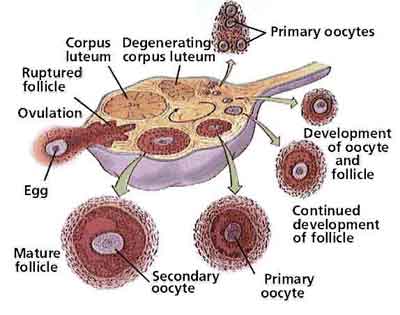 Fig 1. Schematic of the ovarian follicle during its development (clockwise)
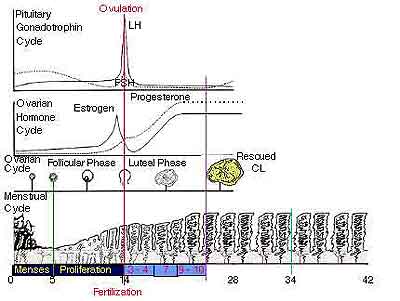 Fig 2. The hormonal changes which occur during a normal ovulatory cycle, if pregnancy occurs. The purple line marks the point when the embryo implants.
Most women with regular periods are, in fact, ovulating. However, any disruption in this hormonal chain can affect ovulation and result in issues such as missed periods (amenorrhoea), irregular cycles (oligomenorrhoea), or even shorter cycles if there is a problem with the second half of the cycle.
How Can You Tell If You Are Ovulating?
It's natural to wonder if your body is doing what it's supposed to. Here are some practical, patient-friendly ways to check for ovulation at home and in the clinic:
- Menstrual Cycle Tracking: Keep a calendar of your periods. Ovulation usually happens about 14 days before your next period. So if your cycle is 28 days, you likely ovulate around day 14. If your cycle is longer or shorter, adjust accordingly. If your period timing keeps changing, this could mean ovulation is not happening regularly.
- Physical Clues: Some women notice mild pain or discomfort on one side of the lower abdomen about halfway through their cycle, this is called mittelschmerz and can indicate ovulation. Others may spot slight vaginal bleeding or changes in mood.
- Cervical Mucus Monitoring: Just before ovulation, your cervical mucus becomes clear, stretchy, and slippery, like raw egg whites. After ovulation, it turns thick, sticky, and less abundant. Learning to recognize these changes can give you a good idea of when you are most fertile. You can learn more about this in our Chapter on The Cervical Factor.
Many women are surprised to learn that even with regular cycles, ovulation might not always occur. Trusting your body's signals is important, but confirming them with simple tracking can bring peace of mind.
Are Basal Body Temperature Charts Still Useful?
Basal body temperature (BBT) tracking was once a mainstay for women trying to detect ovulation. The principle is simple: after ovulation, your progesterone levels rise, causing your body temperature to go up slightly. By recording your temperature every morning before getting out of bed, you can see this shift and confirm that ovulation has happened.
But here is the honest truth: while BBT charts can confirm that ovulation occurred, they can't predict it. This means by the time you see the temperature rise, your fertile window has already closed. BBT charting can also be stressful and disruptive, having to remember to take your temperature at the same time each day, and letting a chart dictate your sex life, is not for everyone.
If you are curious about modern tracking tools, electronic fertility devices and software programs are now available that combine temperature data with cycle dates, making things simpler and less stressful.
Other Ways to Track Ovulation
Technology has made it easier to keep tabs on your fertility. Fertility software programs and apps can help you log symptoms, track cycles, and predict your fertile days. If you like a tech-based approach, these tools can be a great addition to your toolkit. You can also use our free online fertility calculator to estimate when you are likely to ovulate.
Beyond apps and trackers, there are medical tests that can help:
- Blood Tests for Progesterone: Measuring progesterone about seven days before your expected period (usually around day 21 in a 28-day cycle) can confirm if ovulation has occurred. A normal level (10-20 ng/ml) is a good sign your body is producing enough progesterone after the egg is released.
- Ultrasound Scans: Doctors can use ultrasounds to monitor your follicles and see exactly when an egg is about to be released. This can be reassuring and is especially helpful if you have irregular cycles or are undergoing fertility treatments.
Some older tests, like endometrial biopsy or D&C (dilatation and curettage), were once commonly used to check if ovulation was happening. Today, these procedures are rarely needed. An endometrial biopsy involves taking a small tissue sample from your uterus just before your period to see if progesterone has influenced the lining. While it can give clues about ovulation, it's uncomfortable and usually not necessary. D&C is even less helpful and can actually cause harm if done repeatedly.
Relying on outdated tests or procedures can do more harm than good. Ask your doctor about modern, evidence-based options for tracking ovulation.
When Ovulation Fails: Understanding Anovulation
Sometimes, the body simply does not release an egg during the cycle. This is called anovulation. It is more common than most people think and is a major cause of infertility. The signs can be subtle or obvious: irregular periods, cycles that are too long or too short, or even months without a period at all. Some women also notice no changes in cervical mucus, unexplainable mood swings, or ongoing struggles to get pregnant.
Causes of anovulation can include:
- Polycystic ovary syndrome (PCOS), a condition that disrupts hormone balance
- Thyroid disorders (overactive or underactive thyroid)
- Chronic stress or extreme emotional strain
- Over-exercising or being underweight
- Significant weight gain or obesity
- Approaching menopause (perimenopause)
- Certain medications (like steroids or hormonal treatments)
Identifying why you are not ovulating is the first step. At Malpani Infertility Clinic, we use a combination of menstrual history, blood tests (for hormones like FSH, LH, progesterone, thyroid), and ultrasound to find the root cause, never just guessing or offering a one-size-fits-all approach.
of female fertility problems are caused by anovulation.
What Should You Do If You Suspect a Problem?
If you have been trying to conceive for a year (or six months if you are over 35), or if your periods have become irregular or stopped altogether, it is time to seek expert advice. Do not let doubt, shame, or fear hold you back. There is nothing "wrong" with needing help, sometimes, your body just needs a gentle nudge or some extra support.
Most problems with ovulation can be managed or treated. Depending on your diagnosis, your doctor may suggest:
- Lifestyle changes (healthy eating, stress reduction, achieving a healthy weight)
- Medications to stimulate ovulation (such as clomiphene citrate or letrozole)
- Treatments for underlying conditions (like thyroid or hormone imbalances)
- Advanced fertility treatments (like IUI or IVF) if other options are not successful
At Malpani Infertility Clinic, we believe in honest, straightforward advice. We will never push unnecessary treatments or outdated tests. Instead, we focus on giving you clarity, support, and the best possible path forward, so you can make decisions with confidence, not confusion.
Frequently Asked Questions
Q: How do I know if I am ovulating?
A: Regular periods and premenstrual symptoms are good signs, but tracking your cycles, monitoring cervical mucus, and blood tests for progesterone can give you more certainty. If you are unsure, consult a fertility specialist for accurate testing.
Q: Is tracking basal body temperature worth it?
A: BBT tracking can show if ovulation happened, but it cannot predict it. Most experts, including us, believe it is outdated and often stressful.
Q: What causes irregular or missed periods?
A: Hormone imbalances, PCOS, thyroid problems, stress, weight changes, and certain medications can all disrupt ovulation and cause irregular cycles.
Q: What is anovulation and why does it matter?
A: Anovulation means your ovaries are not releasing eggs. It is a common cause of infertility and may also lead to long-term health issues if untreated.
Q: Are endometrial biopsies or D&C procedures necessary for infertility workup?
A: No. These are rarely needed today. Safer and more effective tests are available for assessing ovulation.
Q: Can ovulation problems be fixed?
A: Yes. Many causes of anovulation can be managed with lifestyle changes, medication, or fertility treatments. The right approach depends on your personal situation.
Q: When should I see a doctor about ovulation?
A: If your cycles are irregular, you have missed periods, or you have been trying to conceive without success, it is time to get professional guidance.