
A complete guide of Gamete Intrafallopian Transfer (GIFT) and zygote intrafallopian transfer (ZIFT) | Comparision with IVF treatment

You have probably heard about IVF and know someone who has been through it. But if you are struggling to conceive, and your doctor mentions GIFT or ZIFT, it can feel like stepping into a maze of medical terms and unfamiliar choices. Maybe you are wondering: Why would anyone pick GIFT or ZIFT instead of IVF? Are these still relevant today? Most of all, you just want to understand your options and what they mean for your hope of becoming a parent.
What is GIFT?
GIFT stands for gamete intrafallopian transfer. If you have heard of IVF, you might think of a lab mixing eggs and sperm, growing embryos, and then placing them in the womb. GIFT is different in one crucial way: instead of letting fertilization happen in a lab, both eggs and sperm are placed directly into one or both of your fallopian tubes. In essence, your body becomes the “lab” where fertilization happens, just like in natural conception.
To be eligible for GIFT, you need at least one healthy fallopian tube. This is why GIFT is suggested for women with unexplained infertility, mild endometriosis, or couples where male, cervical, or immune factors might be causing trouble. If there are any doubts about sperm quality, many doctors recommend proving that the sperm can fertilize the egg (either by previous pregnancies or a test IVF cycle) before considering GIFT.
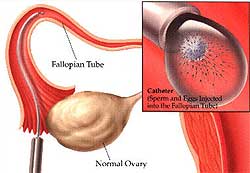 Fig 1. Eggs and sperm being transferred into the fallopian tube during a GIFT procedure
How Does GIFT Work?
The process of GIFT may sound daunting, but here is what really happens:
- Superovulation: You receive fertility medications to encourage your ovaries to produce multiple eggs, increasing your chances.
- Egg Collection: Eggs are collected, usually using a procedure called laparoscopy. This is a minor surgery where a thin camera is inserted to help the doctor see and collect the eggs safely.
- Insemination: The eggs are carefully checked for maturity, then placed with specially prepared sperm in small dishes. Sometimes, doctors let the sperm interact with the eggs for a few minutes before transferring them, so the sperm can start sticking to the egg’s outer layer, just like they would naturally.
- Gamete Transfer: Using a fine catheter, the mixture of eggs and sperm is gently placed into the fallopian tube. Usually, up to four eggs are transferred. The rest is up to nature: fertilization takes place within your body, and the embryo travels to the uterus on its own.
It is important to note that GIFT can only be performed if your fallopian tubes look healthy at the time of the procedure. If they do not, your doctor might recommend switching to IVF instead.
Many couples find comfort in knowing that fertilization happens within their own body during GIFT, which can feel more “natural” than IVF for some.
Comparing GIFT and IVF
You might be asking: Why would I choose GIFT over IVF, or vice versa? Here are the real differences:
- Fallopian Tubes: GIFT needs at least one healthy tube. IVF can work even if you have blocked or damaged tubes, or no tubes at all.
- Fertilization Location: In IVF, fertilization is watched closely in a lab. With GIFT, it happens inside you, and there is no direct way to know if it worked until you wait for a pregnancy test.
- Procedure: GIFT usually involves laparoscopy (a small surgery). IVF does not require this. Some centers have experimented with placing gametes through the cervix under ultrasound, but this is less common and not as effective.
- Success Rates: Many believe GIFT offers higher success, but this is often because patients selected for GIFT usually have healthier tubes and different fertility profiles. IVF success rates have steadily improved with new technology.
Another key difference: IVF provides certainty. Doctors can confirm that eggs and sperm have fertilized and can even select the best embryos for transfer. This is especially important in cases of unexplained infertility or male factor infertility, where seeing fertilization in the lab helps guide next steps.
GIFT was historically about twice as successful as early IVF for selected patients, but modern IVF success rates have significantly improved and often surpass GIFT in most clinics.
One of the reasons GIFT is less common today is that it requires an operating room and surgery. IVF, on the other hand, is less invasive, does not need a hospital stay, and lets you and your doctor see exactly what is happening at each step.
Variations: What is ZIFT?
You might hear your doctor mention ZIFT (zygote intrafallopian transfer), PROST (pronuclear stage transfer), or TET (tubal embryo transfer). These are all related to GIFT, but with a twist: fertilization happens in the lab, and then the early embryo is transferred into your fallopian tube, not the uterus.
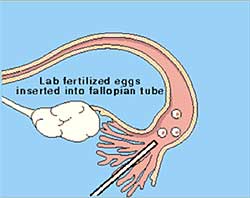 Fig 2. Embryos being transferred into the fallopian tube during a ZIFT procedure
Here is how ZIFT works: Eggs are collected and fertilized in the lab, just like IVF. Once the eggs and sperm join (the zygote stage, before cell division begins), the zygotes are placed into your fallopian tubes via laparoscopy. This way, you get the reassurance that fertilization has occurred, and the embryo still travels along the natural route to the womb.
TET is similar but involves transferring the embryo after it has divided into two or more cells. These methods can offer the best of both worlds: confirmation of fertilization in the lab, and the embryo’s journey through the tube as in natural conception.
However, these procedures are more complex, involve surgery, and can be more costly. Most modern clinics, including Malpani Infertility Clinic, have found that high-quality IVF techniques now offer excellent results with fewer risks and less physical stress for the patient.
Choosing the Right Treatment for You
Deciding between GIFT, ZIFT, and IVF is not just about numbers or techniques. It is about your unique medical situation, your comfort with each approach, and sometimes even your personal beliefs.
- If you have healthy tubes and want to avoid the idea of embryos in a lab, GIFT or ZIFT may be options. But prepare for surgery and less control over the process.
- If your tubes are blocked or damaged, IVF is usually your best path.
- If you want the reassurance of seeing fertilization and the ability to select the best embryos, IVF offers this transparency.
At Malpani Infertility Clinic, our approach is simple: we help you understand all your options, the real pros and cons, and support you in choosing what feels right for you. We are not here to push you into one protocol over another. Instead, we give you the honest advice and detailed explanations that most clinics skip, so you can make decisions with confidence.
If you are feeling overwhelmed or unsure after hearing about all these options, you are not alone. Many couples come to us after feeling lost in a sea of jargon or pressured into procedures they do not fully understand. We believe that informed patients make the best choices for themselves and their families.
Frequently Asked Questions
Q: Who is a good candidate for GIFT?
A: GIFT is most suitable for women with at least one healthy fallopian tube and couples who have unexplained infertility, mild endometriosis, or certain types of male factor infertility (when sperm can fertilize eggs naturally).
Q: How is GIFT different from IVF?
A: In GIFT, eggs and sperm are placed directly into the fallopian tube so fertilization occurs inside the body. In IVF, fertilization happens in a lab dish, and then embryos are placed in the uterus.
Q: What are the main risks with GIFT?
A: GIFT requires surgery (laparoscopy), which has risks like infection or bleeding. There is also no way to confirm fertilization has happened until a pregnancy test is done.
Q: Is ZIFT better than GIFT or IVF?
A: ZIFT combines lab fertilization with tubal embryo transfer, but it is rarely used today because IVF offers similar or better success with less invasiveness and more control over the process.
Q: Why are GIFT and ZIFT less common now?
A: Advances in IVF technology have made it safer, more effective, and less invasive. IVF now offers higher success rates and more transparency, so most clinics have shifted away from GIFT and ZIFT.
Q: Can I choose which procedure is best for me?
A: Yes. The best approach depends on your medical history, test results, and personal preferences. A fertility specialist at Malpani Infertility Clinic can guide you through your choices with honest, personalized advice.