
PGD - Preimplantation Genetic Diagnosis The Newest ART
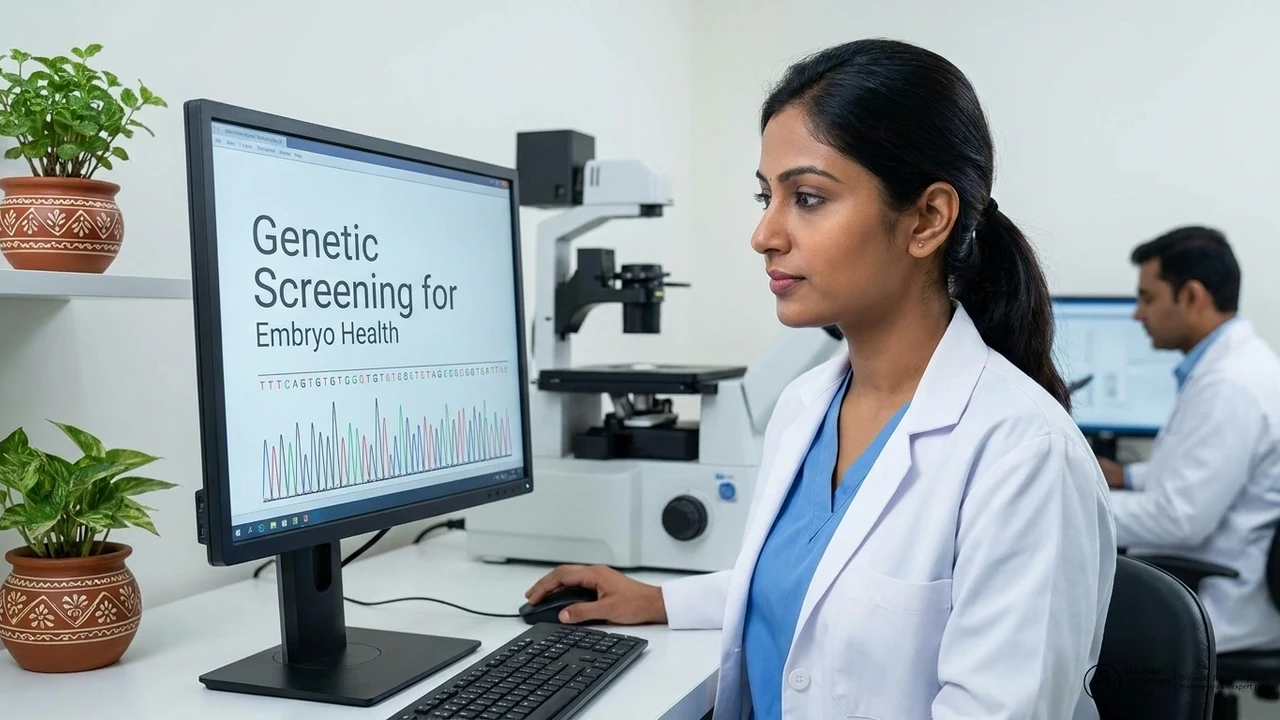
Maybe you have always dreamed of holding your own healthy baby, but there is a cloud of worry hanging over every attempt. Perhaps you or your partner carry a genetic condition, and each cycle, each test, each two-week wait feels like a roll of the dice. The fear of passing on a serious disease, or facing another heartbreak, can be overwhelming. If this sounds familiar, you are not alone, and you do not have to face these decisions in the dark. Preimplantation genetic diagnosis (PGD) empowers families like yours to make informed choices, so you can move forward with more clarity and less fear.
What is PGD?
PGD, short for preimplantation genetic diagnosis, is a remarkable technique that merges the latest advances in genetics and IVF. In simple terms, PGD allows doctors to test embryos for specific genetic diseases before pregnancy is established. The goal: help parents who are at risk of passing on serious conditions have the chance to conceive a healthy child, without facing the agonizing decision of pregnancy termination later on.
For couples with known genetic risks, such as cystic fibrosis, thalassemia, or X-linked diseases, the uncertainty can be all-consuming. Traditional prenatal tests like amniocentesis only offer answers after pregnancy is underway, creating an emotional and ethical minefield. PGD changes this by giving clear answers before an embryo is even transferred.
If you have a family history of genetic illness, PGD lets you break the cycle and protect your future child right from the start.
Imagine a woman who carries a gene for an X-linked disorder. Every pregnancy brings a 50 percent risk that her son will be affected, and her daughter may be a carrier. With PGD, she can confidently choose only unaffected embryos for transfer, removing the heavy burden of uncertainty and impossible choices.
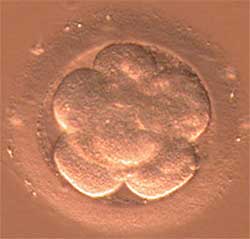 Fig 1. 8-cell embryo, ready for embryo biopsy. One single cell will be removed and sent for genetic testing
PGD has opened doors for families worldwide, helping prevent diseases like:
- Cystic fibrosis
- Duchenne muscular dystrophy
- Tay-Sachs disease
- Thalassemia
- Sickle cell anemia
- Haemophilia A
- Fragile X syndrome
- And many others
How is PGD done?
PGD is performed as part of an IVF cycle. After eggs are fertilized in the lab, embryos are carefully monitored as they grow for a few days. At just the right stage, usually day 5, when the embryo becomes a blastocyst, our skilled embryologists remove a few cells from the part of the embryo that would form the placenta. This biopsy is a delicate procedure that does not harm the embryo’s potential to develop.
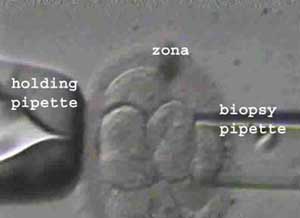 Fig 2. Embryo biopsy, with a single blastomere being sucked out from the 8-cell embryo. This will be sent for analysis.
The removed cells are then sent for genetic analysis using advanced techniques such as:
- FISH: Fluorescent probes highlight specific chromosomes to spot abnormalities.
- PCR: Amplifies DNA to detect mutations in genes linked to inherited disorders.
- Array CGH and NGS: High-tech methods that scan all chromosomes for gains or losses, offering even greater accuracy.
While this may sound technical, the real-world result is simple: by the time it is time to decide which embryos to transfer, you know which are unaffected and safe to use. Only these embryos are placed into the uterus, giving you the best chance for a healthy pregnancy from the very start.
Who should consider PGD?
PGD is not for every couple. It is most helpful for people who:
- Are carriers of a known single-gene disorder (like thalassemia or cystic fibrosis)
- Have a family history of chromosomal problems
- Have had repeated miscarriages linked to genetic factors
- Previously had a child with a serious inherited disease
- Are at risk for X-linked diseases, wanting to avoid affected male offspring
Some couples also wish to use PGD for family balancing by selecting the sex of their child. While technically possible, this raises complex ethical questions and should only be considered after thorough discussion with your fertility specialist.
Can PGD increase IVF success rates?
Many clinics began offering a related test, called PGS or PGT-A, to screen for general chromosomal errors in embryos, especially for older women whose eggs are more likely to carry such problems. The hope was that by transferring only chromosomally normal embryos, pregnancy rates would improve. Unfortunately, real-world data shows that this is not always the case.
In fact, PGS has sometimes been found to actually reduce overall pregnancy chances. This is an uncomfortable truth that many clinics gloss over, but at Malpani Infertility Clinic, we believe in honest conversations, even when the answers are not easy.
PGD testing can reduce the risk of miscarriage and increase live birth rates in women over 37, according to some studies.
That said, for couples with specific, known genetic risks, the benefits of PGD are clear. You avoid the trauma of a pregnancy affected by a serious disease, and you can move forward with greater peace of mind.
Controversies and emotional considerations
PGD is not just a medical technique, it is a deeply emotional choice. Some people feel uneasy about testing embryos, fearing it is unnatural or “playing God.” Others worry about the slippery slope of genetic selection. These are not trivial concerns, and every couple needs space to explore their own beliefs and boundaries.
But consider this: medicine has always been about reducing suffering and improving lives. If we can prevent a child from being born with a painful, life-shortening disease, and spare families the anguish that comes with that, should we not use every tool available to us?
The decision to use PGD is personal and sometimes difficult, but knowing your options can turn fear into hope.
At Malpani Infertility Clinic, we do not push you into decisions. Instead, we walk you through the science, the possibilities, and the limits, openly and honestly. We are here to answer your questions, share the real numbers, and help you make the best decision for your unique family.
Frequently Asked Questions
Q: Can PGD test for all genetic diseases?
A: No. PGD is designed to look for specific, known genetic conditions. Your doctor needs to know your family history and the exact disorder to set up the test. It cannot scan for every possible genetic problem.
Q: Does PGD guarantee a healthy baby?
A: PGD greatly reduces the risk of certain diseases, but no test can promise a perfect outcome. There is always a small chance of genetic changes that were not tested for or that occur spontaneously.
Q: Is the embryo harmed by the biopsy?
A: When performed by experienced specialists, embryo biopsy is safe and does not reduce the embryo’s potential to develop. Advances like day 5 trophectoderm biopsy further minimize any risk.
Q: What happens if all embryos are affected?
A: Sometimes, PGD reveals that none of the embryos are suitable for transfer. While heartbreaking, this knowledge prevents a much harder decision later. Your doctor can help you explore your next steps, such as trying again or considering other options.
Q: How do I know if PGD is right for me?
A: Start by sharing your family and medical history with your fertility specialist. If you are at risk for certain genetic diseases, discussing PGD is a wise next step. At Malpani Infertility Clinic, we offer in-depth consultations to help you decide.
Q: Is PGD the same as PGS or PGT-A?
A: No. PGD is used for detecting specific gene mutations, while PGS/PGT-A checks for general chromosomal abnormalities. They serve different purposes but can sometimes be combined in an IVF cycle.
Q: What are the ethical concerns with PGD?
A: Some people worry about the implications of embryo selection. It’s important to talk openly about your values and concerns with your doctor to make the decision that feels right to you.