
How Babies are Made - The Basics of Human Fertility and Reproduction

Does it sometimes feel like everyone else is having babies so easily while you are left struggling to even make sense of how your own body works? You are not alone. Most of us grew up learning the basics in school: sperm meets egg, baby is made. But when you are facing fertility questions or challenges, those simple diagrams and textbook definitions suddenly feel frustratingly inadequate. Understanding your own body can be the first real step toward feeling reassured, in control, and hopeful about your options. Let us walk through the real basics together, with no embarrassment and no judgments, just facts, support, and the clarity you deserve.
Understanding the Female Reproductive System
If you are struggling to conceive, you might find yourself thinking, “What is wrong with my body?” or “Am I missing something basic?” The truth is, the female reproductive system is beautifully complex, and even small misunderstandings can lead to a lot of unnecessary worry.
On the outside, women have the external genitals, the vulva. This area has three distinct openings:
- The urethra, where urine passes out
- The vaginal opening, which is the entrance to the reproductive tract
- The anus, for bowel movements
The vulva itself includes some sensitive and important structures: the outer lips (labia majora), the inner lips (labia minora), and the clitoris. The clitoris is a small, pea-shaped organ packed with nerve endings. Its sole purpose is sexual pleasure, and it is covered by a protective hood of skin. Just as the penis is important for male sexual pleasure, the clitoris plays a key role for women.
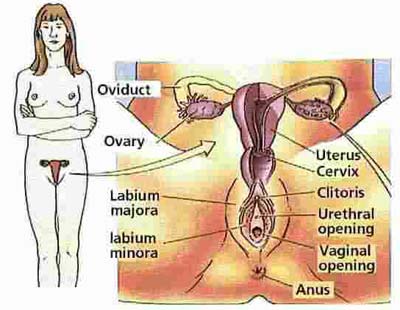
Figure 1. Female external genitalia
Moving inside, the vagina is a soft, muscular tunnel connecting the outside world to the uterus. It can stretch to accommodate a tampon, a penis, or even a baby’s head during birth. At the far end of the vagina is the cervix, which acts as a gatekeeper for the uterus.
The uterus (or womb) sits deep in the pelvis, just behind the bladder. It is about the size and shape of a small pear, and its muscular walls are lined with the endometrium, a rich, nourishing layer where a fertilized egg can implant and grow into a baby.
The cervix itself contains special mucus-producing glands. At certain times of the month, this mucus changes in texture to help sperm swim up from the vagina into the uterus, making conception possible.
On either side of the uterus are the fallopian tubes, each about the width of a piece of spaghetti. They act like conveyor belts, lined with tiny hairs (cilia) that gently move the egg along. The ends of the tubes are close to the ovaries, two almond-sized organs that store and release eggs.
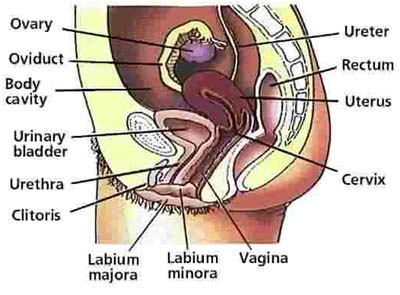
Figure 2. The female reproductive system
Each ovary holds a lifetime’s supply of eggs (about 2 million before birth, dropping to 300,000 by the time a girl is born). Every month, during ovulation, one follicle matures and releases its egg, which is then “caught” by the fallopian tube. This is the egg’s one chance each month to meet a sperm and start a pregnancy.
The Menstrual Cycle and Fertility
If you have struggled with irregular periods, heavy flow, or just confusion about what your cycle means for fertility, you are not alone. Many women come to Malpani Infertility Clinic worried that every little change in their period is a sign something is wrong. Here is what actually happens each month, and why most variations are nothing to panic about.
The menstrual cycle is counted from the first day of one period to the first day of the next. Most women have cycles ranging from 28 to 35 days, but anywhere from three to six weeks can still be normal. During this cycle, hormones (mainly estrogen and progesterone) trigger the lining of your uterus to thicken and prepare for a possible pregnancy.
If an egg is fertilized by sperm after ovulation, it travels to the uterus and implants in this lush lining, starting a pregnancy. If not, the lining is shed as your period, along with blood from tiny blood vessels and the unfertilized egg itself.
- Heavier periods can sometimes include clots or larger fragments of tissue. This is just the uterine lining coming away and is not a sign of miscarriage or illness in most cases.
- Changes in color, amount, or timing of your flow are usually normal, especially if your cycle is generally regular.
Many women worry their period is too light, too dark, or not “normal.” In most cases, these variations have no impact on your ability to get pregnant.
It’s easy to become obsessed with every period detail when you want a baby. But unless your doctor tells you otherwise, small differences in your period are almost never a sign of infertility.
Eggs, Sperm, and the Real Story of Fertility
School biology lessons often skip past the fact that not every egg or sperm is perfect. In reality, both quality and timing matter. Here is what really needs to happen for a baby to be made:
- The ovary releases one mature egg each cycle (ovulation).
- The egg must be picked up by a fallopian tube and meet healthy sperm.
- Fertilization happens inside the fallopian tube, not in the uterus.
- The fertilized egg must travel to the uterus and successfully implant in the lining.
If any step is disrupted, blocked tubes, poor egg or sperm quality, or hormonal imbalances, pregnancy may not occur, even if your periods seem “normal.”
Why This Knowledge Matters for Fertility Decisions
When you understand your own body, you can ask better questions, spot warning signs, and avoid unnecessary anxiety. At Malpani Infertility Clinic, we see every day how empowering knowledge can be for couples, especially when they have faced confusion, stigma, or years of trying without answers.
Instead of guessing or blaming yourself, you can focus on what you can do next. If you are struggling to conceive, here are some steps to consider:
- Track your cycles: Note your period dates, symptoms, and any irregularities. Bring this information to your doctor.
- Learn about ovulation: Ovulation predictor kits or simple temperature tracking can help confirm if you are releasing eggs.
- Test for common issues: Sometimes simple blood tests, ultrasounds, or semen analysis reveal answers.
- Ask for straightforward explanations: If something is unclear, ask your doctor to break it down in simple terms. A good clinic will always help you understand your options.
At Malpani Infertility Clinic, our team believes in honest, clear guidance. We know that fertility struggles can feel isolating and overwhelming, but you do not have to figure it all out alone. Whether you are just starting to try or have faced years of disappointment, we are here to answer your questions, explain the process, and help you make the best decisions for your future family.
Frequently Asked Questions
Q: Do changes in my period mean I am infertile?
A: No. Most changes in period flow, color, or timing are normal and do not indicate infertility. If your cycle is very irregular or you miss periods for several months, it is worth checking with your doctor.
Q: How many eggs am I born with, and can I make more?
A: Women are born with all the eggs they will ever have, about 2 million. This number drops over time, and no new eggs are produced after birth. Each month, one egg matures and is released during ovulation.
Q: Where does fertilization actually happen?
A: Fertilization occurs inside one of the fallopian tubes, not the uterus. The fertilized egg then travels to the uterus to implant and begin pregnancy.
Q: Can heavy periods or clots affect my chances of getting pregnant?
A: Usually, heavy periods or clots are caused by the shedding of the uterine lining and are not linked to infertility. Very heavy bleeding or pain should be discussed with a doctor, but most variations in flow are not concerning.
Q: What is the most important factor for conception each month?
A: Ovulation is key. A mature egg must be released and meet healthy sperm at the right time. Tracking ovulation can help increase your chances of conception.