
Adoption - Yours by Choice
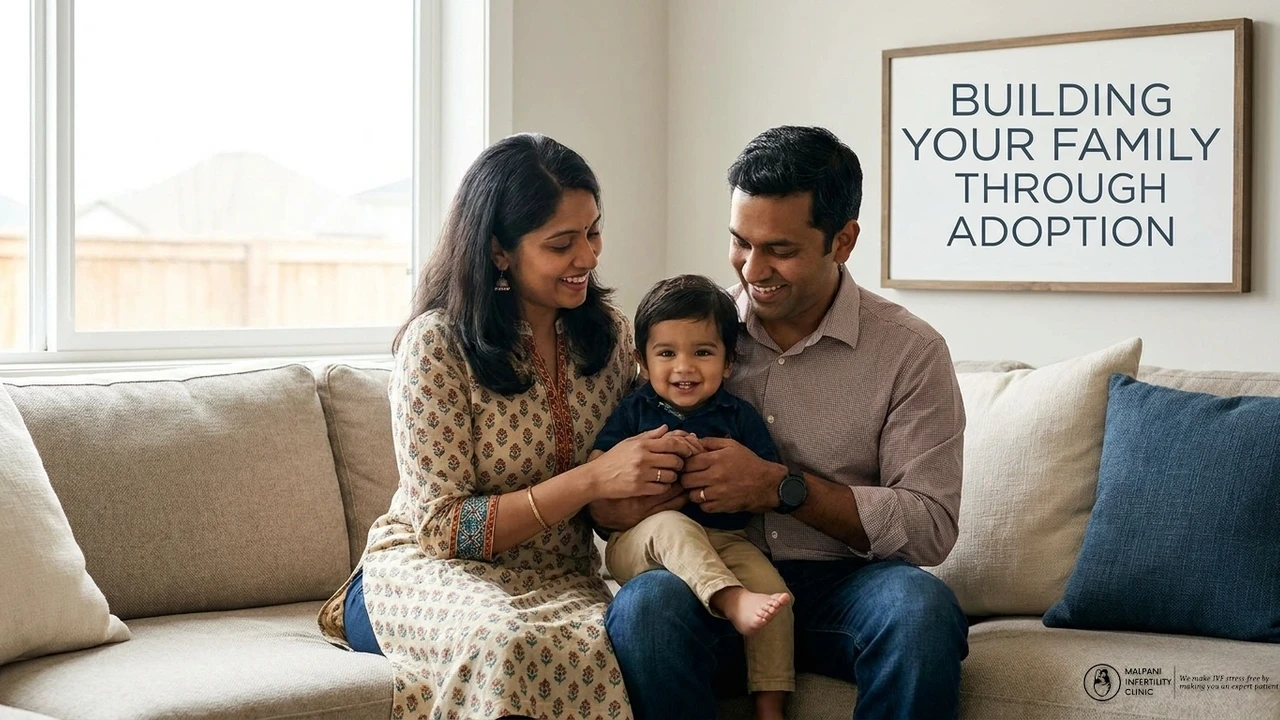
Have you found yourself lying awake at night asking why the path to parenthood has to be so hard? Maybe you have tried every treatment, counted every day of your cycle, and yet, the dream of holding your own child in your arms still feels distant. You are not alone if you have wondered whether adoption could be your answer, but are flooded with doubts, fears, and the weight of what others might say. This is the reality for countless couples who come to Malpani Infertility Clinic: real people, with real pain, searching for real options.
When should you consider adoption?
What is involved in the adoption process?
When is adoption not the right answer?
What are some of the myths about adoption?
Is Adoption Right for You?
You do not have to be a saint or an unbreakable optimist to think about adoption. You just need honesty with yourself and your partner. The decision often begins quietly, perhaps after another negative pregnancy test, or after a conversation that leaves you feeling more tired than hopeful. Sometimes, the thought of adoption first arises as a backup plan. That is completely normal.
Many couples wonder if they can truly love an adopted child as their own. This is a deeply personal fear, and it is okay to admit it.
Here are the kinds of questions and worries we hear all the time:
- Will we bond with an adopted child the same way?
- Are adopted children troubled or rejected by their birth families?
- How will our own parents or relatives react?
- What if our child wants to find their birth parents someday?
- After the struggle of infertility, do we have the strength for adoption's own hurdles?
- Will society or our community ever fully accept our family?
These doubts are not signs of weakness. They are part of a healthy process. As you move through your grief about infertility, you may find these questions slowly lose their sting. Many couples tell us that once they allow themselves to truly grieve the loss of a biological child, they begin to see adoption not as a consolation prize but as a real, joyful path to parenthood.
In fact, families built through adoption experience the same love, joys, and daily ups and downs as any other family. The process is different, but the bonds are just as real. You will face some unique questions, yes, especially as your child grows up and wants to understand their story. But being prepared and open about adoption from the start can create a foundation of trust and love.
It is important to be gentle with yourself. Adoption will not erase all the pain of infertility. It is not a cure for the sadness of being unable to conceive, but it is a powerful way to heal the ache of childlessness and to find new hope.
Understanding the Adoption Process
Adoption is not as simple as signing a form and taking a child home. It is a journey that comes with paperwork, interviews, emotional highs and lows, and, yes, waiting. The process is designed to protect both you and the child: to make sure that families and children are matched in a way that gives everyone the best chance to thrive.
Requirements can vary between agencies, but most have a few core criteria:
- The age gap between you and the child is usually less than 40 years.
- Couples should often have been married for at least five years, to show relationship stability.
- You will need to prove a steady income and good health.
- Major illnesses that could shorten your lifespan may be a concern.
The first step is usually contacting adoption agencies to understand their requirements and waiting lists. It is a good idea to do this early, even if you are still undergoing fertility treatment. Some agencies set an upper age limit for adoptive parents, particularly for infant adoptions, so planning ahead gives you more options.
Once your application is accepted, you will go through a series of interviews, both as a couple and individually. You will be asked for references from family, friends, or employers. A social worker will visit your home to ensure it is a safe, loving environment, this is called a home study. This part can feel invasive but is there to ensure the child’s wellbeing.
After the home study, you will wait to be matched with a child. When a child is identified, you get to decide whether you feel ready to accept this child into your family. After placement, there is a supervisory period (which might last several months), before the legal adoption is finalized. Through each step, a trained medical social worker guides you, explaining every step and supporting you emotionally.
Costs vary depending on the type of adoption and the agency. Always ask for a clear breakdown of fees and expected expenses before you begin.
Most adoptions in India are "closed" adoptions, which means there is little or no contact between birth and adoptive parents, and only minimal information about the child's origins is shared. Agencies keep these records private to help families settle without confusion or interference.
Reliable information and support are essential. A good starting point is the CARA website, the government body that regulates adoption in India. You might also find helpful insights in Nilima Mehta's book Ours By Choice. For couples who are open to different paths, donor embryo IVF (embryo adoption) is another meaningful option.
When Adoption Might Not Be Right
There is a lot of pressure on infertile couples to "just adopt", from friends, relatives, or even strangers. Some people mean well, but nobody else lives with your feelings day in and day out. Adoption is a lifelong commitment, and it is okay if you are not ready, or if the idea feels wrong to you right now.
If you are still struggling to accept your infertility, fantasising about a biological child, or feel you would want to keep your child’s adoption a secret, it may help to pause. You do not have to rush this decision. Adoption will not magically fix a marriage, nor is it a way to guarantee someone will look after you in old age. If you are uncertain, it is better to wait and seek support. At Malpani Infertility Clinic, we encourage honest conversations, never pushing you to make a decision you are not comfortable with. Sometimes, talking to a counsellor or another adoptive family can help clarify your feelings.
Common Myths and Honest Facts
Adoption is surrounded by myths that can make the decision even harder. Let us clear up a few:
- Myth: If you love your child enough, they will never wonder about their birth parents.
Fact: Almost all adopted children will be curious about their origins. This is perfectly normal and not a reflection on your parenting. - Myth: Adopted children are better off not knowing they are adopted.
Fact: Children almost always find out, and secrecy can damage trust. Honest, age-appropriate conversations build stronger self-esteem. - Myth: Adopting is exactly the same as having a biological child.
Fact: There are differences. Adopted children will have unique questions at different ages, but love and belonging are just as real. - Myth: Adoptive parents make better parents because they want a child so much.
Fact: Wanting a child deeply does not guarantee perfect parenting. All families have good days and bad days. - Myth: Once you adopt, your infertility pain will disappear.
Fact: Adoption can fill the emptiness of childlessness, but it does not erase all feelings about infertility. - Myth: You must exhaust all fertility treatments before considering adoption.
Fact: There is no single "right time" to start exploring adoption. Many couples consider both paths in parallel. - Myth: Adoption is nearly impossible or takes forever.
Fact: The process can be long, but with the right guidance, most couples who commit to adoption succeed. - Myth: Adoption is a "better" choice than fertility treatments because of overpopulation.
Fact: Only you and your partner can decide what is right for your family. Adoption is a very personal decision, not a duty you owe to society.
At Malpani Infertility Clinic, we believe in supporting you to make the best, most informed decisions for your unique journey. We are here to answer the tough questions, to help you separate fact from fiction, and to guide you without judgment.
Frequently Asked Questions
Q: Can I consider adoption while still trying fertility treatments?
A: Yes, many couples explore both options simultaneously. Looking into adoption does not mean giving up on other possibilities. It is about gathering information so you can make the best choice for your family.
Q: How long does the adoption process usually take?
A: The timeline varies depending on the agency, the type of child you wish to adopt, and your circumstances. Some adoptions take a few months, while others can take over a year. Early planning helps.
Q: Will my adopted child want to find their birth parents?
A: Many adopted children become curious about their origins as they grow up. This is normal and does not mean they love you any less.
Q: Is it difficult to adopt in India?
A: While the process can feel overwhelming, most couples who are committed and meet the requirements are able to adopt. The CARA website is a reliable resource for guidance.
Q: Will adoption heal my feelings about infertility?
A: Adoption can bring joy and fulfillment, but it does not erase all the pain of infertility. Many couples continue to process their feelings even after building their family through adoption.
Q: What if my family or friends do not accept my adopted child?
A: Some relatives may need time to adjust, but many families find that love grows naturally. Open conversations and involving them in the process can help.
Q: Is there an age limit for adoptive parents?
A: Most agencies prefer the parent-child age gap to be less than 40 years, especially for infant adoptions. Check specific agency requirements early.
Q: What support is available during the adoption process?
A: Agencies provide trained social workers who guide you through interviews, paperwork, and emotional challenges. At Malpani Infertility Clinic, we also offer counseling and honest advice to help you make confident decisions.