
Infertility Glossary of Medical Terms
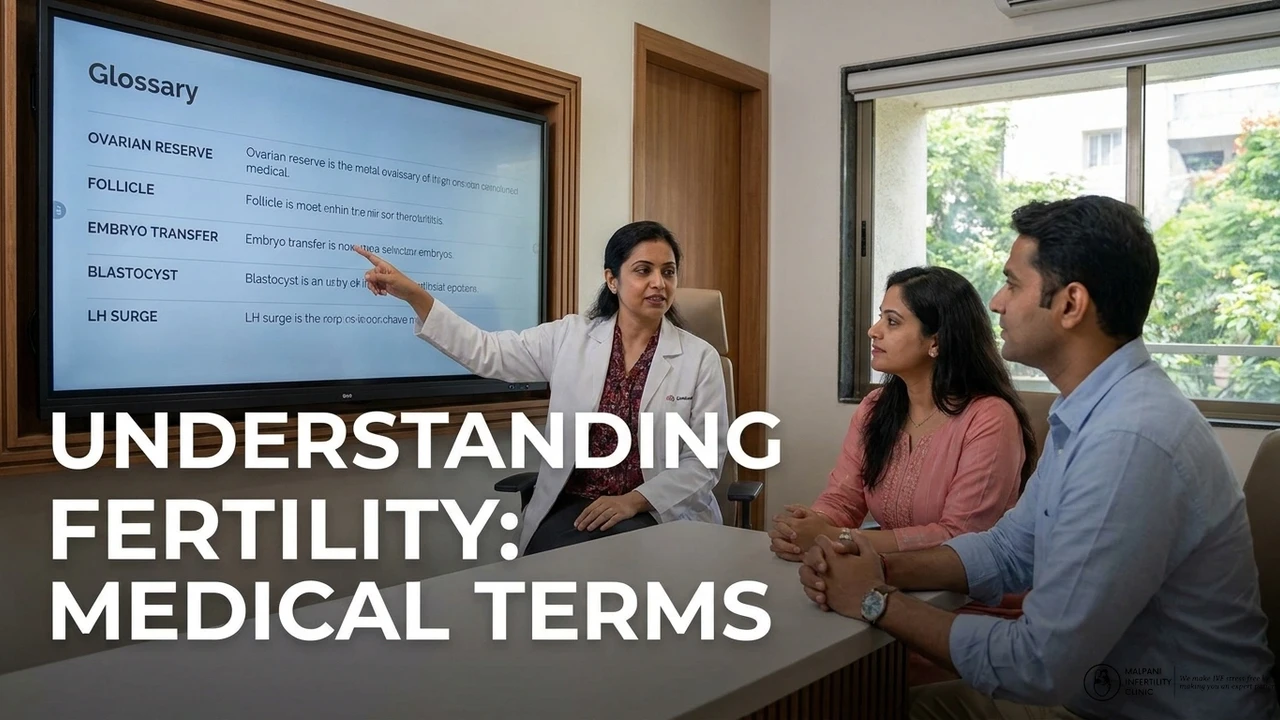
Ever find yourself lost in a sea of medical words and confusing abbreviations that everyone else seems to understand? If you are struggling with infertility, these terms can feel like yet another barrier between you and the answers you desperately seek. You are not alone in feeling overwhelmed or even frustrated by the “infertility language.” At Malpani Infertility Clinic, we believe you deserve clear, honest explanations about what these words mean, and how they might affect you.
Why Fertility Terms Matter to Real People
Infertility is already a deeply personal and emotional journey. Being bombarded by unfamiliar terms, whether in doctor’s offices, online forums, or lab reports, can make it feel even more isolating. Many couples tell us they are scared to ask questions, worried about “sounding stupid,” or simply too exhausted to keep up.
This glossary isn’t just a dictionary. Each explanation is designed for people who want to make sense of their journey, whether you are just starting to wonder about your fertility or you have been through multiple treatments. When you know what words mean, you can ask smarter questions, understand your options, and feel more in control of your next steps.
Decoding Fertility Medical Terms: What They Really Mean for You
Below, we break down the most common infertility and reproductive health terms you will hear during your journey. These aren’t just textbook definitions, they are real explanations for real people, meant to help you feel less alone and more informed.
- Abortion (Miscarriage): The medical word for losing a pregnancy before 20 weeks. There are different types, including:
- Complete abortion: All pregnancy tissue has left the womb, and the cervix is closed.
- Habitual abortion: Two or more miscarriages on separate occasions.
- Incomplete abortion: Some pregnancy tissue remains, often requiring a gentle surgery (D&C) to clean the womb.
- Induced abortion: When a pregnancy is deliberately ended.
- Inevitable abortion: A miscarriage that is already in progress and cannot be stopped.
- Missed abortion: The fetus has died, but the tissue remains in the uterus for several weeks.
- Selective abortion: Ending one or more pregnancies in a case of multiples (like triplets) to improve the chance for the remaining fetus(es).
- Spontaneous abortion: Another term for a miscarriage that happens naturally.
- Therapeutic abortion: Ending a pregnancy to protect the mother's health.
- Threatened abortion: Bleeding or pain in early pregnancy that might, but does not always, lead to miscarriage.
- Adhesion: Scar tissue that sticks organs or tissues together inside the body, sometimes blocking the fallopian tubes or disrupting normal function.
- Amenorrhea: Not having periods, which can mean your body isn’t ovulating.
- Anovulation: When your ovaries do not release eggs, even if you are having periods.
- Artificial Insemination (AI): Placing sperm directly into the uterus or cervix. If using donor sperm, it’s called AID; if using your partner’s, it’s AIH.
- Basal Body Temperature (BBT): Your body’s resting temperature, taken first thing in the morning. A rise can show when you ovulate.
- Cervix: The lower part of the uterus that opens into the vagina. Its position and mucus change during your cycle.
- Clomiphene Citrate: A medicine to help women ovulate by stimulating hormones. Often the first step if you’re not ovulating regularly.
- Endometriosis: A condition where tissue normally lining the uterus grows elsewhere, causing pain and fertility problems.
- FSH (Follicle Stimulating Hormone): A hormone that signals your ovaries to grow eggs. Blood tests can check if your levels are normal for your age.
- ICSI (Intracytoplasmic Sperm Injection): A lab technique where a single sperm is injected into an egg during IVF to help with fertilization, especially if sperm quality is low.
- IUI (Intrauterine Insemination): A fertility treatment where washed sperm are placed directly in the uterus at the best time in your cycle.
- IVF (In Vitro Fertilization): Taking eggs from the ovaries, fertilizing them outside the body in the lab, and placing the resulting embryo back in the uterus.
- Laparoscopy: A minimally invasive surgery using a thin camera to see inside your pelvis. Often used to diagnose or treat endometriosis or adhesions.
- Oligospermia: Low sperm count, which can make conception harder.
- Ovulation: When the ovary releases an egg. Tracking this is vital for timing intercourse or treatments.
- PCOS (Polycystic Ovary Syndrome): A hormonal condition causing irregular periods, cysts on the ovaries, and sometimes excess hair or acne. It is a leading cause of infertility.
- Semen Analysis: A test to measure sperm count, movement, and shape. A crucial first step for evaluating male fertility.
- Ultrasound (Sonography): A safe, painless scan that lets doctors see your uterus, ovaries, and developing follicles. Used to track ovulation and monitor early pregnancy.
- Unexplained Infertility: When all test results are normal but pregnancy still does not happen. This can be especially frustrating, but options exist.
Most couples feel overwhelmed by all the medical words, remember, every question is valid and you deserve clear answers.
Common Infertility Acronyms and Online Abbreviations
Online forums and support groups offer comfort, but their “alphabet soup” can be confusing. Here are some of the most common fertility acronyms and what they mean in plain language:
- 2WW: The “two week wait” between ovulation/treatment and finding out if you are pregnant.
- AF: “Aunt Flo”, slang for your period.
- BBT: Basal Body Temperature, tracking this can show when you ovulate.
- BD: “Baby dancing”, having sex to try for a baby.
- BFN/BFP: “Big fat negative/positive”, refers to the results of a pregnancy test.
- CD: Cycle Day, the day of your menstrual cycle (CD1 is the first day of your period).
- DPO: Days Past Ovulation, how many days since you ovulated.
- FSH/LH: Key hormones involved in egg production and ovulation.
- HSG: Hysterosalpingogram, a special X-ray to check if your fallopian tubes are open.
- IUI/IVF/ICSI: See above.
- OPK: Ovulation Predictor Kit, helps you identify your fertile window.
- PCOS: Polycystic Ovary Syndrome.
- RE: Reproductive Endocrinologist, a fertility specialist like Dr. Malpani.
- TTC: Trying To Conceive.
For a more detailed list and explanations, you can also refer to this helpful Infertility Lingo Guide.
What Nobody Tells You: The Emotional Side of Medical Jargon
It is normal to feel lost, intimidated, or even angry when you first encounter this maze of medical language. Many couples tell us they felt “stupid” for not knowing what their doctor was talking about. If this sounds like you, please know: the problem is not you. The problem is that medical jargon does not always consider the feelings and vulnerability of the people it affects.
At Malpani Infertility Clinic, we believe in clear, honest conversations. We want you to understand every word in your reports, every option you’re given, and every step you take. Our doctors are always happy to explain and re-explain as many times as you need. Your questions are never too basic or too complicated for us.
couples experience infertility at some stage, if you are struggling, you are not alone.
How Understanding Terms Can Change Your Journey
Knowing the real meaning behind fertility terms is not just about feeling “smart.” It helps you:
- Spot red flags or ask about missing tests
- Understand your diagnosis and treatment options
- Communicate clearly with your doctor and partner
- Gain confidence when making tough decisions
When you walk into Malpani Infertility Clinic, you are not expected to be an expert, we are here to guide you. But the more you know, the more empowered you will feel. Sometimes, the right information is the first step towards hope.
Frequently Asked Questions
Q: Why do doctors use so many unfamiliar words?
A: Medical language can be confusing, but it is often used for precision. At Malpani Infertility Clinic, we are committed to translating these terms so you feel informed, not overwhelmed.
Q: What if I forget what a term means during my appointment?
A: That is completely normal. You can always ask your doctor or nurse to explain again, or refer to this glossary for a quick reminder.
Q: What is the difference between IVF, IUI, and ICSI?
A: IVF involves fertilizing eggs outside the body and transferring embryos to the uterus. IUI places washed sperm directly into the uterus around ovulation. ICSI is a lab technique during IVF where a single sperm is injected directly into an egg. Each has its own suitable scenarios, your doctor will guide you.
Q: How important is semen analysis in infertility testing?
A: It is crucial. Male factors contribute to about half of infertility cases. A semen analysis gives vital information about sperm count, movement, and shape.
Q: What does “unexplained infertility” mean?
A: It means all standard tests show normal results for both partners, yet pregnancy does not happen. There are still options and treatments available, your doctor will discuss these with you.
Q: How can I keep up with all the abbreviations used online?
A: It can be tough at first, but most forums have lists of common abbreviations. You can also bookmark this glossary or ask us if you are unsure.