

Unnecessary testicular surgery for the infertile man
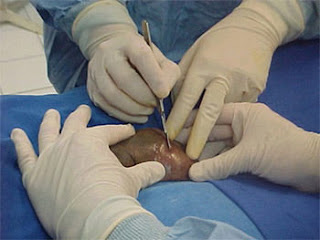
Have you ever left a clinic feeling more confused, anxious, or even angry about your fertility journey than when you arrived? Perhaps you were told you needed surgery on your testes, even though your semen analysis did not show a complete absence of sperm. Maybe you hesitated, thinking: Is this really necessary for me? Why is no one talking about the risks, the pain, or whether it will even help?
Understanding Male Infertility and the Pressure to Act
When a couple faces fertility challenges, men often feel sidelined, misunderstood, and, let’s be honest, sometimes pressured into procedures that sound technical and urgent. In recent years, a trend has emerged in some IVF clinics: recommending surgical procedures like TESE (Testicular Sperm Extraction) or TESA (Testicular Sperm Aspiration) for men who still have sperm in their semen, but with low counts or poor motility (oligoasthenospermia).
The rationale, as explained to patients, is often that sperm retrieved directly from the testes may be “fresher” or less damaged, especially in cases where sperm DNA fragmentation is suspected. The promise: higher fertilization rates, better embryos, more hope for a baby.
But is this the truth, or just another expensive detour?
When Is Testicular Sperm Extraction (TESE) Actually Needed?
Let’s be very clear: the ONLY time TESE or TESA is truly recommended is when a man has azoospermia, meaning his semen contains zero sperm. In these cases, sperm must be retrieved directly from the testicles, because that is the only possible hope for biological fatherhood.
If your semen analysis shows even a small number of sperm, no matter how weak, slow, or oddly-shaped, they can still be used for ICSI (intracytoplasmic sperm injection), the most advanced form of IVF. In fact, ICSI was developed precisely for these challenging cases, and semen sperm almost always works just as well as testicular sperm, without the need for surgery.
Even a single healthy sperm in your semen can be enough for ICSI and a real chance at pregnancy, without cutting into your testicles.
So, if you have oligospermia (low count) or oligoasthenospermia (low count and poor motility), but you are not azoospermic, you do not need testicular surgery. Any clinic suggesting otherwise is simply not following best medical practices, no matter how “modern” they claim to be.
The Myth of “Better” Sperm from Surgery
Some clinics try to justify TESE or TESA for non-azoospermic men by blaming “sperm DNA fragmentation.” They say sperm collected from the testis is less fragmented, less exposed to toxins, and more likely to produce a healthy embryo. The reality is much more complicated:
- There is NO reliable evidence that testicular sperm leads to higher pregnancy rates in men who already have sperm in their semen.
- Sperm DNA fragmentation tests themselves are controversial and not very predictive. Many men with high fragmentation still conceive naturally or via ICSI using ejaculated sperm.
- Testicular retrieval is an invasive surgical procedure. It carries real risks: pain, infection, bleeding, and even permanent damage to your testicular tissue.
- These surgeries add significant cost to your treatment, often without improving your odds of success.
At Malpani Infertility Clinic, our guiding principle is simple: treat patients the way we would want our own family to be treated. That means no unnecessary procedures, ever.
of men with sperm in their semen can achieve fertilization with ICSI, without needing any testicular surgery.
What You Should Ask Before Any Surgical Recommendation
If a doctor suggests testicular sperm extraction and you are not azoospermic, pause and ask:
- Is there any documented reason why my ejaculated sperm cannot be used for ICSI?
- What are the real odds that surgery will improve our chances?
- What studies prove that testicular sperm is better in my situation?
- What are the risks, costs, and recovery time for this procedure?
If you feel rushed or pressured, get a second opinion. You deserve a doctor who respects your body, and your intelligence. At Malpani Infertility Clinic, we sit down and answer every question honestly. Our approach is always to try the least invasive, most evidence-based option first. Surgery is always the last resort, never the starting point.
How We Support Men at Malpani Infertility Clinic
We see too many men who feel blamed, shamed, or simply ignored in the fertility journey. That is not right. Whether your diagnosis is oligospermia, oligoasthenospermia, or azoospermia, you deserve to understand your options and choose what feels right for you.
We explain every test and every step in plain language. We use advanced diagnostics only when they are truly helpful. And if surgery is ever on the table, you will know exactly why, what to expect, and how it fits into your larger plan for building a family.
You only get one body. Never let your testicles be operated on unless there’s a clear, proven reason.
Our promise: No unnecessary surgeries. No expensive shortcuts. Just honest, expert care from people who actually care about your outcome.
Frequently Asked Questions
Q: When is testicular sperm extraction (TESE or TESA) really needed?
A: Only when a man has azoospermia (no sperm in his semen). If you have any sperm present, even in low numbers, ICSI can be done using ejaculated sperm without surgery.
Q: Does testicular sperm have less DNA fragmentation than ejaculated sperm?
A: While some studies suggest this is possible, there is no strong evidence that using testicular sperm improves success rates for men who are not azoospermic. ICSI with ejaculated sperm is almost always effective when sperm is present.
Q: What are the risks of unnecessary testicular surgery?
A: Risks include pain, infection, bleeding, and possible long-term damage to testicular function. Unnecessary surgery also adds cost and stress without proven benefit for most men.
Q: Can high sperm DNA fragmentation be treated?
A: Sometimes. Lifestyle changes, treating infections, and antioxidants may help. However, DNA fragmentation tests are not always reliable and should be interpreted with care by an experienced doctor.
Q: What should I do if a doctor recommends TESE/TESA but I am not azoospermic?
A: Ask for a clear explanation and supporting evidence. Consider getting a second opinion from a clinic with a transparent, patient-first approach like Malpani Infertility Clinic.