
Diagnostic laparoscopy and operative laparoscopic surgery for treating infertility
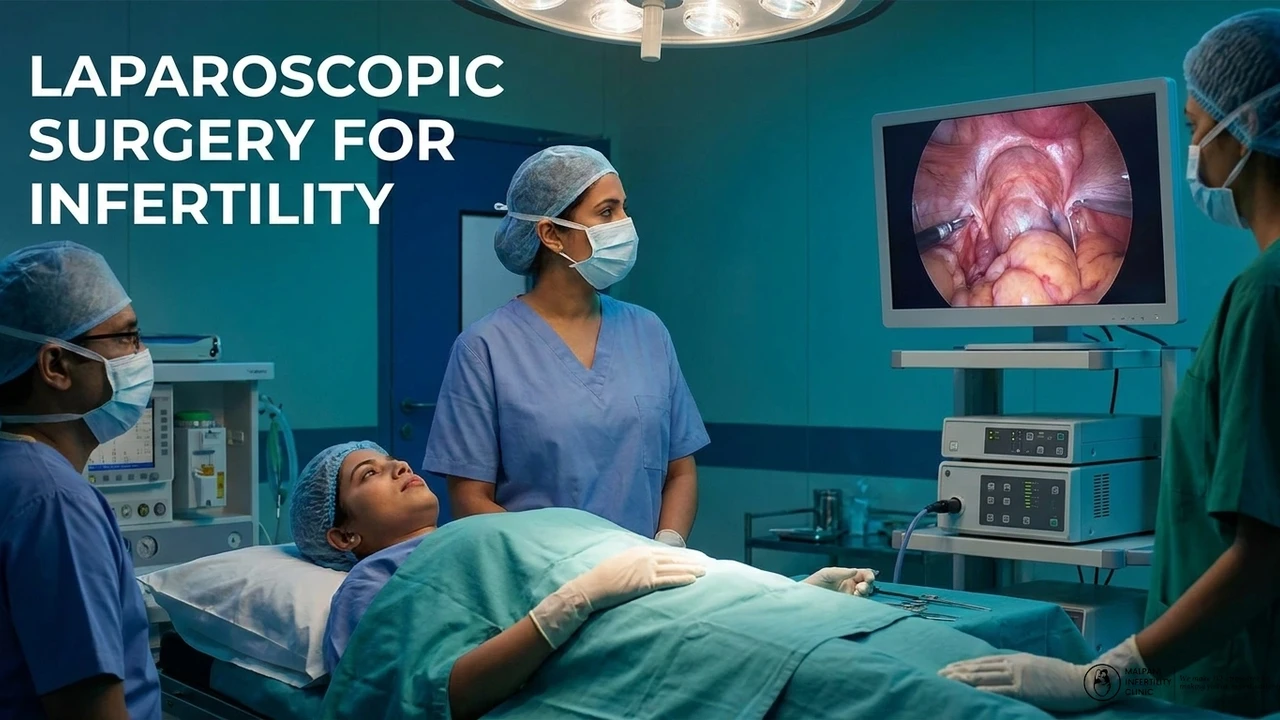
You finally gather the courage to step into a fertility clinic. You have been through months, maybe years, of hope, disappointment, and endless Google searches. You hear the word “laparoscopy” and feel a strange mix of fear and hope: will this procedure finally give you answers about why you are not able to conceive? Or will it just be another invasive test that leaves you with more questions? You are not alone in feeling this way. Most couples struggling with infertility find themselves lost in a maze of tests, complicated terms, and tough choices. Let’s talk honestly about laparoscopy: what it is, when it’s useful, what it really involves, and how you can decide if it’s the right step for you.
What Is Laparoscopy?
Laparoscopy is a minimally invasive surgical procedure that helps your doctor “look inside” your abdomen and pelvis. A thin telescope-like instrument (the laparoscope) is inserted through a tiny cut just below your navel, allowing direct visual inspection of your uterus, fallopian tubes, ovaries, and the surrounding area. This can help identify problems that often go undetected with regular ultrasound or X-rays, such as endometriosis, adhesions (internal scar tissue), blocked tubes, or even hidden infections like tuberculosis.
It sounds intimidating, but compared to older surgical techniques, laparoscopy is far less traumatic for your body. The incisions are so small that most people only need a couple of stitches, or sometimes just a Band-Aid.
 Fig 1. A laparoscopy being performed. Note that the view through the laparoscope can be seen on the TV monitor.
When Do Doctors Suggest Laparoscopy?
Years ago, laparoscopy was almost always performed as part of the standard infertility evaluation. Today, things have changed. At Malpani Infertility Clinic, we see laparoscopy as a targeted tool, not a routine step. We focus first on simple, non-invasive tests for both partners: checking if ovulation is regular, doing a semen analysis, and performing a hysterosalpingogram (HSG) X-ray to see if the fallopian tubes are open. If all these tests are normal and you are still not conceiving, that’s when the question of laparoscopy comes up.
We avoid unnecessary surgery. Laparoscopy is recommended if:
- Your HSG shows a possible blocked tube or irregularity
- You have symptoms like severe pelvic pain, painful periods, or pain during intercourse (which can suggest endometriosis or adhesions)
- You have a history of pelvic infection, tuberculosis, or previous abdominal surgery
- You have unexplained infertility and want to leave no stone unturned before considering advanced treatments like IVF
Sometimes, the real cause of infertility only becomes visible when we look inside; not every problem shows up on scans or blood tests.
We discuss the pros and cons with you openly. If your risk of having something that laparoscopy can detect (and treat) is low, we may advise you to skip it, saving you money, anxiety, and an unnecessary surgery.
How Is Laparoscopy Performed?
The word “surgery” can make anyone nervous, but laparoscopy is much gentler than traditional procedures. First, you are put under general anesthesia, so you are completely asleep and pain-free. The abdomen is cleaned, and a small amount of gas (carbon dioxide or nitrous oxide) is gently pumped in to lift the abdominal wall away from your organs. This creates space and helps your doctor see everything clearly.
The laparoscope is inserted through a small incision below your navel. Usually, a second tiny incision is made to allow an instrument in, which can gently move the organs for a better look. If any suspicious areas are seen, your doctor may take a tiny biopsy or inject a harmless blue dye from the uterus to the tubes to check if they are open.
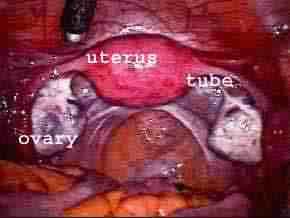 Fig 2. Normal pelvis as seen during a laparoscopy. The uterus is the reddish structure in the center; on either side of which are the pink fallopian tubes. These run towards the ovaries, which are white in colour.
Sometimes, a D&C (gentle scraping of the uterine lining) or a hysteroscopy (looking inside the uterus) is done at the same time, especially if your doctor suspects hidden problems like tuberculosis or wants to confirm ovulation.
Modern laparoscopy uses a video camera connected to the laparoscope. This allows the entire surgical team to see what’s happening in real time and helps with precise documentation. At Malpani Infertility Clinic, we often use these videos to explain your findings to you later, empowering you to understand what’s happening in your body.
What Can Be Treated During Laparoscopy?
One of the biggest advantages of laparoscopy is that it’s not just about looking, it’s about fixing problems right away if they are found. This is called “operative laparoscopy.” Through additional small incisions, your doctor can insert fine instruments to:
- Release scar tissue or adhesions that are trapping the ovaries or tubes
- Open blocked fallopian tubes
- Remove ovarian cysts, fibroids, or endometriosis deposits
- Treat ectopic (tubal) pregnancies safely
The choice of tools, scissors, cautery, even lasers, depends on your specific problem, but the aim is always to restore normal anatomy and improve your chances of pregnancy. Not every abnormality found needs to be treated, and sometimes the findings only confirm what other tests have suggested. Our philosophy at Malpani Infertility Clinic is to treat only what’s necessary and always involve you in the decision.
In rare cases, a “second-look laparoscopy” may be advised a few weeks or months later, to check if scar tissue is reforming or if endometriosis is returning, especially after major pelvic surgery.
Risks, Recovery, and What to Expect
No surgery is without risk, but laparoscopy keeps these to a minimum. Most women experience some mild discomfort, shoulder or chest pain from the gas used, and slight bruising near the incisions. You may feel tired or a little nauseous from the anesthesia. Serious complications, such as injury to organs or infection, are very rare, especially in experienced hands.
Here’s what you can expect after the procedure:
- Rest for 2 to 4 hours after surgery to recover from anesthesia
- Go home the same day, usually within hours
- Resume light work in 2 to 3 days
- Sexual activity can usually restart after a week, based on your doctor’s advice
If you notice fever, significant pain, heavy bleeding, or pus from the incision, contact your clinic immediately.
is the general risk of minor complications after laparoscopy. Major complications are extremely rare in healthy women.
Laparoscopy offers the chance to diagnose and treat some causes of infertility in a single, short procedure, helping you move forward with confidence.
Is Laparoscopy Right for You?
Medicine is full of grey areas, and fertility is no exception. Laparoscopy is a powerful tool, but it’s not for everyone, and it’s not always the magic answer. At Malpani Infertility Clinic, our approach is honest and patient-centered: we recommend laparoscopy only when it will genuinely add value to your diagnosis or treatment. If your basic tests are normal and you do not have symptoms suggesting hidden disease, skipping laparoscopy and moving to fertility treatments directly may be the better, and safer, choice. On the other hand, if you have unexplained infertility, persistent pelvic pain, or risk factors for hidden problems, laparoscopy may reveal issues that can be fixed and may avoid unnecessary IVF cycles.
Remember, your journey is unique. If you’re feeling confused about whether laparoscopy is right for you, or if you want a second opinion on your treatment plan, you are always welcome to talk to Dr. Malpani for honest, expert advice. We are here to help you make the best decision for your family’s future.
Frequently Asked Questions
Q: What exactly does laparoscopy diagnose in infertility?
A: Laparoscopy can directly visualize and diagnose pelvic conditions like endometriosis, adhesions, blocked fallopian tubes, ovarian cysts, and sometimes hidden infections that are not seen on other tests.
Q: Is laparoscopy mandatory for all women with infertility?
A: No, it is not a routine requirement. At Malpani Infertility Clinic, we recommend it only if basic tests are inconclusive or if there are symptoms or history that suggest hidden pelvic disease.
Q: Will laparoscopy treat my infertility problem in the same sitting?
A: If a treatable problem is found, like adhesions or mild endometriosis, operative laparoscopy can often correct it during the same procedure, potentially improving your fertility.
Q: How long is the recovery after laparoscopy?
A: Most women return home the same day and resume light activities within 2 to 3 days. Full recovery is typically quick, with minor discomfort.
Q: What are the risks of laparoscopy?
A: Minor risks include mild pain, bruising, or infection. Serious complications are rare, especially with an experienced surgeon.
Q: Can laparoscopy improve my chances of getting pregnant?
A: Yes, if a correctable abnormality is found and treated. For many women, it provides clarity and helps guide the next steps towards pregnancy.
Q: Do I need any special preparation before laparoscopy?
A: You will be asked to fast before the procedure, and some basic tests may be required to ensure you are fit for anesthesia. Your doctor will provide specific instructions.
Q: How do I decide if I need laparoscopy?
A: The best approach is to discuss your entire fertility workup and personal history with your doctor, weighing the potential benefits and risks in your specific situation.