
Hysteroscopy as a Diagnostic Tool for infertile women
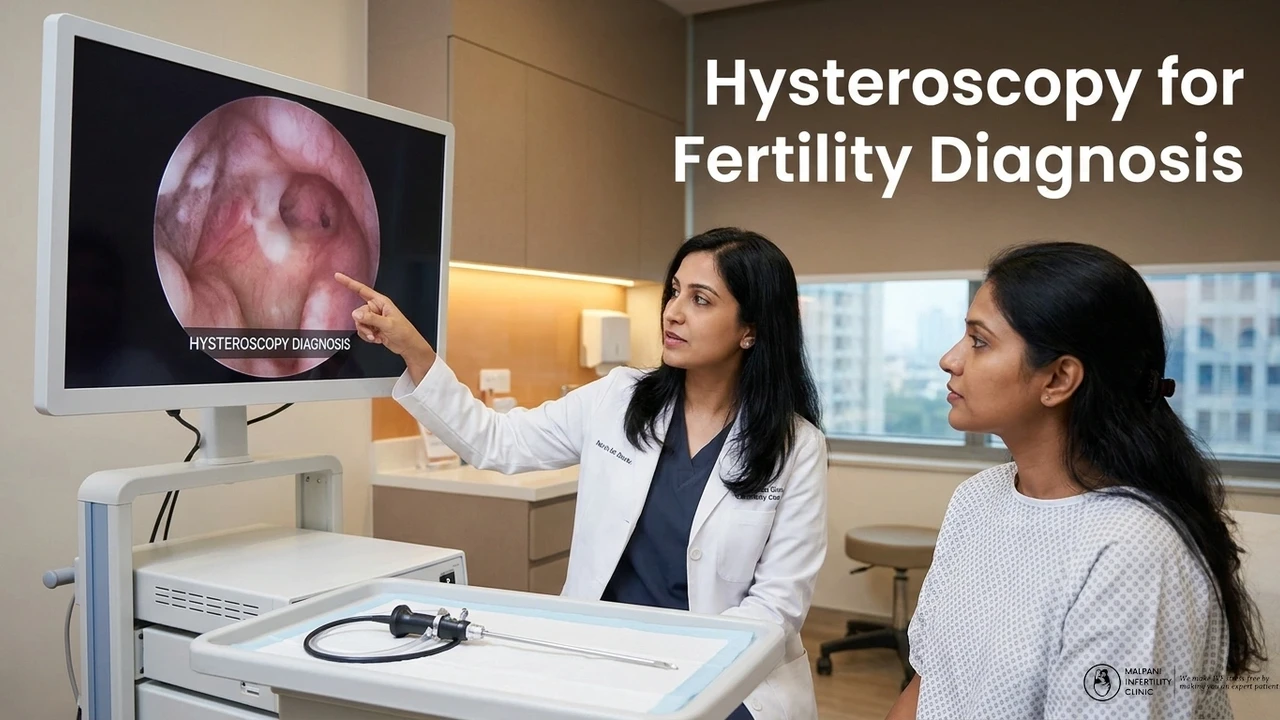
Maybe you have been trying to conceive for a while. You have ticked all the boxes: timed intercourse, lifestyle changes, maybe even a few diagnostic tests. But every period feels like a setback, and every doctor's visit leaves you with more questions than answers. You have probably heard about “hysteroscopy” from friends or forums, and now you are wondering: Is this what I need? Will it help me find the missing piece in my fertility puzzle, or is it just another test that leads nowhere?
Understanding Hysteroscopy
Hysteroscopy is a simple yet powerful procedure. The name says it all: “hystero” means uterus, “scopy” means to look. Using a slim telescope-like device, a specialist can see the inside of your uterus directly. For many women struggling with unexplained infertility or repeated IVF failure, this is the first time anyone has truly “looked inside” to see what is happening.
If you have ever been told your ultrasound is normal, but you still have no answers, you might relate. Sometimes, the uterus hides tiny issues that can only be found with a hysteroscopy, such as:
- Small fibroids that bulge into the uterine cavity
- Scar tissue (also called adhesions or synechiae) that may block embryo implantation
- Polyps: soft, benign growths that can interfere with pregnancy
- Congenital malformations (like a uterine septum) that you were born with
Before recommending hysteroscopy, your doctor may suggest a hysterosalpingogram (HSG) or a vaginal ultrasound. These tests give a rough map of your uterine cavity, but hysteroscopy is like turning on the lights and seeing every detail clearly.
At Malpani Infertility Clinic, we make sure you understand why a test is advised. We never push for unnecessary procedures. If your ultrasound shows a healthy, trilaminar uterine lining, you might not need a hysteroscopy at all. But if there is even a hint of something amiss, seeing is believing, and fixing.
Step-by-Step: What Happens During Hysteroscopy?
The idea of a “scope” inside your uterus can sound intimidating. Most women feel anxious, not knowing what to expect. Let us break it down:
- Preparation: Hysteroscopy is usually a day-care procedure. You arrive, undergo a brief check, and can go home the same day. Sedation or gentle anesthesia is used, so you do not feel pain.
- Starting the Procedure: The doctor gently opens the cervix (the natural canal leading to the uterus) using slim dilators. This is quick and carefully done to avoid discomfort.
- Visualizing the Uterus: The hysteroscope, a thin, lighted telescope, slides through the cervix into the uterine cavity. To “inflate” the cavity and get a clear view, a safe liquid or sometimes carbon dioxide gas is introduced. This pushes the uterine walls apart, washes away any blood or mucus, and gives the doctor a perfect view.
- Thorough Check: Every part of the uterine lining is examined. The entrances to the fallopian tubes (called tubal ostia) are inspected, as these are common hiding spots for problems.
- Optional Curettage: Sometimes, a gentle scraping (curettage) is done, and the tissue is sent for analysis. This helps identify hidden infections or abnormal cells.
The entire process takes about thirty minutes. Most women walk out with just mild cramping, nothing more than what you feel during a period, and can resume normal activities within a day or two.
Treating Problems: Operative Hysteroscopy
Imagine you are at the dentist for a check-up, and they find a tiny cavity. Would you want to come back another day to fix it, or just get it fixed then and there? Operative hysteroscopy works on the same principle. If the doctor finds a problem, say, a small polyp or scar, they can often treat it immediately, using tiny instruments passed through the hysteroscope.
- Polyp removal: Small, harmless growths that can prevent pregnancy are snipped away.
- Fibroid removal: Submucous fibroids (those bulging into the uterine cavity) are shaved off.
- Adhesion removal: Scar tissue is gently cut, restoring the natural shape of your uterus.
- Correction of birth defects: A uterine septum (a wall dividing the uterus) can be removed, giving embryos a better chance to implant.
All of this is done from inside, with no cuts on your belly and minimal recovery time.
Our philosophy at Malpani Infertility Clinic is simple: Fix what matters, skip what does not. We believe in “gentle” surgery, using the least invasive methods to maximize your chances of success.
Restoring Blocked Tubes: Hysteroscopic Tubal Cannulation
Many women are told their fallopian tubes are blocked, often at the place where the tube meets the uterus (the “cornual” end). The reality is that a lot of these blocks are not true blockages, but rather sticky mucus or debris plugging the tube. With hysteroscopic tubal cannulation, a fine wire is threaded through the hysteroscope and into the tube, clearing away the plug and reopening the pathway for sperm and eggs to meet.
Think of it like a plumber clearing out a blocked pipe. The procedure is precise, quick, and spares you from unnecessary major surgery. In some cases, a newer technique called falloposcopy lets us actually see inside the tube itself, giving even more information about your fertility.
of women with “proximal” tubal blocks are found to have treatable, non-permanent obstructions that can be fixed with hysteroscopic cannulation.
After the procedure, you may feel mild cramps or notice some spotting. Most women are able to return to work or regular life within a day. We usually recommend waiting for any bleeding to stop before resuming sex.
Risks and When to Skip Hysteroscopy
No medical procedure is totally risk-free, but hysteroscopy is considered very safe when performed by skilled hands. Complications are rare, but can include:
- Infection of the uterus or fallopian tubes
- Accidental “perforation” (a small hole in the uterus), almost always heals on its own
- Allergic reactions or bleeding (very uncommon)
Sometimes, the best doctors are the ones who tell you when not to do a test.
Sadly, too many fertility clinics do hysteroscopy “just in case” for every patient. At Malpani Infertility Clinic, we do not believe in unnecessary procedures. If your ultrasound shows a healthy uterine lining with no suspicious findings, there is usually no need to go looking for problems that are not there.
But if you have had repeated IVF failures, unexplained bleeding, or abnormal ultrasound or HSG results, hysteroscopy could be the missing step that finally gets you answers, and a plan for what to do next.
Frequently Asked Questions
Q: Is hysteroscopy painful?
A: Most women experience only mild cramping, like a period. Sedation or gentle anesthesia is used, so you should not feel pain during the procedure.
Q: How long does it take to recover after hysteroscopy?
A: You can usually return to normal activities within one or two days. Mild spotting or cramps may last a day or two.
Q: Is hysteroscopy always necessary before IVF?
A: No. If your ultrasound shows a normal, trilaminar uterine lining, hysteroscopy may not be needed. It is best reserved for women with abnormal scans, unexplained infertility, or repeated IVF failures.
Q: Can hysteroscopy also treat problems, or is it just for diagnosis?
A: Yes, many problems (like polyps, small fibroids, or adhesions) can be treated immediately during the same procedure. This is called operative hysteroscopy.
Q: What are the risks of hysteroscopy?
A: Complications are rare. Infection, bleeding, or accidental perforation of the uterus are possible but usually minor and treatable.
Q: Are there alternatives to hysteroscopy?
A: Ultrasound and HSG can give clues, but hysteroscopy is the only way to directly see and treat the inside of the uterus.