
Beyond the Semen Analysis - More Tests for the Infertile Man. Sperm Function Tests.
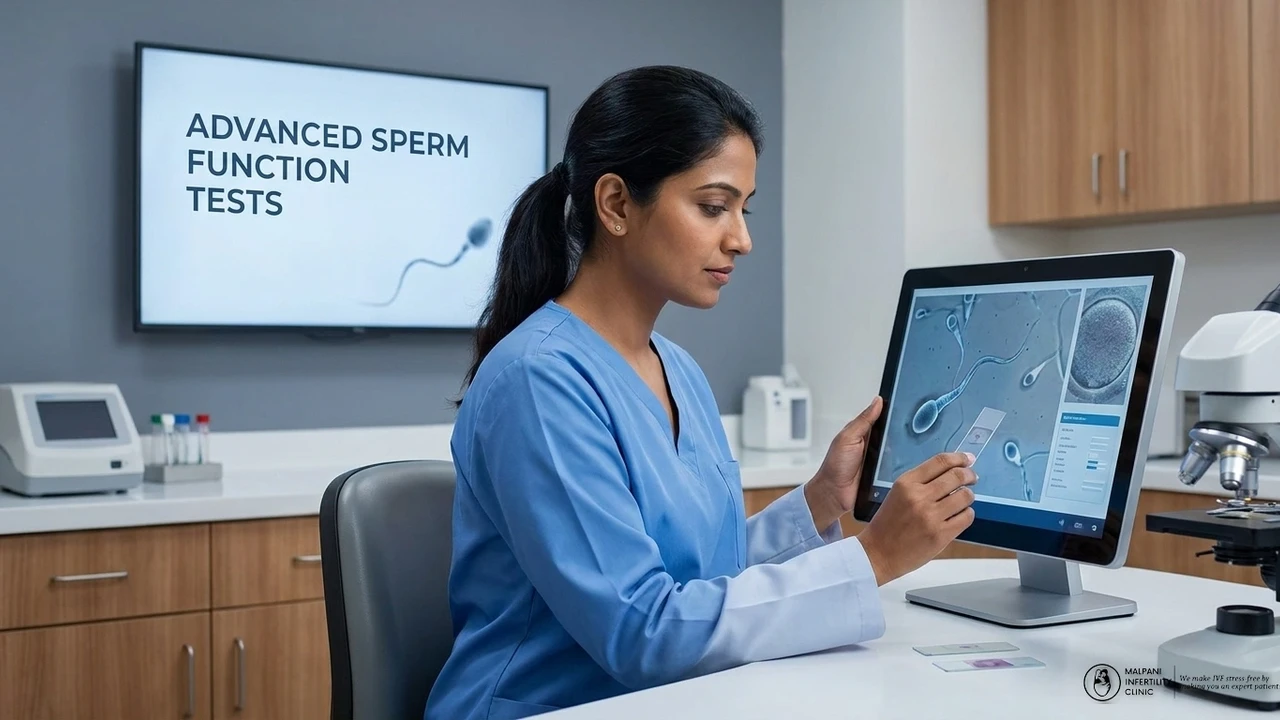
Do you ever look at a disappointing semen analysis report and feel a wave of worry? Maybe you have already been told your sperm count or motility is "abnormal" and you feel lost in a maze of strange test names, unhelpful explanations, and uncertainty about what to do next. If you are reading this, you are probably searching for clarity, real answers, and the reassurance that you are not alone in this confusing journey. The truth is: semen analysis is only the starting point. But what happens when the results do not make sense, or when "abnormal" does not actually mean infertile? Let us break down what matters, what does not, and how you can truly understand your fertility as a man.
Antisperm Antibodies Test
Semen Culture Test
Postcoital Test (PCT)
Bovine Cervical Mucus Test
Sperm Viability or Sperm Survival Test
Sperm Penetration Assay (SPA, Hamster Assay)
What Comes After a Semen Analysis?
If you have had a semen analysis that shows low sperm count, poor motility, or other abnormalities, you might feel like you need to do every test under the sun. You are likely wondering: what do these extra tests actually tell me? Will they change my chances of becoming a father? At Malpani Infertility Clinic, we see many men who have been given a long list of expensive, confusing, or downright unnecessary tests. Let us be honest: most of these "advanced" tests rarely change treatment or make a real difference to your chances.
Here is a straightforward guide to the most common additional sperm tests you might hear about, what they check for, and whether you really need them.
Antisperm Antibodies Test
Antisperm antibodies are substances that may attack sperm, making them clump together or stopping them from swimming properly. Both men and women can sometimes develop these antibodies, especially after injuries, infections, or surgeries. The idea is that these antibodies might kill or immobilize sperm before they can reach the egg.
There are several ways to test for these antibodies: in the blood, in the semen, or in the cervical mucus. The most "advanced" method uses small beads to show where the antibodies stick to the sperm. If they are on the head, sperm may not penetrate the egg. If on the tail, sperm may not move well.
Even if this test is positive, doctors rarely agree on what to do about it.
Here is the truth: for most men, this test creates more confusion than answers. It almost never changes what we recommend for treatment. At Malpani Infertility Clinic, we do not advise this test, because it does not actually help you become a parent.
Semen Culture Test
This test checks for bacteria in the semen. It sounds important, but here is a fact most clinics will not tell you: it is completely normal to find some bacteria in semen. Many of these bacteria are harmless "commensals" that live naturally in the body and do not affect your fertility at all.
Only if you have symptoms of infection (like pain, fever, or pus in the semen) might a culture be useful. Otherwise, a positive result usually leads to unnecessary antibiotics, anxiety, and no real benefit.
Postcoital Test (PCT)
The postcoital test (PCT) is one of the oldest sperm function tests. The idea is simple: during the woman's fertile days, the couple has intercourse. A few hours later, the doctor gently collects some cervical mucus from the woman and checks under a microscope to see how many sperm are swimming in it.
Finding 5 to 10 motile sperm per field is considered normal, which can be a relief to anxious couples. If the result is abnormal, sometimes it needs to be repeated, as timing and technique can affect the outcome. If the problem is persistent, doctors might swap in donor sperm or donor mucus to see whether the issue is with the man, the woman, or both.
For some couples, this test can be awkward or embarrassing. The good news is, with the advances in IVF and ICSI, this test is rarely needed and is largely of historical interest today.
Bovine Cervical Mucus Test
This test is similar to the PCT, except the mucus comes from a cow instead of a human. The sperm is placed in the cow mucus, and doctors check how far the sperm can swim. This might sound odd, and that is because it is: this test is now obsolete and has no practical value in real-world fertility care.
Sperm Viability or Sperm Survival Test
This is a simple lab test. After washing the sperm (just like in IVF), the sperm is placed in a special solution and kept in an incubator for 24 hours. The next day, the lab checks how many sperm are still alive and swimming.
If many are still moving, it means the sperm can survive and are functionally healthy. If none survive, it suggests the sperm may be too fragile or weak. While this gives some idea about sperm "stamina," it does not always predict whether fertilization will happen inside the body.
Sperm Penetration Assay (SPA, Hamster Assay)
This test was once popular in research labs. It measures whether a man's sperm can penetrate a hamster egg that has had its outer shell (zona) removed. The number of sperm that manage to get inside is counted to give a "penetration score."
But here is the catch: being able to fertilize a hamster egg does not always mean a man can fertilize a human egg. The results are unreliable, and this test is now considered outdated and is almost never used in practice.
Sperm DNA Fragmentation
One test that has become popular recently is the sperm DNA fragmentation test. This checks whether the DNA inside the sperm is damaged or "broken." The idea is that sperm with more damaged DNA might be less likely to fertilize an egg or might cause problems with embryo development.
You can read more about sperm DNA fragmentation tests at
https://www.drmalpani.com/articles/sperm-dna-fragmentation-assessment and
http://blog.drmalpani.com/2011/07/is-it-egg-or-sperm.html
While these tests sound high-tech, the truth is that they rarely provide helpful information that changes how we treat infertility. At Malpani Infertility Clinic, we do not recommend these tests routinely, because they do not improve your chances of success or change your treatment plan.
The Ultimate Sperm Function Test: IVF
If everything else is confusing, remember this: the only test that truly shows if sperm can fertilize an egg is IVF (in vitro fertilization). During IVF, some of the wife's eggs are mixed with the husband's sperm in the lab. If fertilization happens, the sperm has done its job. Sometimes, doctors may even use donor sperm in parallel to confirm if the issue is with the sperm or the egg.
But using IVF purely as a "test" is rarely practical or affordable. IVF should be used as a treatment, not just a diagnostic tool. Even then, about 5 percent of sperm samples that failed to fertilize eggs once in IVF, succeed on a second try. Biology is unpredictable.
Other Sperm Tests You Might Hear About
- Acrosomal status testing (measures the sperm's "cap" needed for egg entry)
- HOS test (checks if sperm membranes are healthy)
- CASA (computer-assisted sperm analysis for advanced motion tracking)
- Hemizona assay and electron microscopy (research tools, not standard care)
These tests are mostly for research or very niche cases. If a clinic is telling you that you need all these, ask how the results will actually change your treatment. If the answer is not clear, you can probably skip them.
Frequently Asked Questions
Q: Are advanced sperm function tests necessary if my semen analysis is abnormal?
A: In most cases, these tests do not change your treatment plan or improve your chance of pregnancy. Focus on what will actually help you move forward.
Q: What is the best way to find out if my sperm can fertilize an egg?
A: The only definitive way is through IVF or ICSI, where your sperm's ability to fertilize your partner's eggs is tested directly in the lab.
Q: Are bacteria in semen always a problem?
A: No. Most bacteria found in semen are harmless and do not impact fertility. Only treat infections if you have clear symptoms.
Q: Should I get a sperm DNA fragmentation test?
A: Routine testing is not recommended, as it rarely changes the treatment approach or improves pregnancy outcomes for most patients.
Q: What should I do if I have failed multiple fertility treatments?
A: Consult with an honest, experienced fertility specialist who will help you focus on evidence-based options and avoid unnecessary tests.