

Blocked Fallopian Tubes: What Now?
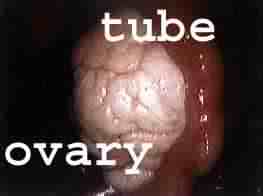
You stare at the test results in disbelief. You have done everything “right” – tracking your ovulation, maintaining a healthy lifestyle, following your doctor’s advice. Yet, the word “blocked” stares back at you from your fallopian tube report. The pain is silent, but the ache in your heart is very real. If you are reading this, you may be feeling lost, overwhelmed, and maybe even angry at the unfairness of it all. You are not alone. Every day, women and couples walk into Malpani Infertility Clinic with the same burning questions: What does this mean for me? Is there still hope for a baby? How do I make sense of this diagnosis? Let’s walk through the facts, the feelings, and the paths forward together.
What Are Fallopian Tubes and Why Do They Matter?
Your fallopian tubes are much more than just tiny passageways in your body. Imagine them as delicate, living bridges connecting your ovaries to your uterus. Each month, when an ovary releases an egg, tiny finger-like fringes called fimbriae sweep the egg into the tube. The tube itself is about 10 centimeters long, muscular, and surprisingly sophisticated, lined with microscopic hair-like projections called cilia. These cilia gently nudge the egg along its journey, creating the perfect environment for the egg and sperm to meet – a rendezvous that happens in the outer half of the tube, called the ampulla.
If the egg is fertilized, the embryo continues its journey down the tube, reaching the uterus at just the right time to implant and start a pregnancy. The fallopian tube is not just a simple pipe – it’s an active, nourishing environment, crucial for the earliest and most delicate stage of your baby’s life.
How Do Tubes Get Blocked – and What Does It Mean for You?
One of the most frustrating things about blocked fallopian tubes is that you probably never felt anything was wrong. Most women have no symptoms. Your cycles may be completely regular. You may have never had pelvic pain, an infection, or surgery. This is why so many couples are shocked by the diagnosis.
- Previous pelvic infection, even if you never had clear symptoms (including sexually transmitted infections like chlamydia or gonorrhea)
- History of abdominal or pelvic surgery (like an appendix operation or cyst removal)
- Endometriosis, which can cause tissue to grow and scar around the tubes
- Hydrosalpinx, where the tube fills with fluid due to a blockage at its end
- Past ectopic pregnancy, which can damage the tube
Most of these causes result in scar tissue that acts like a roadblock, preventing the egg and sperm from ever meeting. It is heartbreaking, because you cannot “feel” this problem. It does not affect your periods, health, or sexual life – it just quietly steals your chance of conceiving naturally.
So many women are told their tubes are fine just because their ultrasound is normal. That’s simply not true.
How Can You Tell If Your Tubes Are Blocked?
No doctor, no matter how experienced, can tell if your tubes are open or blocked by just doing an internal examination or a vaginal ultrasound scan. This is a common misunderstanding, and sadly, it leads to wasted time and broken hopes. Even young women, or those with conditions like polycystic ovaries, may have blocked tubes – you cannot assume they are open!
The only reliable ways to check if your tubes are open:
- HSG (Hysterosalpingogram): A special X-ray using dye to see if the tubes allow fluid to pass through.
- Laparoscopy: A keyhole surgical procedure to visually inspect the tubes and surrounding organs.
At Malpani Infertility Clinic, we often recommend an HSG first, as it is less invasive and provides clear, documented images. Laparoscopy may be needed in selected cases, especially if other conditions are suspected.
What Next? Understanding Your Results and Your Options
Receiving the news of a blocked tube can feel like a punch in the gut. But before you panic, let’s break down what it really means, and what you can do next.
- If only one tube is blocked: One healthy tube is often enough for natural conception. There’s no need for surgery or aggressive treatment to “fix” the blocked tube. That’s not just wishful thinking – it is supported by science. Eggs can even be picked up by the opposite tube in some cases!
- If both tubes are blocked: The next step is to determine where the blockage is. Is it near the uterus (proximal), in the middle, or at the far end (distal/fimbrial)?
Sometimes, the blockage is at the end of the tube, causing it to swell with fluid – this is called hydrosalpinx. In the past, doctors tried to surgically open such tubes, but the results were discouraging – the tubes often closed again or did not function properly, leading to a higher risk of ectopic pregnancy (when the embryo implants in the tube instead of the uterus).
If the blockage is near the uterus, it could sometimes be due to a temporary spasm or a plug of mucus. In certain cases, a procedure called Fluoroscopic Tubal Recanalisation (FTR) can be used. This is a bit like “angioplasty for your fallopian tube,” using a thin wire to gently open up the blockage.
Doctors may use terms like “sluggish spill,” “beaded appearance,” or “slow filling” to describe HSG findings. These are not precise diagnoses – they often add to your confusion. What matters most is whether there is a clear path for the egg and sperm to meet.
Finding out your tubes are blocked does not mean you have failed. It is just a piece of information – and it opens up new possibilities for treatment.
Realistic Paths Forward: From Diagnosis to Hope
It is natural to feel devastated when you hear your tubes are blocked. But there is real hope. The truth is, tubal surgery to repair blocked tubes has low success rates, especially if the inner lining is damaged. The risk of another blockage or an ectopic pregnancy remains high.
This is where modern fertility treatments, especially IVF (In Vitro Fertilisation), offer genuine hope. IVF allows us to bypass the tubes entirely. In the IVF lab, the egg and sperm are united outside your body. The resulting embryo is then gently placed back into your uterus, where it can implant and grow. The tube is no longer needed for this process.
of female infertility is due to blocked fallopian tubes. IVF offers a path to parenthood for many affected couples.
Some doctors may recommend removing a hydrosalpinx (swollen, fluid-filled tube) before IVF. At Malpani Infertility Clinic, we carefully assess whether surgery is truly needed. In many cases, surgery may not be necessary, and avoiding unnecessary procedures can save you time, money, and heartache.
You Are Not Alone: Finding Support and Making the Right Decisions
The emotional burden of a blocked tube diagnosis is heavy. You may feel isolated, misunderstood, or even ashamed. Please know that this is not your fault. Blocked tubes are silent, invisible, and can happen to anyone – regardless of age, background, or health history.
At Malpani Infertility Clinic, we believe in honest, no-nonsense advice. We explain your options, risks, and likely outcomes in plain language. Our goal is not to push you toward one treatment, but to help you make the best decision for your unique situation. Sometimes, all you need is reassurance and time. Sometimes, you need a clear plan for advanced treatment like IVF. Either way, you deserve respect, compassion, and support at every step.
Frequently Asked Questions
Q: Can I get pregnant if only one fallopian tube is blocked?
A: Yes, many women can conceive naturally with one healthy fallopian tube, as eggs can be picked up from either ovary.
Q: What symptoms would I have if my tubes are blocked?
A: Most women have no symptoms. Blocked tubes are usually “silent” and discovered only during fertility testing. Rarely, hydrosalpinx (swollen tubes) can cause mild abdominal pain.
Q: Is an ultrasound enough to check if my tubes are open?
A: No. Ultrasound cannot reliably check tubal patency. You need a Hysterosalpingogram (HSG) or laparoscopy for accurate results.
Q: Can tubal blockages be fixed with surgery?
A: Surgery is rarely effective, especially when the inner lining of the tube is damaged. IVF is usually a better option if both tubes are blocked.
Q: What is hydrosalpinx and how does it affect fertility?
A: Hydrosalpinx is when a fallopian tube is blocked at the end and fills with fluid. This can lower IVF success rates if not treated appropriately.
Q: Does blocked tubes mean I can never have a baby?
A: No. With modern fertility treatments like IVF, you can still achieve pregnancy even if both tubes are blocked.
Q: Should I remove a blocked tube before IVF?
A: Not always. Removal is only needed in select cases, such as severe hydrosalpinx. Your doctor should individualize this decision.