

Bleeding After IVF? Don’t Panic—Dr Malpani Answers Your Questions
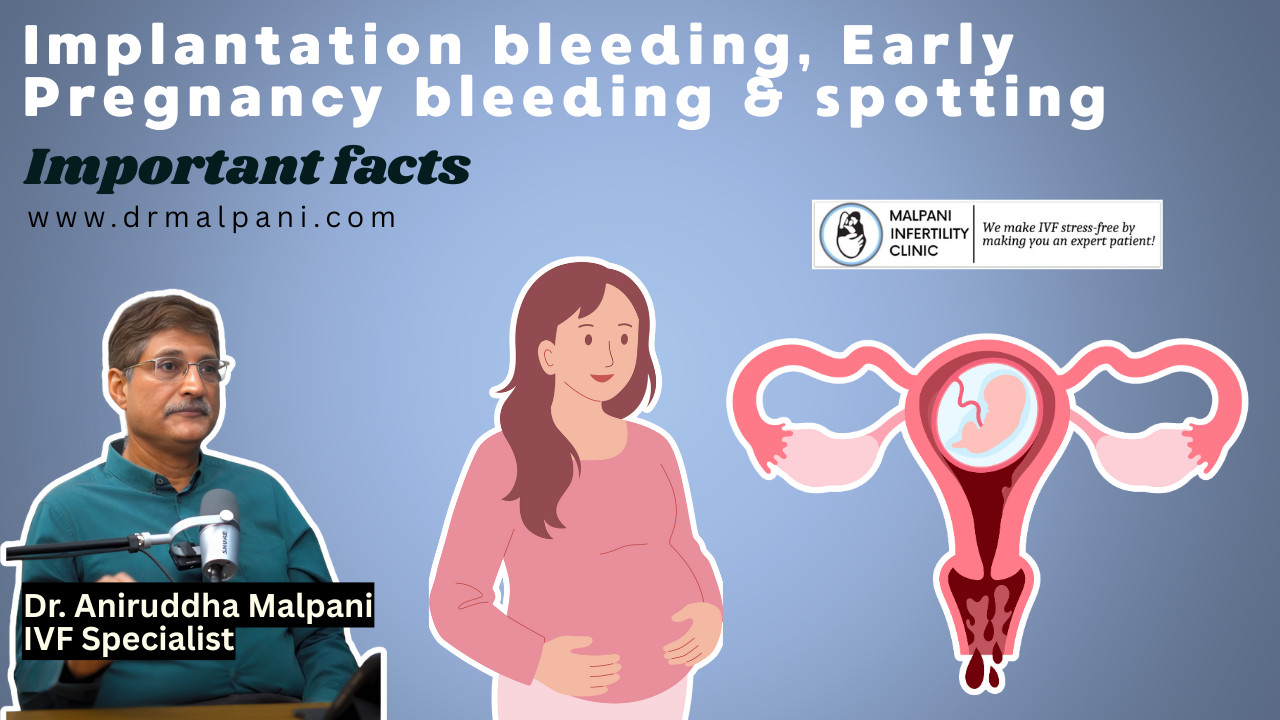
Patient: Dr. Malpani, I just started spotting a bit, and I’m really scared. I’m pregnant after IVF, and I don’t know what this bleeding means. Could something be wrong with my baby?
Dr. Malpani: I completely understand how frightening that can be. But let me reassure you—bleeding during early pregnancy is surprisingly common. In fact, it occurs in about 10% of all pregnancies. And most of the time, the bleeding doesn’t come from the baby at all—it usually comes from the mother.
Patient: Really? So what causes it?
Dr. Malpani: There could be several sources—bleeding might originate from the uterus, the site of implantation, or elsewhere. But here’s the truth: in many cases, we never find a clear reason. And that’s okay. What matters is that most of this bleeding is self-limiting and doesn’t cause any harm to the baby.
Patient: But I read something online about “threatened abortion”. That sounds terrifying.
Dr. Malpani: Yes, the term sounds alarming, but it simply means that there’s bleeding in early pregnancy. It does not mean that a miscarriage will happen—it just means we need to watch things more closely. Many women who bleed go on to have completely healthy pregnancies.
Patient: What if the bleeding becomes heavy? Could that cause a miscarriage?
Dr. Malpani: Heavy bleeding can sometimes irritate the uterus and trigger contractions, which may increase the risk of miscarriage. That’s why we never ignore bleeding—we take it seriously, even if we can’t always stop it. But remember, 50% of women who bleed early in pregnancy still have healthy babies.
Patient: Should I be worried about the colour? It was brown at first, then a little red.
Dr. Malpani: Good question. Brown discharge is usually old blood, and even bright red blood doesn’t automatically mean the worst. What matters more is whether the bleeding is accompanied by pain or cramping. If you have painful bleeding, let your doctor know right away.
Patient: So what should I do if I notice spotting or bleeding?
Dr. Malpani: First, don’t panic. Keep taking your prescribed medications, especially progesterone. Let your doctor know. We may increase hormonal support or prescribe tablets like Pause, which help reduce bleeding. We often recommend bed rest too—not because it’s proven to help, but because it gives you peace of mind.
Patient: Can an ultrasound help at this point?
Dr. Malpani: Absolutely. Ultrasound is your best friend. If we see a beating foetal heart, that’s the most reassuring sign. It tells us that the pregnancy is progressing well.
Patient: I’ve heard of something called a subchorionic haematoma. Is that related?
Dr. Malpani: Yes, it’s one of the most common findings during early pregnancy bleeding. It’s a small collection of blood under the placenta. Most of the time, it gets reabsorbed by the body or comes out as a clot. Either way, it usually resolves on its own.
Patient: So just to be clear—bleeding doesn’t always mean something is wrong?
Dr. Malpani: Correct. Bleeding is common, even after IVF. IVF doesn’t protect you from it. And in most cases, it doesn’t mean you’re having a miscarriage. You’re doing your best, your doctor is monitoring you, and you're not alone. Just remember: if you ever feel unsure, you can always get a second opinion. I'm just an email away.