

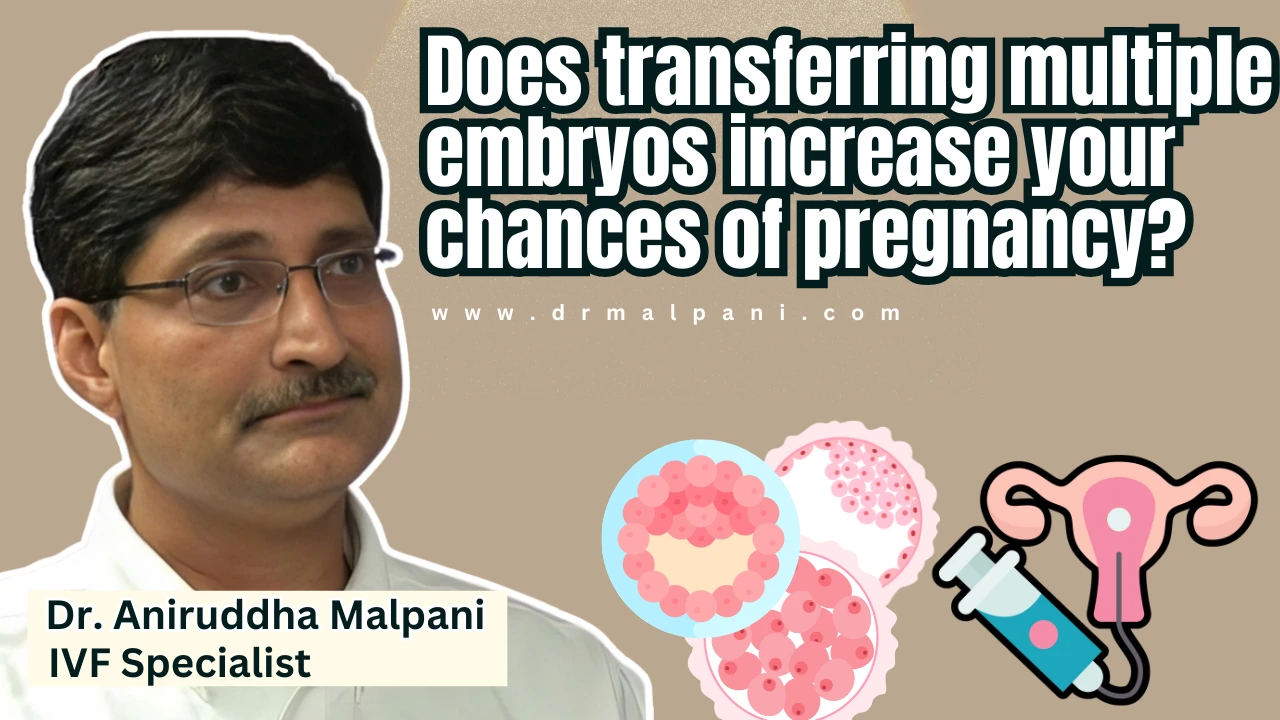
Does transferring multiple embryos increase your chances of pregnancy?
Patient: Doctor, wouldn’t transferring two embryos increase my chances of getting pregnant? And if both implant, I get twins—that’s a bonus, right?
Dr. Malpani: That sounds logical, but it’s not the best approach. Many patients think transferring two embryos improves success rates, but it actually increases risks significantly.
Patient: What kind of risks?
Dr. Malpani: Let’s say you transfer two embryos. If neither implant, you have no embryos left and must start a fresh cycle, which means more medication, injections, and expense. If one implants, you get a pregnancy, but if both implant, you end up with a twin pregnancy—and that comes with complications.
Patient: But twins seem like a blessing. What could go wrong?
Dr. Malpani: A twin pregnancy is high-risk. There’s a higher chance of miscarriage, preterm labour, and premature rupture of membranes. Many twins are born prematurely and require NICU care, sometimes leading to long-term health issues. It’s not always the joyful outcome people imagine.
Patient: If that’s the case, why do some IVF clinics still transfer two embryos?
Dr. Malpani: Some clinics focus on increasing pregnancy rates in the short term rather than what’s safest for the patient and baby. However, the best IVF clinics worldwide follow the gold standard—single embryo transfer—because it gives the highest chance of a healthy, full-term baby.
Patient: Won’t transferring just one embryo lower my chances of success?
Dr. Malpani: Not at all! What truly matters is embryo quality, not quantity. A single top-quality blastocyst has the best chance of implantation. Plus, if you have a second good embryo, we can freeze it for future use.
Patient: Is freezing the embryo safe? Will it still be as good as a fresh one?
Dr. Malpani: Absolutely! With advanced vitrification techniques, frozen embryos are just as good as fresh ones. In some cases, frozen embryo transfers even have better success rates because the uterus is more receptive in a natural cycle.
Patient: So, if I have two embryos, the best approach is to transfer one and freeze the other?
Dr. Malpani: Exactly! If the first embryo implants, you have the second one saved for a future pregnancy. If it doesn’t implant, you can transfer the frozen embryo in your next cycle without going through the entire IVF process again.
Patient (nodding) : I hadn’t considered that. It sounds like a much better plan.
Dr. Malpani: It is! I always tell patients—have as many babies as you like, but one at a time. That’s the safest, most effective approach.
Patient: Thank you, Doctor. I feel much more reassured now.
Dr. Malpani: You’re welcome! Let’s give you the best chance at a healthy pregnancy.