

How Many Embryos Should You Transfer?

When you sit across from your doctor, staring at those precious embryo images, it feels like the weight of your entire future is pressing down on a single question: How many embryos should we transfer? You want to give yourself the best shot at parenthood, but you are terrified of making the wrong choice. Maybe you have already been through failed cycles or spent sleepless nights worrying about twins or triplets, or even the possibility of another heartbreak. If all this feels painfully familiar, you are not alone.
Why Deciding the Number of Embryos to Transfer Is So Emotional
Every person who comes to Malpani Infertility Clinic brings their own hopes, fears, and sometimes scars from previous attempts. The decision about how many embryos to transfer is more than just a medical calculation: it is a deeply personal crossroads. Many couples feel torn between wanting to maximize their chances of success and the fear of complications from a multiple pregnancy.
Our goal is always simple: help you have a healthy baby, safely. But the path to that goal can look different for each individual or couple.
What Actually Goes Into Deciding How Many Embryos to Transfer?
There is no magic formula. At Malpani Infertility Clinic, we carefully weigh several factors before making recommendations, but we always include you in the final decision. Here is what we consider:
- Your age: Younger women usually have higher quality eggs and embryos, which increases the chance of pregnancy (and of twins or more if multiple embryos are transferred).
- Embryo quality: Top quality embryos, especially when they reach the blastocyst stage (Day 5), are more likely to implant and result in a healthy baby.
- Previous IVF attempts: If you have had failed cycles before, sometimes the urge to try more embryos is strong. But even then, more does not always mean better chances.
- Your medical history: Some health conditions make multiple pregnancies riskier for both the parent and the babies.
- Personal preferences: Some couples actively want twins, hoping for an “instant family.” Others are anxious about a multiple pregnancy and its risks.
Each country has its own rules. For example, in some European countries, doctors are legally required to transfer just one embryo at a time. In India, we have more flexibility, but that does not mean we should always transfer more.
What Do the Embryos Look Like?
Let us take a closer look at what a top-quality embryo can look like at different stages:
 Top Quality Day 5 Embryo
By Day 5, the embryo develops into a blastocyst. These are usually the best candidates for a single embryo transfer because they have the highest chance of implanting successfully.
Day 3 embryos are earlier in development. Sometimes, especially if you are younger or it’s your first cycle, we might recommend transferring only one. Here is what 2 top quality Day 3 embryos look like:
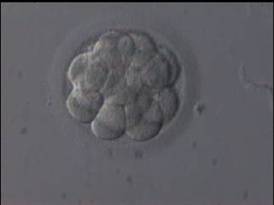
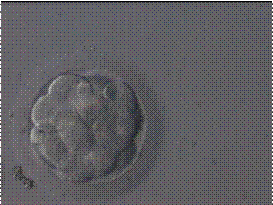 2 Top Quality Day 3 Embryos
Why Not Just Transfer More?
It is only natural to think putting in more embryos means a higher chance of success. After all, you have worked so hard for each one. But transferring more than one embryo can actually increase your risk for:
- Twins or triplets, which are much more likely to be born prematurely
- Pregnancy complications for the mother (like high blood pressure, diabetes, preterm labor)
- Babies needing intensive care or facing lifelong health issues
of IVF single embryo transfers can still result in identical twins because embryos sometimes split spontaneously.
We see many couples who think of twins as a “bonus.” It is important to know that even a twin pregnancy comes with significantly higher risks, both for you and your babies. While we understand the desire, our guiding principle is always: have as many babies as you like, but one at a time!
Making the Decision Together at Malpani Infertility Clinic
At Malpani Infertility Clinic, we believe in honest, transparent guidance. No sugarcoating. Here is how we approach embryo transfer decisions:
- For younger patients with excellent Day 5 embryos, we strongly recommend transferring just one embryo.
- If you have Day 3 embryos and you are young or it’s your first cycle, we might suggest one or, at most, two embryos—but we always explain the risks.
- If your embryos are not of top quality or you have had multiple failed cycles, the decision can be tougher. Sometimes, transferring more embryos does not actually increase your success rate, especially if their quality is low. We will talk you through the reasoning, every step of the way.
- Ultimately, while we share our medical expertise, the final decision is yours. Our job is to make sure you understand the pros and cons, and to support your choices with compassion and respect.
Patients sometimes ask: If my embryos are not perfect, is it worth transferring all of them? Our answer is honest—more embryos do not guarantee success and can bring more risks.
If you want to read more about embryo transfer choices, visit our How many embryos should I transfer? article.
Real Talk: What About Poor-Quality Embryos or Repeated Failure?
This is where the conversation gets tough and emotional. If you have been through failed IVF cycles, you might feel desperate not to “waste” any embryos—no matter the quality. We understand, and we never dismiss your feelings. Your logic is sound: even a small chance is better than no chance at all.
However, we will be honest: transferring extra poor-quality embryos rarely increases your odds. In some cases, it just increases the risk of complications. At our clinic, we respect your wishes and will discuss every option. But we also draw the line at what could put you or your future babies at serious risk. For example, we will not transfer three embryos at once because the chances of a high-order multiple pregnancy (triplets or more) are simply too dangerous.
Frequently Asked Questions
Q: Will transferring more embryos guarantee a higher chance of pregnancy?
A: Not always. While it seems logical, more embryos can increase your risk of twins or triplets, which can lead to serious complications without actually improving the chance for a healthy baby.
Q: Is single embryo transfer safer?
A: Yes. Transferring one top-quality embryo (especially at the blastocyst stage) gives you a high chance of success with the lowest risk for complications.
Q: Can I choose how many embryos to transfer?
A: Absolutely. Your preferences matter. We provide all the facts, risks, and benefits so you can make the decision that feels right for you.
Q: What if my embryos are not of good quality?
A: We will discuss all options with you. Sometimes, transferring more does not help if the quality is low. We support your wishes, but always keep your safety in mind.
Q: What are the risks of multiple pregnancies?
A: Carrying twins or more increases risks for premature birth, low birth weight, and health complications for both the mother and babies.
Q: Is it common to want twins from IVF?
A: Many patients see twins as a bonus, but it is important to understand the significant health risks involved. We will help you make the safest choice for your family.