

When Do I Know If I am Pregnant After Transfer?
- Pregnancy weeks after IVF are always counted from a calculated Last Menstrual Period (LMP), not the embryo transfer date.
- Doctors use the same pregnancy dating system for IVF as for natural conception to ensure consistency in care and records.
- Your medical pregnancy age will always be about two weeks older than the actual age of your embryo.
- To calculate your pregnancy weeks after IVF, subtract 14 days from your egg collection date to find your 'corrected LMP,' then count forward from there.
How Do I Know If I Am Pregnant After My Embryo Transfer?
That two-week wait after an embryo transfer can feel endless. If you’re reading this, you’ve probably already refreshed Google a dozen times, wondering: “How far along am I? When can I finally know if it worked? Why does every tiny symptom make me question everything?”
If you relate to this, you are absolutely not alone. Every single patient who walks through our doors at Malpani Infertility Clinic faces this same emotional rollercoaster. The uncertainty is real, the hope, the fear, the second-guessing. We see you.
The wait after embryo transfer is full of questions and silent hopes. It’s normal to feel lost in the unknown.
Let’s clear away the confusion and share what really happens after your IVF or ICSI embryo transfer, not just the clinical facts, but the truths and emotions nobody usually talks about.
Why Doctors Don’t Count Pregnancy From Embryo Transfer Day
Here’s a strange fact: Even though IVF gives us precise dates for egg collection and embryo transfer, doctors everywhere still use the same method to count pregnancy weeks as they do for natural conception. That means your pregnancy isn’t calculated from the day of your transfer. Instead, it’s counted from what we call your “Last Menstrual Period” or LMP, just like for women who conceive naturally, even if their cycle dates are a mystery.
This might seem odd, but there’s a good reason. Most pregnancy books, ultrasound machines, and medical records around the world use this system. It keeps everything consistent, no matter how you conceived. Yes, even in the world of advanced science and IVF, some traditions persist for clarity and standardization.
Menstrual Age vs. Embryo Age: What’s the Difference?
This is where most IVF patients get tripped up. There are two ways of thinking about your pregnancy:
- Embryo Age: The actual age of the embryo since fertilization (usually a few days old at transfer).
- Menstrual Age (Gestational Age): How doctors count pregnancy weeks, starting from that calculated LMP, always two weeks before ovulation or egg collection, even if that period never actually happened in your IVF cycle.
In medical terms, your “pregnancy” is always 14 days older than your embryo. So if your embryo is 14 days old, you’re 4 weeks pregnant by doctor’s charts.
How to Calculate Pregnancy Weeks After IVF Transfer
If you want to know “how far along am I?” after a transfer, here’s what you need to do:
- Identify your egg collection date (this is when ovulation was triggered in IVF).
- Subtract 14 days from that date. This becomes your “corrected LMP.”
- Count the days or weeks from that corrected LMP to today. That’s your pregnancy age, as your doctor will record it.
For example, if your egg collection was March 10, your “doctor’s start date” for pregnancy is February 24. So if your blood test is two weeks after transfer, you’re already considered about 4 weeks pregnant, even if your embryo is only 2 weeks post-transfer.
Why Subtract 14 Days?
Textbooks assume ovulation happens 14 days after the period starts. IVF lets us pinpoint ovulation perfectly. By subtracting 14 days from egg collection, we create a “fake LMP” that lines up with standard pregnancy charts, scans, and due date calculators.
This way, when you take that all-important pregnancy test two weeks after your transfer, you’re already considered 4 weeks pregnant, even if you’ve only just found out!
Understanding the Two-Week Wait: What to Expect
This waiting period is infamous. Whether you had a fresh or frozen transfer, these days can feel like forever. Here’s the reality nobody tells you: symptoms, or lack of them, don’t predict success.
Some people experience:
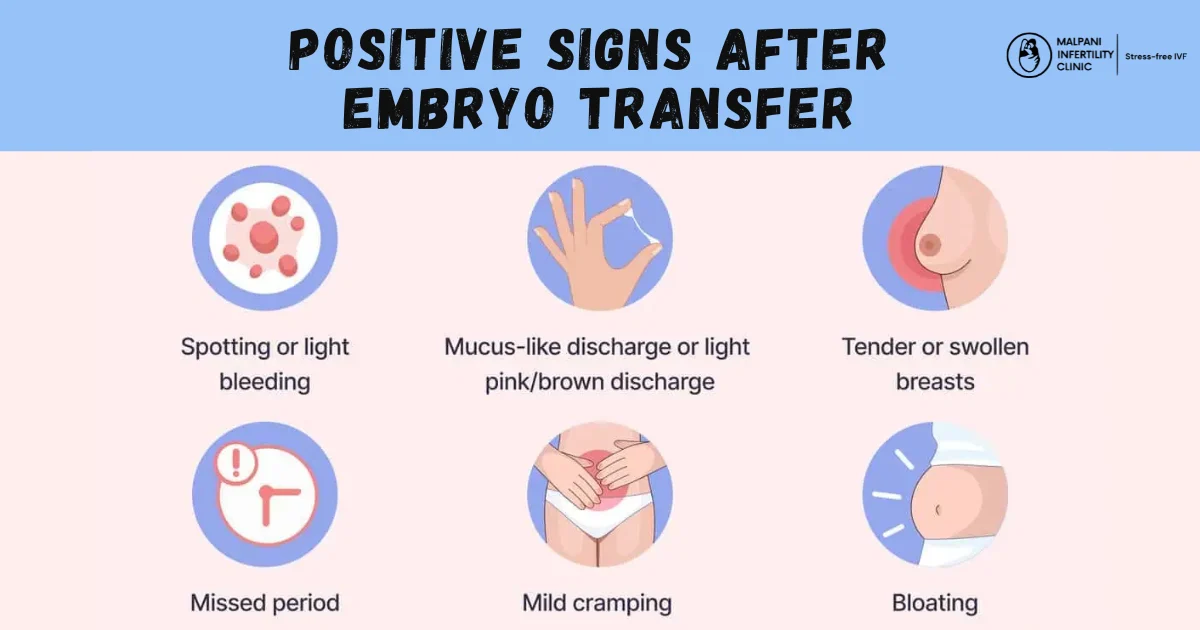
- Light spotting or pink discharge (could be implantation, could be progesterone effects)
- Mild cramps, bloating, or twinges (often from medications or the procedure itself)
- Tender or swollen breasts (again, usually from hormone medications!)
- Fatigue or mood swings (common from stress, hormones, or both)
- No symptoms at all (also completely normal!)
It’s easy to analyze every twinge and Google every feeling. But here’s the honest truth: these symptoms are not reliable signs of pregnancy at this stage. Both early pregnancy and your hormone medications can cause identical feelings.
When Can You Take a Pregnancy Test After Transfer?
We know you’re tempted to test at home early. Most people are! But please, don’t rush to test before your clinic’s recommended date (usually 10-14 days after transfer). Testing too soon can give false negatives (which devastate you for no reason) or false positives (if there’s lingering hCG from trigger injections).
The only reliable answer comes from a blood test at your clinic, about 2 weeks after transfer.
This is the moment of truth: Your hCG blood test can tell you, with certainty, if you’re pregnant. If positive, you’ll often be scheduled for a follow-up blood test and an early scan a couple of weeks later to check growth and heartbeat.
How Far Along Are You? A Real-Life Example
Let’s walk through an example, so you can see how the calculation works:
- Your period (LMP) was April 2
- Your egg collection was April 21
- Your embryo transfer was April 26 (Day 5 embryo)
- Your pregnancy blood test is May 5 (14 days after egg collection)
- Your corrected LMP = April 21 minus 14 days = April 7
- On May 5, you’re 28 days from your corrected LMP
- Your doctor will say you’re 4 weeks pregnant
So, 2 weeks after your embryo transfer, you’re already considered 4 to 5 weeks pregnant in “doctor speak”.
What Happens Next?
If your test is positive: Congratulations! You are officially pregnant, and your embryo transfer was successful. You’ll remain under close care for a few more weeks, with repeat blood tests and your first scan (usually at 6-7 weeks “gestational age,” or around 3-4 weeks after transfer) to check for a heartbeat.
If your test is negative: This is hard. We want to acknowledge the heartbreak that comes with a negative result after investing so much, emotionally, physically, financially. Many people need more than one IVF cycle to achieve pregnancy. It isn’t your fault, and you haven’t failed. Our team at Malpani Infertility Clinic is always here to discuss what happened, next steps, and how to optimize your chances in the future.
Common Questions We Hear After Embryo Transfer
Frequently Asked Questions
Q: Can I trust symptoms (or no symptoms) after embryo transfer?
A: Symptoms like cramping, spotting, bloating, or breast tenderness can be caused by both hormone medications and early pregnancy. Some women feel nothing at all. Neither guarantees success or failure, so don’t stress over every sensation.
Q: When will I know for sure if I’m pregnant?
A: The only reliable answer comes from a blood test for hCG, done at your clinic about 10-14 days after embryo transfer. Home pregnancy tests before this can be misleading.
Q: Why is my pregnancy “4 weeks” at my first positive test, even though it’s only been 2 weeks since transfer?
A: Doctors count pregnancy from your calculated LMP, which is always 14 days before egg collection in IVF cycles. So by the time of your test, you’re already 4 weeks by this system.
Q: Is it safe to resume normal activities after transfer?
A: Gentle activities like walking are fine. Avoid strenuous exercise, heavy lifting, and intercourse until after your pregnancy test, unless your doctor advises otherwise. Bed rest is not necessary.
Q: What if I have spotting or cramps?
A: Light spotting or mild cramps are common and usually not a reason for concern. If you have heavy bleeding, severe pain, or fever, contact your clinic immediately.
Q: What should I avoid after embryo transfer?
A: Avoid smoking, alcohol, excess caffeine, hot baths, and any activities your doctor has specifically restricted. Focus on healthy food, hydration, and rest.
Q: If my test is negative, what should I do next?
A: Allow yourself to grieve and ask your doctor about possible reasons and next steps. Sometimes small changes to your protocol can make a big difference in future cycles.
Q: How soon can I try again if the transfer is unsuccessful?
A: This depends on your personal medical situation, how you’re feeling, and your doctor’s advice. Some patients wait a cycle; others can proceed sooner. Discuss what’s right for your body and mind.