

Is Sperm Banking Right for You?

Maybe you never imagined you'd be here: reading about sperm banking, weighing options you never thought you'd face. Maybe this feels lonely, uncomfortable, or confusing. The idea of using donor sperm, or storing your own, can stir up emotions that are hard to even put into words. Most couples in this position carry a secret pain, questions that keep them up at night, and a hope that somehow, their dream of a family will still come true. If this is you, know that you’re not alone. So many have walked this path before, each with unique struggles and decisions to make. This is your space to find real answers and honest support.
Understanding Donor Insemination: More Than a Medical Choice
Therapeutic insemination by donor (TID) involves using sperm from a healthy, anonymous donor to help a woman conceive when her partner is unable to provide sperm. For many couples, this option enters the picture when male infertility becomes a reality, sometimes after months or years of trying, sometimes after failed treatments or diagnoses that are hard to accept.
With advances in fertility treatments like ICSI (a technique where a single sperm is injected directly into an egg), some couples find new hope using their own sperm. But the reality is, not all these options are affordable or accessible. For many, TID remains a practical, medically sound solution—and for some, the only viable way to have a child.
But let’s be honest: the medical part is only half the story. The emotional and ethical weight of donor insemination can feel overwhelming. You might worry about how it will change your relationship, your sense of self, or your connection to your future child. These are real, valid concerns that deserve time, space, and honest discussion.
The Emotional Journey: Facing the Hardest Questions
For couples considering TID, the emotional landscape can be complex and isolating. Many men struggle with feelings of inadequacy, grief, or even jealousy. The thought of raising a child who isn't genetically theirs can create doubts: Will I feel like the real father? Will my bond be the same? For women, there can be guilt or resentment—having to go through the procedures, the secrecy, and the social silence, often without the support they need.
Both partners may feel alone, carrying a secret that even close friends and family never know about.
Couples rarely talk openly about using donor sperm. This secrecy can cut off sources of comfort and understanding. Some men experience temporary sexual difficulties. Women may worry about what the child will look like, or whether the baby will feel like "theirs." And there’s the ever-present question: Should we tell our child? Our family? Our friends?
At Malpani Infertility Clinic, we believe in honest, no-nonsense conversations. We encourage couples to talk openly with each other and to seek support. Decisions about donor insemination should be made together, with compassion, patience, and sometimes with the help of a counsellor or a fertility expert who truly understands what you’re going through.
Who Are Sperm Donors? What About Known Donors?
It’s natural to wonder about the person helping you build your family. Sperm donors at Malpani Infertility Clinic are healthy men aged 20 to 40, usually with a strong educational background and no family history of illness. Every donor’s semen is carefully tested for quality, including sperm count and motility. Blood tests ensure they are free from HIV, hepatitis, and other infections.
After collection, the sperm is mixed with a special protective solution, loaded into coded straws, and frozen at extremely low temperatures (-196°C). One straw is thawed the next day to check for sperm survival, and only samples with enough healthy, motile sperm are kept.
The samples are stored in quarantine for six months, after which the donor is re-tested for infectious diseases. Only then is the sperm made available for use.
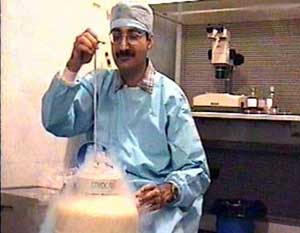 Fig 1. Sperm being frozen in liquid nitrogen
Most donors are motivated by the desire to help others, and strict policies ensure no single donor fathers more than ten children to reduce any risk of accidental half-sibling relationships in the future.
Some couples consider asking a friend or relative to be their donor, hoping it will make things simpler. However, using a known donor can sometimes complicate relationships. Over time, feelings and circumstances can change, leading to unexpected emotional or even legal issues. Plus, you’re relying on another person’s discretion to keep your story private. For these reasons, anonymous donor insemination is often safer and less stressful in the long run.
How Donor Insemination is Performed: The Real Step-by-Step
Once you and your partner decide to go ahead, you’ll both sign a consent form after thorough counselling. Your doctor will make sure at least one of the woman’s fallopian tubes is open—usually checked by an X-ray (hysterosalpingogram) or a small surgical procedure (laparoscopy).
To maximize chances, the woman may take fertility medications to trigger ovulation. The clinic will track her cycle using regular ultrasound scans, watching the egg develop and timing insemination precisely.
When the time is right, a straw containing the chosen donor’s sperm (carefully matched to the husband’s physical traits) is thawed and checked under a microscope to ensure the sperm are healthy and active. The insemination itself is quick and nearly painless: the sperm is injected through a thin catheter into the cervix or uterus. The woman rests for a few minutes afterward, and the husband is encouraged to be present or even participate, reinforcing the sense of shared journey.
Afterwards, comes the hardest part: the two-week wait to see if pregnancy has occurred. It’s a time of hope, anxiety, and sometimes heartbreak.
of women under 25 will conceive within six cycles of donor insemination.
Success rates mirror nature. For a 25-year-old woman, the chance of pregnancy per cycle is about 10 percent. Over six cycles, this adds up to around 60 percent. For women over 38, the chance drops to about 20 percent after six cycles. The younger and healthier the woman, the better the odds.
- Success is highest when the woman has no fertility issues and the man has no sperm at all.
- Irregular periods, endometriosis, or past infections can lower the chance of pregnancy.
- Strangely, pregnancy rates are lower for women whose husbands have very low sperm counts than for those whose husbands have no sperm at all—an effect not fully understood.
If you do conceive, your pregnancy is just like any other in terms of risks and care. Complete confidentiality is maintained. It’s up to you whether to share your story with anyone, including your child.
Why Frozen Sperm is Safer Than Fresh: Protecting Your Family’s Health
In the past, many gynecologists used freshly donated sperm for TID. But this approach has risks: unknown medical history, no physical matching, and—most importantly—the inability to screen for HIV or other infections in real time. There’s also the challenge of timing and sample quality.
- No reliable donor or medical records with fresh samples
- Difficult to match appearance and blood group
- Legal and emotional complications with known donors
- Risk of infections like HIV or hepatitis
Frozen sperm, on the other hand, offers several clear advantages:
- Thorough medical screening and quarantine ensures safety
- Always available, with no scheduling challenges
- High-quality samples screened before and after freezing
- Physical traits can be matched to your family
- No risk of sudden donor unavailability
Modern studies show that pregnancy rates with frozen sperm are just as good as with fresh, as long as the thawed sample has enough healthy sperm.
Sperm Banking: Who Should Consider It?
Sperm banking is not just for donor insemination. There are many situations where freezing your own sperm can be a wise, proactive step. Here are some scenarios where sperm banking may be recommended:
- Men undergoing cancer treatment: Chemotherapy and radiotherapy can damage sperm production, sometimes permanently. Banking sperm before treatment preserves the possibility of having biological children in the future.
- High-risk jobs or military deployment: If you work in an environment with exposure to chemicals, radiation, or physical danger, storing sperm is a way to safeguard your future family options.
- Men with unpredictable sperm counts: If your sperm quality varies, banking good samples can provide peace of mind for future attempts at conception.
- Situational erectile challenges: If producing a sample on the day of treatment is stressful or impossible, having frozen sperm on hand removes pressure and ensures your cycle is not wasted.
- Before starting hormone therapy (for LGBTQ+ individuals): Treatments like HRT can impact fertility. Freezing sperm before starting therapy keeps the door open to biological parenthood later.
- Before vasectomy: Some men freeze sperm before sterilization in case their life circumstances change.
Sometimes, just knowing your sperm is safely stored can bring a sense of control and hope—even if you’re not sure you’ll use it.
At Malpani Infertility Clinic, we make sure every patient receives honest guidance about whether sperm banking is truly right for them, and how it fits into their personal story.
Frequently Asked Questions
Q: Is using donor sperm safe for my child and my family?
A: Yes, using donor sperm from a reputable sperm bank is very safe. Rigorous testing and a quarantine period ensure that all samples are free from infections and genetic problems. At Malpani Infertility Clinic, strict confidentiality and safety protocols are followed at every step.
Q: Should we tell our child that we used donor sperm?
A: This is a deeply personal decision. Some families choose to be open, while others keep it private. Your doctor or a counsellor can help you think through the pros and cons for your unique situation.
Q: How do you choose the right sperm donor?
A: Doctors carefully match donors with intended parents for physical traits like height, skin tone, hair color, and blood group. Only healthy, well-screened donors are accepted.
Q: Can we use a friend or relative as a sperm donor?
A: While it’s possible, it can create complicated emotional and legal issues. Most clinics recommend using anonymous donors for privacy and safety.
Q: Is sperm banking only for men with infertility?
A: No. Sperm banking is also useful for men before cancer treatment, military deployment, risky jobs, or starting hormone therapy, and even for men with unpredictable sperm counts or those considering vasectomy.
Q: Will my insurance cover sperm banking or donor insemination?
A: Coverage varies by policy and location. At Malpani Infertility Clinic, we provide transparent information about costs and help you plan ahead.
Q: What is the success rate for pregnancy using donor sperm?
A: For women under 25, about 60 percent conceive within six cycles. Success rates decrease with age and other fertility factors.