

Is this a good quality embryo ?
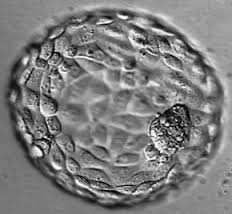
You sit in the embryology lab, heart pounding, staring at the screen as the embryologist gently brings up the image. There it is: your embryo. For a moment, you can barely breathe. You want to ask, “Is this a good quality embryo?” but what you really mean is, “Will this finally become our baby?” If this is you, know that you are not alone. Every hopeful parent who has gone through IVF knows what it feels like to pin all their hopes on just a few tiny cells.
What Embryo Quality Actually Means
At Malpani Infertility Clinic, we believe in being honest with our patients. When you look at your embryo’s photograph, you are looking at a promise, but not a guarantee. Embryologists grade embryos using what they see under the microscope: the number of cells, how even those cells are, and whether there are fragments (tiny pieces that break off as the embryo divides). On Day 3, a “good” embryo usually has about 8 cells and very little fragmentation. By Day 5, we look for a blastocyst: a fluid-filled ball of cells with a healthy inner cell mass (the part that becomes your baby) and a strong outer layer (the part that forms the placenta).
But here’s the hard truth: an embryo that looks perfect in the lab does not always become a baby. And sometimes, embryos that look less impressive surprise everyone by growing into healthy children. The process is not as predictable as we wish it could be.
Even the best-looking embryo in the lab can’t promise a pregnancy, and a “poor” embryo isn’t always out of the race.
The Limits of Embryo Grading
If you have ever been told your embryo is “Grade A” or “Grade B,” you might have felt hopeful, confused, or even anxious. What does that grade really mean for your chances? Here’s what nobody tells you: embryo grading is just a snapshot, a way to compare embryos in the lab, not a crystal ball for the future.
- Cell number and shape: More cells, and cells of even size, are usually better on Day 3.
- Fragmentation: Less than 25% is ideal, but even more fragmented embryos can sometimes succeed.
- Blastocyst features: On Day 5, the best embryos have a strong inner cell mass and a well-formed outer layer.
But embryos are living things, not machines. They can suddenly stop growing after looking perfect for days. Others catch up after a slow start. Even our most advanced technology cannot predict exactly which embryo will implant or become a healthy baby.
Are There Better Ways to Tell Which Embryo Will Succeed?
Many patients ask if there are tests that can give more certainty. Techniques like Pre-Implantation Genetic Testing (PGT, sometimes called PGS or CCS) can check if an embryo has the right number of chromosomes. This helps rule out embryos that are unlikely to result in a healthy pregnancy due to major chromosomal issues. Time-lapse imaging, which captures how embryos grow hour by hour, can add extra detail. But even with these tools, science just cannot tell you for sure which embryo will “stick.”
That means no matter how advanced the lab, doctors and patients alike must accept some unpredictability. If an embryo does not implant, was it an issue with the embryo or with the uterine environment? Did it stop developing after transfer, or was the timing off? These are questions even the world’s top clinics still cannot answer with certainty.
Why Photographs and Documentation Matter
When you see your embryo’s photo, you are holding a piece of your story. At Malpani Infertility Clinic, we make sure you get clear photographs of your embryos before transfer. This documentation is important: it not only reassures you that your treatment is transparent and ethical, but also means that if you need a second opinion, other specialists can review the images and help guide your next steps.
Remember, even embryos that look less than “ideal” can lead to perfectly healthy babies. If your embryo photo does not look like the textbook example, do not lose hope. We have seen many couples celebrate healthy births after transferring embryos no one expected to succeed.
of pregnancies after IVF come from embryos that were not top-graded, proving that looks do not tell the whole story.
How to Make Sense of Your Embryo Grades
It’s natural to want control and certainty when so much is at stake. But the best approach is to focus on what you can control:
- Choose a clinic with experienced embryologists and transparent protocols.
- Ask for photos and clear explanations of your embryos’ grades.
- If you are unsure, seek a second opinion. At Malpani Infertility Clinic, we encourage you to share your embryo photos with us for review. Sometimes, a fresh pair of eyes can make all the difference in guiding your decisions.
Most importantly, remember that your story is unique. Your value, your worthiness as a parent, and your chances do not hinge on a single number or letter. We are here to support you emotionally and medically, every step of the way.
If you have questions about your embryo’s quality, or want an honest expert opinion about what to do next, our team is here to help. Sometimes, what you need most is guidance and honesty, not sugar-coating.
Frequently Asked Questions
Q: What makes an embryo "good quality"?
A: Embryologists look at cell number, evenness, and fragmentation on Day 3, and blastocyst features like the inner cell mass and outer layer on Day 5. These features suggest the embryo is developing well, but do not guarantee pregnancy.
Q: Can poor quality embryos become healthy babies?
A: Yes. Many pregnancies result from embryos that were not top-graded. Embryo grading is a guideline, not a prediction of outcome.
Q: Does genetic testing (PGT/PGS) guarantee a healthy baby?
A: No. PGT can help identify embryos with the correct number of chromosomes, but it cannot guarantee implantation or eliminate all risks. It is an extra tool, not a guarantee.
Q: Why do some perfect-looking embryos fail to implant?
A: Implantation is influenced by many factors, including embryo genetics and uterine environment. Even the best-looking embryos sometimes do not implant for reasons beyond our control.
Q: Can I get a second opinion about my embryos?
A: Yes. Malpani Infertility Clinic offers free photo reviews. Submit your details at www.drmalpani.com/free-second-opinion for honest, personalized advice.