

IVF failure rates vs IVF success rates
When you sit across from your IVF doctor, heart pounding, and ask, "What are my real chances of having a baby?", know that you are not alone in this anxious moment. You may have already spent months or years hoping and waiting, perhaps even faced failed treatments or miscarriages. Every couple walks into an IVF clinic with hope burning bright, but also with the very real fear: what if it doesn’t work?
Facing Both IVF Success and Failure
Most couples beginning IVF are desperate for reassurance. You want numbers, clear answers, something to hold onto. It is normal to focus on success rates, to ask about the percentage of patients who take home a baby. Many clinics, eager to offer comfort, talk about their highest success stories. But here is the truth that few will share openly: IVF is not a guarantee. Every cycle carries the possibility of failure, and that possibility is just as real as the chance of success.
Focusing only on success sets up unrealistic expectations. When a cycle fails, the pain is deeper because nobody prepared you for that possibility. At Malpani Infertility Clinic, we believe in honesty and support: we will always walk you through both sides of the journey, not just the sunny side.
Everyone hopes to be in the group who gets pregnant right away, but the reality is that it often takes more than one try.
Why Success Rates Are Not the Whole Story
It is tempting to compare clinics by their posted "success rates." But these numbers can be misleading. Some clinics only count their best cases, or use confusing definitions. Others might not discuss the crucial factors that influence outcomes, like age, egg quality, or previous fertility diagnoses.
Here is what actually matters:
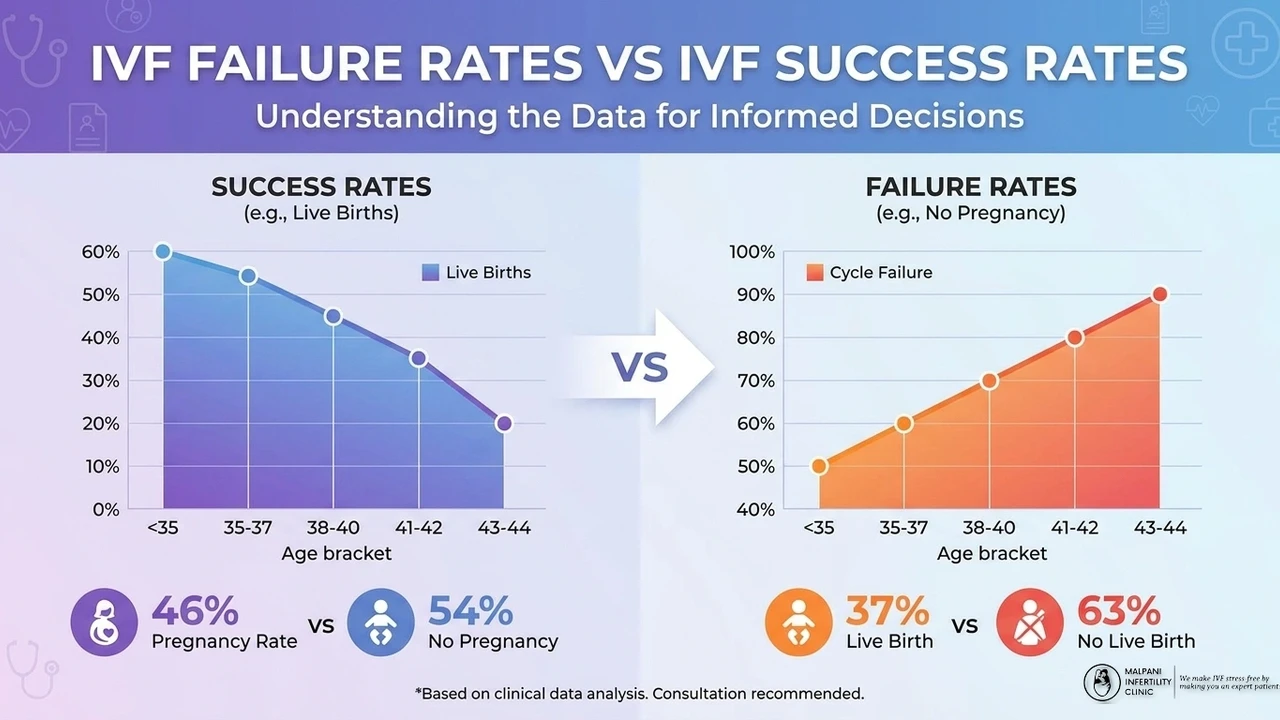
- Your age is the biggest factor. IVF success rates drop as age increases, especially after 35.
- Cause of infertility matters too: blocked tubes, low sperm count, endometriosis, and unexplained infertility all respond differently to IVF.
- The number and quality of embryos available after an IVF cycle affects your chances, as does whether you use your own eggs or donor eggs.
of women under 32 may get pregnant after one IVF cycle, but this drops to around 13% for women aged 40-41.
What does this mean for you? Success rates are averages, not certainties. Your story is unique, and deserves a personal plan and honest expectations.
The Emotional Toll of IVF Failure
No one wants to talk about IVF failure. It is painful, discouraging, and it makes you question if you have done something wrong. If you are reading this after a failed cycle, or two, or three, you probably recognize the cycle of hope, heartbreak, and self-doubt.
Too often, doctors and clinics focus on the positive, skipping the hard conversations that matter just as much. At Malpani Infertility Clinic, we believe that preparing you for the possibility of failure is not negative: it is respectful and empowering. When you know what to expect, you are less likely to feel blindsided, and more likely to stay strong for the next steps.
Remember, a failed IVF cycle does not mean you cannot become a parent. It usually means we need to review your results, learn from what happened, and adjust the approach. Sometimes, a change in medications, protocols, or even considering donor options can make all the difference.
Understanding Cumulative IVF Success
One of the most misunderstood facts about IVF is that success often builds over several cycles. The first cycle gives us information: how your ovaries respond, how many eggs are retrieved, how embryos develop. Each attempt is not just a chance to get pregnant, but an opportunity to fine-tune your treatment.
For example, research shows that the cumulative chance of having a baby increases with each stimulated IVF cycle, especially for women under 35. While only about half of women under 32 may get pregnant after their first IVF cycle, this rises to nearly two-thirds after three cycles. This means you may need to prepare—financially, emotionally, and practically—for more than one attempt.
Here’s a simplified look at what cumulative success can look like:
- Women under 32: about 50% have a baby after one cycle, up to 67% after three cycles
- Women aged 34-35: around 40% succeed in one cycle, up to 61% after three
- Women aged 40-41: about 13% after one cycle, up to 25% after three
Age is the biggest factor, but other reasons—egg and sperm quality, uterine health, and past treatment history—also matter. Each cycle helps us gather clues about what works best for your body.
How Malpani Infertility Clinic Guides You
At Malpani Infertility Clinic, we do not sugar-coat the facts. Our team believes that being honest about the possibility of both success and failure actually helps you cope better and make more informed decisions. We are here to answer your questions, review your previous cycles, and help you understand what the numbers really mean for your unique case.
We take time to explain every result, every option, and every next step, so you never feel lost or rushed. Whether you are just starting IVF or have already faced disappointment, you deserve a partner who will help you see both the hope and the hurdles—so you can keep moving forward, one step at a time.
Need help in getting pregnant? Please send me your medical details by filling in the form at www.drmalpani.com/free-second-opinion so that I can guide you.
Frequently Asked Questions
Q: What is the average IVF success rate per cycle?
A: For women under 32, about 50% may achieve pregnancy in the first cycle. This drops with age, and for women aged 40-41, the chance is about 13% per cycle. Your individual chance depends on many factors.
Q: How many IVF cycles do most couples need?
A: Many couples require more than one IVF cycle. Cumulative success rates after three cycles can reach up to 67% for younger women, but are lower for older women.
Q: Why do clinics focus on success rates?
A: Clinics often highlight success rates to reassure patients, but this can set up unrealistic expectations. It's important to discuss both potential outcomes to prepare emotionally and practically.
Q: Does a failed IVF cycle mean I cannot get pregnant?
A: No. A failed cycle is common and does not mean you cannot eventually have a baby. It provides valuable information to adjust your treatment for future attempts.
Q: How can I improve my chances of IVF success?
A: Factors you can control include following medical advice, optimizing your health, and understanding your unique diagnosis. Working with an honest, experienced clinic makes a big difference.