

What Happens Inside the IVF Lab?

If you have ever found yourself lying awake at night, wondering: “What exactly happens to my eggs and embryos once they leave my body? Are they safe? Is everything being done to give us our best shot?” you are not alone. Most patients never see the mysterious world inside the IVF laboratory. All the hope, anxiety, and dreams for a family are placed in the hands of a team you’ll rarely meet, working behind closed doors with technology you may never see. Yet, every parent-in-waiting deserves to know what really happens in those precious days after egg retrieval. Here is your honest, detailed look inside the IVF lab at Malpani Infertility Clinic, so you can feel informed and empowered at every step.
What Really Happens After Egg Retrieval?
Once your egg retrieval is complete, your journey continues in the capable hands of our embryologists. Your eggs are immediately taken into the lab, where the real magic—and science—begins. This is where your eggs and sperm meet, where embryos are carefully created and nurtured, and where every moment is monitored with devoted care.
- Egg Evaluation: After retrieval, each egg is gently inspected under a microscope to check its maturity and quality. Only mature eggs can be fertilized, so this step is crucial for your cycle’s success.
- Sperm Preparation: On the same day, a fresh or previously frozen sperm sample is prepared. The healthiest, most active sperm are chosen using a special “washing” technique that separates the best swimmers from the rest.
Our embryologists treat every egg and sperm as precious—because for you, each one holds the hope of a future family.
How Are Embryos Actually Made?
The next step is fertilization, and this is where the IVF lab’s expertise truly shines. Depending on your unique history and diagnosis, we’ll use one of two main approaches:
- Conventional IVF: Eggs and sperm are placed together in a special dish, allowing the sperm to fertilize the egg naturally.
- ICSI (Intracytoplasmic Sperm Injection): For couples dealing with male factor infertility or earlier failed fertilization, a single healthy sperm is injected directly into each mature egg. This highly skilled process requires special equipment and a steady, experienced hand.
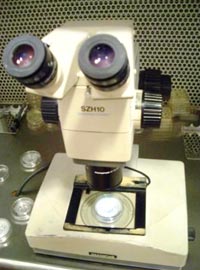
The Embryo’s Journey: Culture, Grading, and Growth
Once fertilization occurs, your embryos are placed inside the IVF lab’s most vital piece of equipment: the CO2 incubator. Think of this as an artificial womb, carefully regulating temperature, humidity, and gas concentrations to mimic the conditions inside your body. Here’s what happens next:
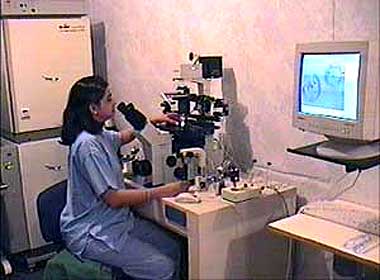
- Embryo Culture: Over the next 3-5 days, embryologists check your embryos’ development—watching each cell divide, looking for healthy growth, and recording progress daily.
- Embryo Grading: Not all embryos look the same. Our team assesses each for cell symmetry, number of cells, and other features that can hint at their chance to implant and grow. This grading system helps identify which embryos are most promising for transfer or freezing.
- Blastocyst Formation: By day 5 or 6, some embryos reach the “blastocyst” stage—a milestone that often means higher implantation rates.
The days your embryos spend in the lab are some of the most important and fragile moments of your IVF journey.
Genetic Testing, Freezing, and Future Options
Depending on your needs, some embryos may be biopsied for genetic testing (like PGD or PGS). This involves removing a few cells to check for chromosomal or genetic concerns. It’s a sophisticated process, and for those at higher risk, it offers reassurance that only healthy embryos will be transferred.
Extra embryos that are high quality but not immediately transferred can be safely frozen for future cycles. At Malpani Infertility Clinic, we use advanced computer-controlled cryopreservation units to protect your embryos in the long term. Freezing also allows you to pursue another transfer later, without repeating the entire IVF process.
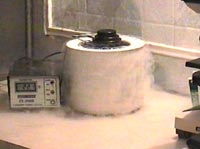

- Where are embryos stored? Embryos are kept in special liquid nitrogen tanks at -196°C. This ultra-low temperature prevents any biological activity, keeping your embryos safe and unchanged for years.
Why Most Labs Are Off-Limits—And Why You Deserve Transparency
It can be nerve-wracking to have your most precious cells handled in a place you cannot see. IVF labs, including ours, maintain strict sterility and security to protect your embryos from contaminants and mix-ups. Every specimen is rigorously labeled and tracked at every step. At Malpani Infertility Clinic, we believe in full transparency and patient education. We know that understanding what happens in the lab can relieve anxiety and help you make better choices for your family.
We encourage you to ask questions—about the lab, about the team, about every part of the process. Our doctors and embryologists are always ready to explain, reassure, and empower you. If you would like to see more or have concerns, we offer guided tours and open conversations so you never feel left in the dark.
You Are More Than a Number—Your Embryos Deserve Individual Care
Behind every dish in the IVF lab is a story as unique as yours. At Malpani Infertility Clinic, we handle every egg, every sperm, and every embryo with the utmost respect and responsibility. Our lab combines the most advanced equipment with an experienced, caring human touch. We know that for you, this is not just science—it is your hope, your future, your family.
Frequently Asked Questions
Q: Are my eggs and embryos safe in the lab?
A: Yes. At Malpani Infertility Clinic, we use strict protocols and advanced technology to ensure your eggs and embryos are securely tracked, stored, and protected at every stage.
Q: Can I visit the IVF lab or see my embryos?
A: While most labs have restricted access for safety reasons, we are committed to transparency and patient education. You can request a guided tour or ask to see photos and videos of your embryos.
Q: What is the difference between conventional IVF and ICSI?
A: Conventional IVF involves combining eggs and sperm in a dish and letting fertilization occur naturally. ICSI involves injecting a single healthy sperm directly into an egg and is used in specific cases like male factor infertility.
Q: What happens if I have extra embryos after transfer?
A: Good quality embryos not transferred can be frozen (cryopreserved) for future use. This means you can try again without another egg retrieval.
Q: How long can embryos remain frozen?
A: Embryos can be safely stored in liquid nitrogen for many years without losing viability.
Q: How do you decide which embryos to transfer?
A: Our embryologists grade embryos based on cell number, symmetry, and appearance. The best quality embryos are selected for transfer to maximize your chances.
Q: Is genetic testing of embryos necessary?
A: Not always. Genetic testing (like PGD/PGS) is recommended for couples with a history of genetic disorders, recurrent miscarriages, or advanced maternal age.