
What Is the Vitrification Process for Eggs and Embryos?
If you have ever wondered how it feels to have your dreams of parenthood put on hold by circumstances outside your control — whether it’s a medical diagnosis, a ticking biological clock, or the heartbreak of failed cycles — you are not alone. Many couples and individuals come to us at Malpani Infertility Clinic asking, with hope and anxiety in equal measure, if it is possible to pause time for their eggs or embryos. The answer today is yes — and the reason is a breakthrough called vitrification. If you are looking for honest, practical answers about what vitrification really is, why it matters, and how the process works, you will find them here.
Why Vitrification Changed Fertility Care Forever
For years, freezing eggs and embryos was a gamble. The old method, called "slow freezing," often left patients with few viable options when they returned months or years later to use their stored eggs or embryos. Many didn’t survive the thaw. Those who did sometimes suffered microscopic damage that made pregnancy less likely.
Vitrification — an ultra-rapid freezing process — changed everything. Instead of letting water inside the cells slowly turn to ice (which can cause sharp crystals to form and damage delicate structures), vitrification freezes eggs or embryos so quickly that water solidifies into a glass-like state. This almost instant transformation protects the cell from injury, preserving its full potential for life.
The science of vitrification lets us freeze time for your eggs or embryos, so you can plan your family when you are truly ready.
At Malpani Infertility Clinic, our experienced team uses vitrification every day to help patients preserve their fertility, whether due to age, medical treatment, or as part of IVF care. We have seen the relief and hope it brings — and the babies born from eggs and embryos that waited for just the right moment.
What Happens During Vitrification?
Vitrification is not just a buzzword — it is a carefully controlled process that combines speed, precision, and a deep respect for the fragility of human life at its earliest stage. Here’s how we do it at our clinic:
First, let’s break down the essential steps and materials involved:
- Preparation: Everything is done at room temperature (25-27°C) to keep the environment stable for your eggs or embryos.
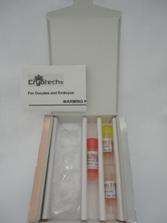
- Media: We use the CRYOTECH VITRIFICATION KIT, which contains special protective solutions (called cryoprotectants) that help prevent damage during freezing.
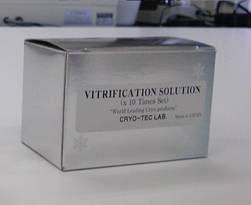
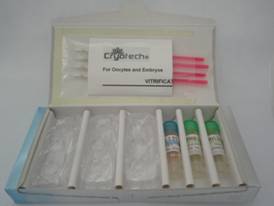
- Disposables: Special culture dishes, pipettes, cryolocks, goblets, and liquid nitrogen are used to handle and store the eggs or embryos securely during the process.
Here’s what happens next:
- The eggs or embryos are gently moved through a series of solutions with increasing concentrations of cryoprotectants. This step is crucial. It helps dehydrate the cells and replace water with the protective solution, minimizing the risk of ice crystal formation.
- Once ready, the eggs or embryos are loaded onto a tiny device (the cryolock) in the smallest possible droplet of solution. This is a delicate, time-sensitive step that our embryologists are highly trained to perform.
- The cryolock is immediately plunged into liquid nitrogen, bringing the temperature down to -196°C almost instantly. This “flash freezing” is what gives vitrification its power.


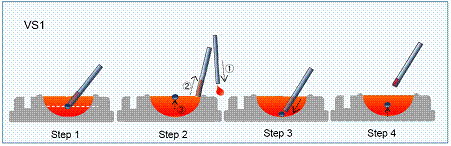
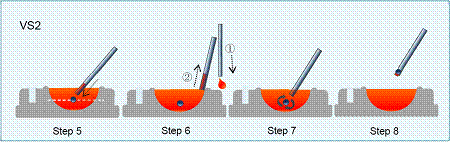
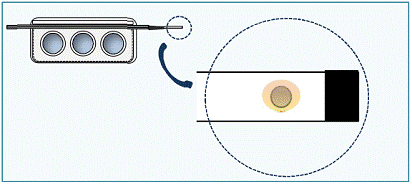
Every move matters. If there is too much solution, or if timing is off by even a few seconds, the risk to the egg or embryo increases. This is why expertise, attention to detail, and a calm, steady hand matter so much.
Step-by-Step: The Vitrification Protocol at Malpani Infertility Clinic
For those who want to know exactly what happens in our lab, here’s a look at the vitrification protocol we trust:
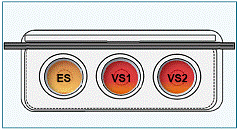
- Prepare the vitrification plate with the required solutions (Equilibration Solution and Vitrification Solution), and bring everything to room temperature at least an hour beforehand.
- Retrieve the culture dish containing your eggs or embryos from the incubator.
- Carefully transfer the egg or embryo into the Equilibration Solution (ES). Here, it will shrink as water leaves the cell, then slowly return to its normal size as it adapts to the new environment. This takes about 12-15 minutes, depending on the developmental stage.
- Move the egg or embryo through two stages of Vitrification Solution (VS1 and VS2), spending no more than 90 seconds in total. This step is critical for success.
- With utmost care, load the egg or embryo on the end of a cryolock with minimal solution and immerse it immediately in liquid nitrogen. The cap is then placed on the cryolock, and it is stored safely in a cryostorage tank.
What sets our clinic apart is not just the technology, but the experience of our embryologists in handling every step with precision. We openly share our detailed protocols because we believe patients deserve to know what is happening to their precious eggs and embryos — no secrets, just good science and good care.
Bringing Your Eggs and Embryos Back: The Warming Process
When you are ready to try for pregnancy, your eggs or embryos are carefully warmed (thawed) in a process that reverses vitrification. This process is just as precise as freezing, and success depends on every detail being followed perfectly.

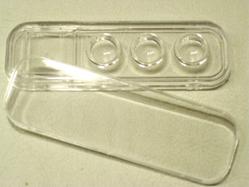
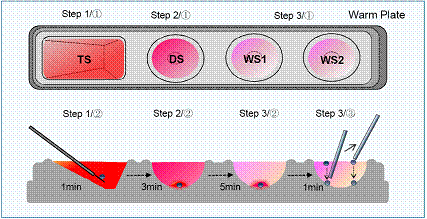
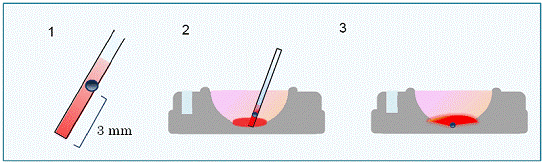
Here is what happens during warming:
- The cryolocks are removed from storage and placed into a warming solution (TS) at 37°C — this step must happen within seconds to prevent damage.
- The protective cryoprotectant is gradually diluted and washed away using a series of solutions (Diluent Solution and Washing Solutions), restoring the original water content of the cells.
- Finally, the eggs or embryos are placed in the culture medium, ready for fertilization (in the case of eggs, using ICSI) or transfer to the uterus (in the case of embryos).
Our team monitors every egg and embryo for survival and quality after warming. Thanks to vitrification, most will look just as they did before freezing — ready to give you a genuine chance at pregnancy.
of vitrified embryos and eggs survive the warming process at leading clinics, including Malpani Infertility Clinic.
Who Should Consider Vitrification?
Vitrification is useful in many real-life situations:
- Women wanting to preserve fertility for the future — perhaps due to career, personal circumstances, or simply wanting more time.
- Patients facing cancer treatments or other medical conditions that could harm fertility. Vitrification offers hope for parenthood after recovery.
- IVF patients with extra embryos — instead of discarding precious embryos, they can be safely stored for future attempts or to grow your family later.
- Cases where medical advice suggests delaying embryo transfer (such as ovarian hyperstimulation, polyps, or hydrosalpinx).
If you are unsure whether vitrification is right for you, or if you want a second opinion about your fertility options, you deserve honest, expert guidance. Dr. Malpani’s approach is always about helping you make decisions with your eyes open, based on real science and your unique situation.
Realistic Hope: What You Can Expect
At Malpani Infertility Clinic, our vitrification protocols are designed with both safety and success in mind. We use only proven methods and the very best equipment. Most importantly, we pair medical expertise with transparency, so you always know what is happening with your eggs or embryos and why each step matters.
If you are feeling anxious about your future, or frustrated by the slow pace of fertility treatments, vitrification gives you a new option: to take control without feeling rushed. Many of our patients have gone on to have healthy pregnancies and babies using eggs or embryos that were frozen years earlier. You might be one of them.
Fertility preservation is not just about freezing cells. It is about preserving hope, choice, and the chance to build your family when the time is right for you.
Frequently Asked Questions
Q: What exactly is vitrification?
A: Vitrification is an ultra-rapid freezing method that protects eggs and embryos from ice crystal damage, giving much better survival and pregnancy rates than older slow freezing methods.
Q: How long can my eggs or embryos stay frozen?
A: With vitrification, eggs and embryos can be safely stored for many years without losing quality. There is no strict expiry date, so you can use them whenever you are ready.
Q: Is the process safe for future babies?
A: Yes. Studies show that babies born from vitrified eggs or embryos are just as healthy as those conceived naturally or from fresh IVF cycles.
Q: Is vitrification right for me if I am over 35?
A: Vitrification can still be valuable for women over 35, but the success rates are higher when eggs are frozen at a younger age. Dr. Malpani can help you decide what is best for your situation.
Q: What happens to my eggs or embryos during thawing?
A: The warming process carefully reverses freezing, using special solutions to protect the cells. Most survive and can be used for fertilization or embryo transfer.
Q: How do I know my embryos or eggs are safe?
A: At Malpani Infertility Clinic, we use strict protocols, state-of-the-art equipment, and careful record-keeping to ensure every patient’s samples are safe and traceable at all times.