

What’s the IVF Case You’ll Never Forget : A Candid Conversation About Joy, Struggle & Humanity
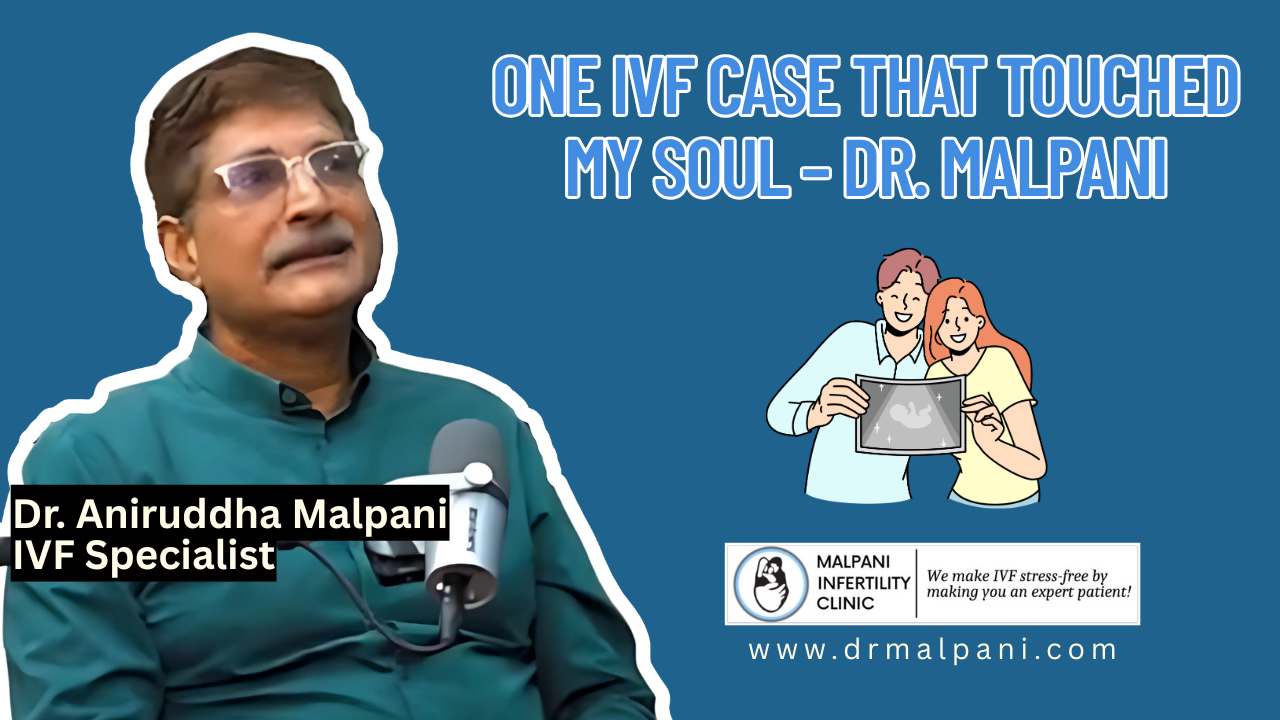
Patient: Dr Malpani, with so many years of IVF experience, is there one case that stands out for you as the most memorable?
Dr. Malpani: That’s a tough one – like asking a mother to choose her favourite child! Honestly, every baby brings joy. But the cases that really stay with me are the technically challenging ones—especially where patients have had multiple failed IVF cycles at other clinics because something was missed.
Patient: Can you give me an example of such a case?
Dr. Malpani: Sure. One that comes to mind is a couple where the husband had a rare condition called globozoospermia. His sperm couldn’t fertilise the egg because they lacked an acrosome—a cap necessary for penetration. The diagnosis had been completely missed elsewhere. We identified it and used a technique called assisted oocyte activation, and they finally had a baby.
Patient: That must have felt amazing—for both you and the couple!
Dr. Malpani: It truly was. But what really brings meaning to my work is when I can use my knowledge to solve a puzzle that no one else could. It’s not about the number of cycles—it’s about restoring hope when others have lost it.
Patient: So would you say rare medical challenges are the most fulfilling for you?
Dr. Malpani: Yes, but not just medically. What really makes each case special are the emotional dynamics—the stories behind the struggles. And here, I must say, my wife Dr Anjali is far better than me at connecting with patients on that level.
Patient: Really? Tell me more about her role at your clinic.
Dr. Malpani: She’s not just my partner in life—she’s the soul of our clinic. Kinder, more intuitive, and very patient-centred. She even wrote a book called “Tries, Cries, Sighs, and Lullabies”. It’s a beautiful collection of real IVF stories—some end in success, some in adoption, and some in acceptance.
Patient: That title sounds powerful. What does it mean?
Dr. Malpani: It captures the entire emotional journey of infertility. The “Cries and Sighs” reflect the pain of not being able to conceive. The “tries” are the repeated IVF attempts. And “Lullabies” represent the joyful ending—whether that’s a baby or finding peace another way.
Patient: That’s really moving. Do you think IVF is more than just a medical problem?
Dr. Malpani: Absolutely. Infertility affects people on multiple levels—psychological, emotional, and social. The medical part is easy for us: retrieve eggs, fertilise, transfer embryos. But emotionally, it shakes self-esteem, strains marriages, and isolates couples from society.
Patient: I’ve definitely felt that pressure. Sometimes I can’t even talk to my husband about it.
Dr. Malpani: That’s so common. Men and women grieve differently. Women often cry with every failed attempt. Men want to help but feel helpless. It creates emotional distance if you don’t communicate openly.
Patient: And socially, it’s hard to avoid people’s questions and judgements.
Dr. Malpani: That’s another burden. Society often treats infertility like a personal failure, especially for women. Which is unfair and untrue. That’s why compassionate counselling and community support are just as vital as medical treatment.
Patient: So would you say every IVF story is different?
Dr. Malpani: Yes—and no. Medically, most cycles follow a similar path: eggs, sperm, embryos. But each couple’s emotional story is completely unique. That’s why we treat patients, not just protocols.
Final Takeaway from Dr Malpani:
Infertility is not just about lab reports and ultrasound scans—it’s about hopes, heartbreaks, and resilience. The best IVF outcomes happen when doctors treat patients as human beings, not just clinical cases.