
What You Need to Know About HSG
When you have been trying for a baby and things just are not working, every new test feels like another mountain to climb. The word HSG might have come up in your doctor’s office, and, if you are like most women, you may have a mix of hope and anxiety. You start googling, your mind races with worst-case scenarios, and you wonder: What will it feel like? What if they tell me something I do not want to hear? Most of all, you are desperate for answers, but scared of what those answers might be.
Understanding HSG: What Is It and Why Is It Done?
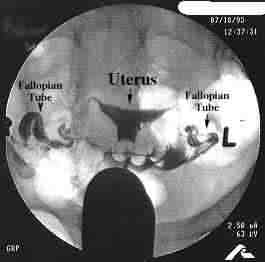
HSG stands for hysterosalpingogram. It sounds intimidating, but it simply means an X-ray test that looks at your uterus and fallopian tubes. Doctors use it to check if your tubes are open and your uterus is healthy in shape. Both are essential for natural conception. If you have been facing trouble getting pregnant, your doctor may recommend an HSG to rule out blocked tubes or any issues inside the uterus, such as fibroids or polyps, that could make it harder to get pregnant.
In simple words, HSG helps answer a basic but crucial question: Are there any roadblocks inside your body that are stopping you from conceiving?
What Happens During an HSG?
The test is typically scheduled just after your period ends, but before you ovulate—usually between day 6 and day 10 of your cycle. This timing ensures your uterine lining is thin and there is no chance of an early pregnancy being exposed to X-rays.
- You will go to an X-ray clinic for the procedure.
- After being positioned on the table, the doctor will gently insert a thin tube (catheter) through your cervix into your uterus. Many clinics, including ours, now use a soft balloon catheter to make this process more comfortable and less painful.
- A special dye that shows up on X-rays is slowly injected into your uterus. As it fills your uterus and flows into the fallopian tubes, the passage of the dye is monitored in real time using X-ray imaging.
- If the dye spills out the ends of your tubes into your abdomen, it means your tubes are open. If it stops partway, it may suggest a blockage.
- Usually, at least three X-ray images are taken: one early on to see the uterine cavity, and one after a few minutes to check for dye spill into the abdomen.
All of this takes only a few minutes, but the emotional impact can feel much longer.
What Do HSG Results Mean?
Normal HSG: The dye outlines the uterus, flows smoothly into the tubes, and spills out into the abdominal cavity. This usually means your tubes are open and your uterus is not misshapen.
Abnormal HSG: Sometimes, the dye does not enter one or both tubes, or it stops partway. This could mean a blockage. Sometimes, the dye outlines an unusual shape inside the uterus, which might mean a fibroid, polyp, or congenital abnormality.
A single open tube is enough for natural conception—so do not panic if only one tube is clear.
If both tubes appear blocked, further steps are needed. But before you worry, remember: HSG is not perfect. Sometimes, a tube can look blocked because of a temporary muscle spasm at the junction where the tube meets the uterus (the cornua). In such cases, your doctor might repeat the test or suggest a laparoscopy for confirmation.
Want to understand more about blocked tubes and what it means for you? Click here
What to Expect: Pain, Risks, and Real Talk
This is the part patients rarely hear upfront: HSG can be painful. Most women feel cramping—sometimes mild, sometimes strong—especially when the dye is being injected. It can feel like a heavy period pain. The good news is that the discomfort usually lasts just a few minutes.
- Take an over-the-counter painkiller (like ibuprofen) one hour before and after the test to help manage cramps.
- Ask your doctor if you need an antibiotic to lower the (small) risk of infection, especially if you have had a history of pelvic infections or if your tubes are known to be swollen (hydrosalpinx).
- You may have some vaginal spotting or discharge after the test. Use a sanitary pad, not a tampon, until it stops.
- It is okay to drive yourself home, but if you are worried, bring a friend or partner.
Sometimes, the test is technically tricky—if the cervix is very tight or small, it helps to have a gynecologist present to assist. At Malpani Infertility Clinic, our team takes extra care to make the experience as gentle and safe as possible. We use modern balloon catheters and gentle techniques, and we prioritize your comfort and dignity every step of the way.
The pain is real, but it is usually brief—and knowing you are one step closer to answers can make it worth it.
of women complete HSG with only mild to moderate discomfort, especially when pain relief and gentle technique are used.
Limitations and Next Steps: What HSG Can and Cannot Tell You
HSG is a powerful tool, but it is not perfect. It tells us whether tubes are open or blocked, and whether the inside of the uterus looks normal. But it cannot tell us:
- Why a tube is blocked (for example, old infection, scarring, or endometriosis)
- How well an open tube actually works or if there are adhesions around it (sticky tissues that can prevent an egg from being picked up)
- If the tube moves and functions normally
If your HSG is normal and you are still not pregnant after three cycles of IUI with superovulation, it may be time to consider other options, like IVF. If the HSG shows blocked tubes, your doctor may recommend confirming with a laparoscopy—a minor surgical procedure that allows direct visualization.
 Laparoscopy shows a large hydrosalpinx on the right side
Very rarely, an HSG can give misleading results if the dye leaks through a torn, unhealthy tube or if the uterus goes into spasm. That is why interpretation by an experienced fertility specialist matters. At Malpani Infertility Clinic, we believe in transparent, honest communication—no sugarcoating, no unnecessary tests.
HSG Alternatives: SSG and Laparoscopy
There are other ways to check if your tubes are open:
- SSG (Sonosalpingogram): Uses ultrasound instead of X-rays to look for dye spill. No radiation, and can be done in the doctor’s office. Good for screening, but less precise than HSG in many cases.
- Laparoscopy: A keyhole surgery under anesthesia that allows direct visualization of the tubes and surrounding organs. Much more invasive and costly, so usually reserved for when HSG or SSG results are unclear or suspicious.
At our clinic, we recommend starting with HSG for most patients—it is quick, effective, and gives us the most essential answers without surgery.
Frequently Asked Questions
Q: How painful is an HSG, really?
A: Most women feel menstrual-like cramps for a few minutes during the dye injection. Taking painkillers beforehand and using modern catheters helps reduce the discomfort. The pain usually fades quickly after the test.
Q: What if my HSG shows blocked tubes?
A: If only one tube is blocked, you can still conceive naturally. If both tubes are blocked, further confirmation with a repeat HSG or laparoscopy may be needed before planning next steps like IVF.
Q: Can HSG results be wrong?
A: Yes, sometimes temporary spasms or technical issues make tubes look blocked when they are not. Experienced doctors can usually spot these situations and recommend repeat testing or alternative assessments if needed.
Q: How soon after HSG can I try for pregnancy?
A: Unless advised otherwise, you can try as soon as the spotting or discharge stops, usually within a day or two. Some studies suggest that HSG may even slightly improve chances of pregnancy in the first few months after the test.
Q: What are the risks of HSG?
A: Serious risks are rare, but include infection and allergic reaction to the dye. Taking antibiotics and using sterile technique greatly reduces these risks.
Q: Which is better—HSG or laparoscopy?
A: HSG is less invasive and provides enough information for most women. Laparoscopy is only needed if HSG is inconclusive or if there are other reasons to look inside the abdomen directly.
Q: Can I drive home after HSG?
A: Most women feel well enough to drive themselves home, but if you are anxious or tend to have significant pain, arrange for someone to come with you.