
Why freezing all embryos is the IVF treatment of choice today
You are sitting across from your partner, staring down at another negative test result. You have done everything right: followed the medications, attended every appointment, and still, you are left with hope tangled with anxiety. You wonder if you are missing something, if there is a better way to give your embryos their best chance. The idea of freezing all embryos in IVF might sound counterintuitive at first, why wait when you are ready now? But for many couples, especially those who have faced disappointment, the “freeze-all” approach is quietly revolutionizing the journey to parenthood, bringing a calm sense of control and a real, evidence-backed boost in success.
- Freezing all embryos before transfer often increases your chances of a healthy pregnancy, especially for younger women and those at risk of hormone imbalances or ovarian hyperstimulation.
- The “freeze-all” strategy can reduce risks and costs by maximizing the use of your embryos from a single egg retrieval.
- This approach gives your body time to recover, making your uterus more receptive for when you are truly ready for transfer.
- Pre-implantation genetic testing (PGT) is only possible with frozen embryos, helping you avoid heartbreak from undetected genetic issues.
- At Malpani Infertility Clinic, we help you decide if freeze-all is right for your situation, based on transparent, no-nonsense advice.
Why Freeze All Embryos?
For years, IVF meant transferring an embryo just a few days after retrieval. But as science and patient stories have shown, that is not always the best path. When your ovaries are stimulated for IVF, your body is flooded with hormones. These can make the uterus less welcoming, even while embryos are ready to thrive. By freezing all embryos and waiting for your hormone levels to settle, you are giving your future baby the very best start, inside a calm, balanced environment, not one thrown off by fertility medications.
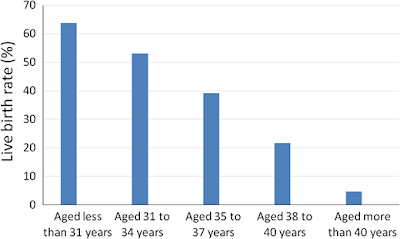
This isn’t just theory. A landmark study of over 20,000 women using the “freeze-all” strategy found that more than half, 50.74%, had a live birth after their first complete IVF cycle. For women under 31, that number was an encouraging 63.81%. For women above 40, the success rate was lower (4.71%), but still meaningful for some. These numbers are not promises, but they are honest, and they give you real perspective when you are weighing your options.
Live birth rate after one complete IVF cycle using the freeze-all strategy.
How Does the Freeze-All Approach Work?
Here is what happens: after ovarian stimulation and egg retrieval, all embryos are frozen using a rapid process called vitrification. This keeps them safe with almost no risk of damage. You then let your body return to its natural hormonal state, or prepare your uterus with gentle medications. Only when your lining is ready, and you are physically and emotionally prepared, do we thaw one or more embryos and transfer them. This “segmentation” of the IVF process allows for smarter, more personal timing, something that can make all the difference for your peace of mind.
The technology used today means the survival rate of embryos after thawing is now between 80% and 100%, which is a massive leap from earlier days. Success rates with frozen transfers have caught up with, and even surpassed, fresh transfers in many cases. At Malpani Infertility Clinic, we use the latest vitrification protocols, so you do not have to worry about losing your precious embryos in the freezing process.
Who Should Consider Freezing All Embryos?
The freeze-all approach is especially helpful if:
- You have high levels of estrogen or progesterone after stimulation (these can reduce implantation chances in a fresh cycle).
- You are at risk for ovarian hyperstimulation syndrome (OHSS), a rare but serious complication.
- You want to do pre-implantation genetic testing (PGT) to rule out chromosomal issues before transfer.
- Endometrial polyps, adenomyosis, or other uterine findings are discovered during your cycle, and you need time to treat them.
- You simply want more flexibility in timing, or need to take a break before transfer for health or personal reasons.
For women with polycystic ovaries or those who respond strongly to stimulation, freezing all embryos is often the safest route. It also helps if you want to preserve embryos for future pregnancies, using younger, healthier eggs, even if you plan to try for a baby years from now.
Most couples feel more in control and less rushed when they know their embryos are safely frozen, waiting for the right moment.
At Malpani Infertility Clinic, we do not push a one-size-fits-all protocol. Our focus is on honest, customized advice. We take the time to explain if freeze-all makes sense for you based on your age, egg numbers, hormone levels, and medical history. You will always know the real facts, not just the ones that sound good.
Benefits and Limitations of the Freeze-All Strategy
The main benefits of freezing all embryos include:
- Reduced risk of OHSS: Especially important for women with PCOS or high egg counts.
- Improved uterine receptivity: Your uterus is more welcoming once hormone levels return to normal.
- More time for genetic testing: PGT can only be performed on frozen embryos, helping prevent heartbreak from undiagnosed genetic issues.
- Greater flexibility: The chance to schedule transfers when your body and mind are ready, not just when the clock says so.
- Cost-effectiveness: Multiple embryos from one retrieval can be used over several cycles, reducing the need for more egg collections.
However, freeze-all is not always necessary for every patient. For women who produce a normal (not high) number of eggs and have healthy hormone levels, the advantage over fresh transfer may be smaller. There is also a very small risk that an embryo might not survive the thawing process, though this is rare with modern techniques.
It is also worth noting that while the freeze-all strategy gives hope to many, age still plays a significant role. The quality of embryos, especially for women above 35, may affect outcomes regardless of the method. That is why honest, individualized discussion is key.
Making the Right Choice for Your IVF Journey
When you are already feeling overwhelmed, by choices, by statistics, by the emotional rollercoaster of infertility, having a clear, evidence-backed path can make a world of difference. The freeze-all approach is not just about science. It is about giving you time, flexibility, and a real shot at success.
At Malpani Infertility Clinic, we believe in putting patient education first. We are not interested in sugar-coating the truth or pushing the latest fad. Instead, we guide you to understand all your options and help you decide what is best for you, not just what is popular or convenient. If you are uncertain about whether to freeze all embryos, or want to know how this fits with your age, diagnosis, or previous IVF attempts, we are here to help you think it through, without pressure and with all your questions respected.
If you’re ready to talk with an expert about your specific situation, speak to a fertility advisor at Malpani Infertility Clinic for completely personalized guidance.
Frequently Asked Questions
Q: What is the freeze-all strategy in IVF?
A: The freeze-all strategy means all embryos created during an IVF cycle are frozen and stored, rather than transferring them immediately. Transfers happen in a later cycle when your body is more prepared.
Q: Does freezing embryos reduce my chances of pregnancy?
A: No. With modern vitrification, frozen embryos have similar or sometimes higher success rates than fresh transfers, especially in younger women and those with high hormone levels during stimulation.
Q: Who benefits most from freezing all embryos?
A: Women at risk for ovarian hyperstimulation, those planning pre-implantation genetic testing, or anyone with hormone imbalances after stimulation often benefit most. It can also help if you want to preserve embryos for later use.
Q: Are there risks to freezing and thawing embryos?
A: The risk that an embryo will not survive thawing is very low (less than 5% with current technology). Most embryos survive and are healthy for transfer.
Q: Can I still do genetic testing if I choose a fresh transfer?
A: No. Genetic testing (PGT) is only possible with frozen embryos, as results take time and the biopsy process requires freezing before transfer.
Q: Will freezing all embryos delay my IVF treatment?
A: It may add a few weeks between retrieval and transfer, but this pause often increases the chance of a successful, healthy pregnancy.