

Egg freezing - the lies doctors peddle about egg freezing
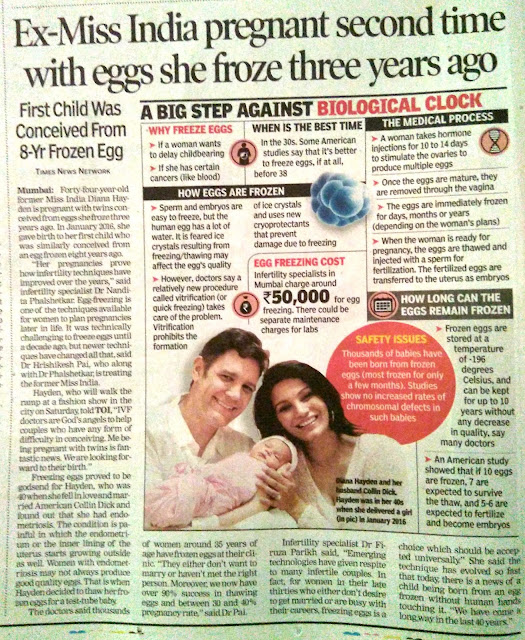
Maybe you have seen those glowing headlines: a celebrity welcomes twins well into her forties with the help of egg freezing. Maybe your friends have shared these stories and it makes you pause: Is egg freezing really a magic solution? Could it really “stop the clock” on your fertility and guarantee you a family whenever you are ready? If you have ever felt both hopeful and anxious reading these stories, you are not alone.
The Hype and the Hidden Truth
It is easy to see why egg freezing is often painted as a miracle. Clinics and advertisements showcase it as a simple, empowering way to delay motherhood and "have it all". But the story is much more complicated, and sometimes, the truth gets lost in the excitement. Here is what most people will not tell you: egg freezing is not a guarantee. It can be an amazing tool for some women, but only if done at the right time and with full awareness of what it can and cannot do.
The idea that you can freeze eggs at any age and expect a baby later is a myth that leads too many women to heartbreak.
Many celebrities and clinics gloss over the uncomfortable facts: the quality and quantity of a woman’s eggs decline sharply with age, especially after 35. If you freeze your eggs in your forties, the odds of achieving a healthy pregnancy with them are very low. This is not pessimism. This is biology.
How Egg Freezing Really Works
Egg freezing, or “oocyte cryopreservation,” involves stimulating your ovaries to produce multiple eggs, retrieving those eggs in a minor procedure, and then freezing them for future use. When you are ready, the eggs are thawed and fertilized in the lab. If healthy embryos develop, they can be transferred into the uterus via IVF.
- Eggs are not all created equal. The younger you are, the healthier your eggs tend to be.
- Not every retrieved egg will survive freezing and thawing.
- Not every surviving egg will fertilize and become a viable embryo.
- Not every embryo will result in a pregnancy, and not every pregnancy will lead to a healthy baby.
The process is safe and routine in the right hands, but it is not as simple as freezing peas. Every step involves loss and uncertainty, especially as women get older.
The Numbers Nobody Likes to Talk About
Here is what most headlines skip: if you are over 40, the chances that a single IVF cycle using your own (fresh or frozen) eggs will result in a live birth are less than 5 percent. With every year after 38, the number and quality of eggs drop steeply. Embryos from older eggs are also more likely to have genetic problems, which means a higher risk of miscarriage or a baby with chromosomal issues.
IVF live birth rate per cycle for women using their own eggs after age 40.
It is even more sobering when you consider that freezing eggs is not a single-step process. You may need more than one cycle to bank enough eggs for a realistic chance at future pregnancy. And the costs, emotional, financial, and physical, can add up quickly.
The Right Time for Egg Freezing
So who should consider egg freezing? The answer is not “every woman.” At Malpani Infertility Clinic, we believe in honest, personalized advice. If you are under 35 and not ready for motherhood (because of career, studies, or not having found the right partner), freezing your eggs can be a sensible option. You are likely to get more eggs, of better quality, and thus have a much better chance of a baby when you are ready.
After 38, however, the reality is harsher. Ovarian reserve (the number of eggs left in your ovaries) falls sharply. Most IVF specialists agree that freezing eggs after 40 is rarely successful, and we do not want to give you false hope or sell you treatments that are unlikely to work.
There are, of course, exceptions. If you need to freeze eggs because of a medical reason (such as cancer treatment), every case deserves a thoughtful, honest conversation. But for “social” egg freezing, the kind you read about in the news, the window of opportunity is much earlier than most women realize.
The Donor Egg Dilemma
Here is another fact that is often swept under the rug: older women who want to get pregnant often end up using donor eggs, because their own eggs are no longer viable. This is a deeply personal decision, and one that many women struggle with. There is nothing wrong with using donor eggs, but it is important to be informed and honest, both with yourself and with your doctor.
It is also not uncommon for women to feel pressured (by themselves, partners, or even by society) to keep their fertility options open as long as possible. But at Malpani Infertility Clinic, we believe in respecting your choices and guiding you with facts, not fantasies.
Real empowerment comes from making decisions with your eyes open, not from being sold a dream that cannot be delivered.
Making the Best Choice for You
If you are thinking about egg freezing, here are some questions to consider:
- How old am I now, and what are my family-building goals?
- Can I afford the costs (not just financially, but also emotionally and physically)?
- Am I doing this because I want to, or because I feel pressured by others?
- What are the real odds of success for someone my age?
- What are my other options (such as embryo freezing, or even considering donor eggs in the future)?
The best decisions are made after honest conversations with trusted fertility experts. At Malpani Infertility Clinic, we do not believe in selling hope at any cost. Our job is to give you all the information you need, without sugarcoating, to make the choice that is right for you.
If you are confused or anxious about your fertility, you are not alone. Many women feel lost in a sea of conflicting advice and glossy success stories. You deserve real answers, not marketing. If you would like to explore your personal options, talk to Dr. Malpani for a no-nonsense, caring discussion about your next steps.
Frequently Asked Questions
Q: At what age should I consider freezing my eggs?
A: The ideal age is before 35, when egg quality and quantity are higher. Freezing after 38 significantly reduces your chances of success.
Q: Does egg freezing guarantee I will have a baby later?
A: No. While egg freezing can increase your chances, it does not guarantee pregnancy. The outcome depends on your age at freezing and other factors.
Q: Is egg freezing the same as embryo freezing?
A: No. Egg freezing stores unfertilized eggs, while embryo freezing stores fertilized eggs (embryos). Embryo freezing generally has higher success rates.
Q: Can I freeze my eggs after 40?
A: Technically yes, but it is rarely effective since egg quality and quantity are much lower. Most clinics, including ours, advise against it unless there are exceptional circumstances.
Q: How many eggs should I freeze for a good chance at pregnancy?
A: This varies, but generally at least 10-15 mature eggs are recommended for a reasonable chance at one child. More may be needed as you get older.
Q: What are the costs involved in egg freezing?
A: Costs include ovarian stimulation, egg retrieval, freezing, storage, and eventual IVF. These can add up and should be discussed in detail with your clinic.
Q: Will using donor eggs be my only option if I wait too long?
A: If your own egg quality or reserve is too low, donor eggs may be recommended. This is a personal decision and should be discussed with your doctor.