

Role of laparoscopy for treating infertility in women
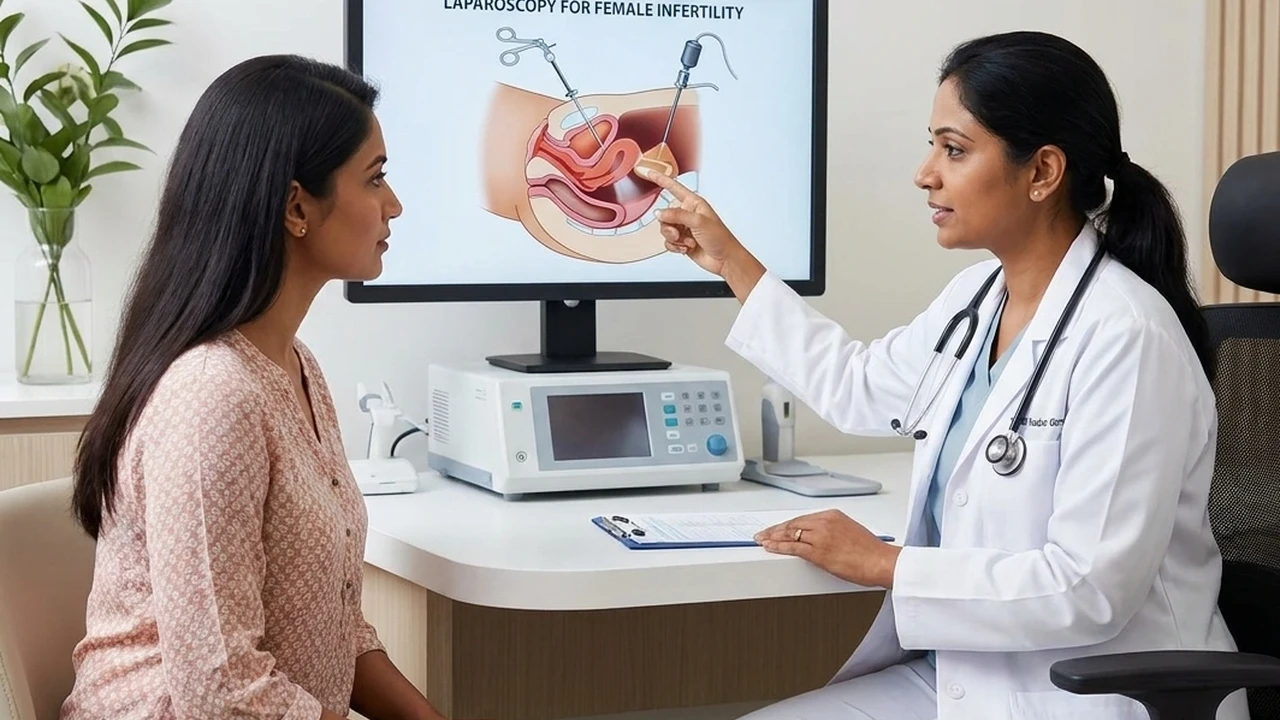
If you are reading this, you might have already been through months or even years of hope, disappointment, and sometimes confusion about why pregnancy is not happening. Maybe you feel like you have tried everything: blood tests, scans, HSGs, changing doctors, and yet, you are still searching for answers. The word laparoscopy keeps coming up, and you wonder: Should I do it? Is it safe? Will it finally give me clarity, or is it just another step on a never-ending journey? If this sounds familiar, you are not alone. So many women and couples stand where you are right now, caught between the anxiety of the unknown and the hope for a solution.
Understanding Laparoscopy in Infertility
Laparoscopy is a minimally invasive surgical procedure used to look directly at the pelvic organs. For women dealing with infertility, it can sometimes be both a diagnostic and therapeutic tool. During this procedure, a small camera (laparoscope) is inserted through a tiny incision near the belly button, allowing your doctor to see inside your abdomen and pelvis. This direct view helps detect hidden problems that other tests might miss, such as mild endometriosis, small ovarian cysts, or adhesions (scar tissue) around the tubes or ovaries. Sometimes, if a problem is found, it can be treated immediately during the same procedure.
What to Expect After Laparoscopy
It is completely normal to feel apprehensive about surgery, even if it is called “minor.” Let us be real: for the patient, every operation feels major. After laparoscopy, most women experience some discomfort, but recovery is far quicker and easier compared to traditional open surgery.
- Mild nausea from anesthesia or medicines
- Pain in the neck and shoulder caused by the gas used during the procedure (this gas sometimes irritates a nerve and makes pain appear in your shoulder)
- Pain or tenderness where the instruments entered your belly
- A scratchy throat if a breathing tube was used
- Cramps, similar to period pain
- Slight vaginal discharge or spotting for a day or two
- General muscle aches
These symptoms usually fade in a day or two. The abdomen may feel bloated for a short while. Always report unusual symptoms, such as high fever, severe pain, or heavy bleeding, to your doctor right away.
Compared to major surgery (laparotomy), which can mean a week in the hospital and a month or more at home, laparoscopy is truly a “kinder cut.” Most women go home the same day, and are up and about much sooner.
Risks and When to Be Cautious
While laparoscopy is generally safe, every surgery, no matter how small, carries some risks. Complications are rare, especially in young, healthy women, but they do happen. The risk of a serious complication, such as damage to the bowel, bladder, or blood vessels, is about 3 out of every 1,000 cases. These risks can be higher if you have had previous abdominal surgeries, infections, large growths, or if you are overweight.
Sometimes, these injuries are noticed right away and corrected during the same operation. Other times, complications may show up after you go home. That is why it is so important to pay attention to your body and keep your doctor informed if something does not feel right.
Serious complications occur in about 3 out of every 1,000 laparoscopies.
For many women, the biggest risk is not from the surgery itself, but from having a laparoscopy you do not actually need.
Choosing the Right Doctor for Your Laparoscopy
Choosing who will perform your laparoscopy is just as important as deciding if you need one. Not all gynecologists are equally skilled in this procedure. Some use outdated techniques, others might miss subtle findings, and unfortunately, a few may even suggest unnecessary surgeries.
Here are some practical questions to ask any doctor before you sign up for laparoscopy:
- How many laparoscopies have you done? A more experienced surgeon is less likely to make mistakes and more likely to recognize subtle findings.
- Do you use multiple entry points (“multiple punctures”)? This allows a better, more thorough look inside the pelvis.
- Will you record the surgery (video or photos) and give me a copy? Documentation is your shield. It lets you seek a second opinion and prevents you from having to repeat unnecessary procedures.
- If you find a problem, will you fix it right away? Ideally, your doctor should be able to treat certain issues during the same surgery, so you do not have to go through two procedures.
At Malpani Infertility Clinic, we believe patients deserve full transparency. We always provide you with documentation, and our doctors discuss every single finding with you after the procedure.
Laparoscopy or HSG? Weighing Your Options
This is a common dilemma for many couples. Hysterosalpingography (HSG) is a special X-ray test that checks if your fallopian tubes are open. It is quick, non-surgical, and much less expensive. In our practice, we usually start with HSG because it can confirm tube patency and provides a permanent record for you to keep.
However, HSG only shows the inside of the tubes and the uterine cavity. It cannot detect issues like endometriosis or adhesions around the tubes and ovaries. Laparoscopy, on the other hand, can reveal these subtle problems. If the tubes appear blocked on HSG, or if there are unexplained symptoms like pelvic pain, laparoscopy might be suggested as the next step.
Beware of being pushed into repeated laparoscopies. Some doctors may want to “double-check” what another surgeon saw, or may not trust previous reports. If your first laparoscopy was normal and there is no new reason, you can (and should) politely refuse unnecessary repeat surgeries. Your body, your choice.
What Happens After Laparoscopy?
Your follow-up visit is crucial. This is when your doctor will discuss what was found and what it means for your fertility journey. There are generally three possible outcomes:
- Everything looks normal: This is the most common result. It confirms “unexplained infertility,” which, while frustrating, can also be reassuring, many couples with unexplained infertility do go on to conceive, either spontaneously or with simple treatments like IUI.
- Findings that were treated during the procedure: For example, adhesions were cut, or mild endometriosis was treated. Sometimes, your doctor may suggest a follow-up HSG or “second look” laparoscopy later to check if the problem is resolved. Remember: not every finding needs to be fixed. Small fibroids, mild endometriosis, or small cysts are often harmless and don’t always require intervention.
- Findings that could not be treated during laparoscopy: If the tubes are badly damaged or blocked, IVF may be recommended. In such cases, further surgery rarely helps, and moving directly to IVF saves you time, money, and heartache.
Sometimes, laparoscopy reveals “incidental” findings, things like tiny endometriosis spots or cysts that often have no real impact on fertility. Removing these can occasionally do more harm than good. An honest doctor will tell you when treatment is unnecessary.
Making the Decision: Is Laparoscopy Right for You?
Laparoscopy is not for every woman with infertility, and it is certainly not the first test we recommend. At Malpani Infertility Clinic, we use laparoscopy sparingly, only when it will truly add value in your diagnosis or treatment. For most women, HSG, ultrasound, and hormone tests provide enough answers to move forward with treatment. Laparoscopy is mainly helpful if:
- You have abnormal HSG results and need confirmation or possible correction
- There is a high suspicion of endometriosis or pelvic adhesions (for instance, if you have chronic pelvic pain or a history of pelvic infections or surgeries)
- You have failed several cycles of IUI or IVF with no explanation
Ultimately, the decision to proceed with laparoscopy should be made after a frank discussion with a doctor you trust. You deserve to understand why the procedure is being suggested, what it involves, and how it could affect your next steps.
Frequently Asked Questions
Q: How long does it take to recover from laparoscopy?
A: Most women are up and about within a day or two. Some mild discomfort or bloating can last a few days, but most people return to normal activities within a week.
Q: Is laparoscopy painful?
A: You will be asleep during the procedure. Afterwards, you may feel some pain at the incision sites, mild cramps, or a sore throat from the breathing tube, but these usually resolve quickly.
Q: Is laparoscopy always necessary for infertility?
A: No. Most infertility evaluations do not require laparoscopy. It is usually reserved for cases where non-invasive tests are inconclusive or when there are specific symptoms or abnormal findings.
Q: Can laparoscopy treat infertility?
A: Sometimes. If endometriosis, adhesions, or other treatable conditions are found, the surgeon can often correct them during the procedure. However, not all problems identified are relevant to infertility or require treatment.
Q: Should I get a second opinion before having laparoscopy?
A: Absolutely. It is wise to discuss your case thoroughly with a fertility specialist and ensure you understand the reasons for the procedure and the alternatives.
Q: Are there alternatives to laparoscopy?
A: Yes. HSG and advanced ultrasound techniques are non-invasive ways to assess the uterus and fallopian tubes. Laparoscopy is only needed in select situations.