

Ovulation Prediction Test Kits, Anovulation, Ovulation Ovulation . Ovarian Failure
There is nothing more frustrating than month after month of uncertainty, waiting for your period to arrive, hoping this will finally be the month, and feeling crushed when it is not. Many couples silently wonder: Is my body really releasing an egg? Could I be missing my fertile window? If you find yourself scrutinizing every cramp, every calendar date, or even every home test, you are not alone. Understanding your ovulation and how to track it can make all the difference between helplessness and hope.
Understanding Ovulation and Why It Matters
Ovulation is the monthly release of a mature egg from your ovary. For most women, this happens about halfway through their menstrual cycle, but the actual day can vary. If you do not ovulate regularly, or if ovulation is unpredictable, getting pregnant can feel like a guessing game. The good news: with the right guidance and a few simple tools, you can decode your body’s signals and take back control.
At Malpani Infertility Clinic, we see many women who feel lost after failed attempts or confusing test results. We believe that every woman deserves to understand what is really happening in her body. With empathy and honesty, let’s explore the practical ways to track ovulation and what to do if things seem off.
Ultrasound: Seeing Ovulation in Action
The egg grows inside a small fluid-filled sac in your ovary called a follicle. Ultrasound scanning lets us watch this follicle develop and mature. Using a gentle vaginal probe, your doctor can see the follicles on a screen, usually starting from day 10 or 11 of your cycle. As the follicle grows (about 1 to 2 mm each day), it becomes visible when it is around 7 to 8 mm in size and is ready for ovulation when it reaches 18 to 25 mm.
When ovulation occurs, the mature follicle releases the egg and the follicle itself often disappears from the scan. Sometimes a small pocket of fluid appears behind the uterus, proof that the egg has been released. If the follicle does not grow normally, or fails to rupture, we can spot these problems early with ultrasound.
- Ultrasound follicle tracking usually takes just a few minutes and does not require any special preparation, except an empty bladder.
- Modern vaginal scans are much more comfortable and accurate compared to older abdominal scans, which needed a painfully full bladder.
You can actually see your follicle grow and ovulate on the screen, making your journey feel a little less mysterious and a lot more real.
Ovulation Prediction Kits: Testing at Home
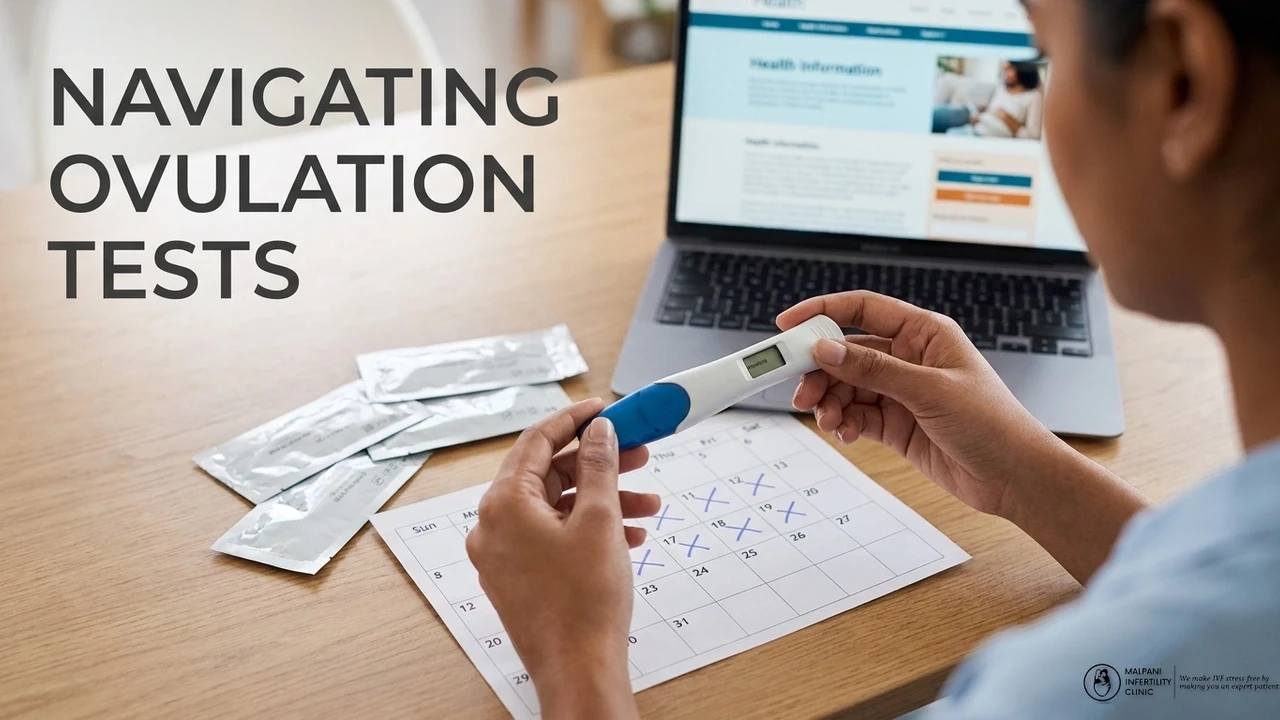
If you prefer privacy and convenience, ovulation prediction kits (OPKs) are a practical tool. These simple urine tests detect a surge in luteinizing hormone (LH), a chemical signal that tells your ovary to release an egg. The LH surge happens one to two days before ovulation, so a positive test tells you your most fertile days are just ahead.
Here’s how to use them:
- Start testing about two days before you expect to ovulate. If you have a regular 28-day cycle, begin around day 11. If your cycle varies, you may need to start earlier and test for more days.
- Collect your urine at the same time each day. First morning urine is often best.
- A positive result means your LH is surging and ovulation should occur within 12 to 44 hours.
If you have irregular cycles, tracking can feel tricky. For example, if your periods range from 27 to 34 days, you could ovulate anywhere from day 13 to 20. In this case, start testing on day 11 and keep going until you see a positive or reach your latest possible ovulation date. Most women will catch their LH surge within five to ten days of testing.
If your kit never turns positive, do not panic, but do take this as a sign to check in with your doctor. Sometimes, ovulation does not happen every cycle, or there may be a deeper issue. The team at Malpani Infertility Clinic can help you interpret your results and plan next steps.
Newer digital fertility monitors can also track both LH and estrogen levels, giving you even more detail about your fertile window, though these are more expensive and not always necessary.
Other Ways to Track Ovulation
Some women use pocket microscopes to look for "saliva ferning." When you are about to ovulate, your dried saliva can form tiny crystal patterns under the microscope. While this sounds fascinating, these devices are not always reliable, and their usefulness is still debated.
Blood tests can offer another layer of certainty, especially if you are under medical care. Two hormones matter most:
- Estradiol: This rises as the follicle grows. Doctors sometimes check this during fertility treatments to see if the eggs are maturing.
- LH: The "surge" can also be measured in blood, usually just before ovulation.
These tests are rarely needed unless you are undergoing ovulation induction or have a complex fertility history.
When Ovulation Is Abnormal
Maybe your periods are irregular: too short (less than 21 days), too long (over 35 days), or sometimes missing for months. This can mean that ovulation is not happening as it should, or not at all. The technical terms are:
- Anovulation: Not ovulating at all
- Oligomenorrhea: Infrequent periods (gaps of three months or more)
- Amenorrhea: No periods at all
Multiple hormone systems must work together for regular periods and ovulation. If things are off, a few simple blood tests can often show what is wrong:
- FSH (Follicle Stimulating Hormone): High FSH can mean your ovaries are running out of eggs (poor ovarian reserve). Very high levels may indicate ovarian failure. If your FSH is borderline, some doctors do a clomiphene challenge test for more information.
- LH: High LH (especially if higher than FSH) can signal polycystic ovarian syndrome (PCOS).
- Thyroid hormones (TSH, thyroxine): Thyroid problems can disrupt ovulation.
- Prolactin: High levels can stop ovulation and may cause a milky breast discharge (not related to pregnancy). Sometimes, high prolactin is due to a tiny pituitary tumor, but most cases are easily managed with medication.
Even women with regular cycles can sometimes have poor egg quality that is only revealed through these tests. At Malpani Infertility Clinic, we believe in giving you honest answers, not false hope, so you can focus your energy on the best solutions.
Understanding Ovarian Failure
Ovarian failure means the ovaries stop producing eggs, often leading to early menopause. The most common sign is the absence of periods (amenorrhea). Sometimes it is genetic, as in Turner’s syndrome, or can happen after cancer treatments, surgery, or for reasons we simply cannot explain.
of women with absent periods have true ovarian failure.
Diagnosis is made with a high FSH reading. For most women with ovarian failure, traditional ovulation induction will not work. The best option is egg donation IVF, though rare spontaneous recoveries can sometimes occur.
Treatments to Induce Ovulation
If blood tests show you are not ovulating, treatment can be highly effective, sometimes even life-changing. There is no one-size-fits-all approach. Your doctor will choose medicines based on your unique hormone levels and history.
- Clomiphene citrate: The first and most common medicine to help the ovaries release an egg.
- Gonadotropins (HMG, FSH): Injectable hormones for women who do not respond to clomiphene, or who have low FSH/LH (hypogonadotropic hypogonadism).
- HCG injection: Given to trigger the final release of the egg when the follicle is mature.
- Bromocriptine or cabergoline: Used when high prolactin is the problem.
- GnRH analogues, growth hormone, dexamethasone: Sometimes used in more complex cases or poor responders.
Ovulation induction involves patience and careful monitoring, often with daily ultrasounds and blood tests. It can feel tedious, but the reward is worth it: correcting ovulation issues is one of the most successful treatments in fertility medicine.
To dive deeper into these treatments, you can read more in our chapter on Understanding Your Medicines.
Frequently Asked Questions
Q: How can I tell if I am ovulating?
A: You can track ovulation using home urine LH kits, ultrasound scans, blood hormone tests, or sometimes by monitoring physical signs like regular periods and changes in cervical mucus. For the most accurate answers, consult your doctor.
Q: What should I do if my ovulation test never turns positive?
A: If your ovulation prediction kit remains negative across several cycles, it may mean you are not ovulating regularly. Please consult a fertility specialist to investigate further.
Q: Are irregular periods always a sign of ovulation problems?
A: Not always, but irregular cycles often signal that ovulation is unpredictable or absent, which can affect your chances of pregnancy. Simple blood tests can clarify what is happening in your body.
Q: Can ovulation be restored if I have ovarian failure?
A: In most true ovarian failure cases, natural ovulation cannot be restored. However, egg donation IVF provides a successful path to pregnancy for many women.
Q: How long should I try tracking ovulation before seeking medical help?
A: If you have been trying to conceive for over a year (or six months if you are over 35), or if your cycles are very irregular, consult a fertility expert sooner rather than later.
Q: Are ovulation kits accurate?
A: Ovulation kits are usually reliable, but not foolproof. Certain medications, medical conditions, or improper use can affect results. If in doubt, seek medical guidance.