
Infertility in the Aging Women. Egg Freezing. The Donor Egg Option
Maybe you find yourself lying awake at night, counting the months, or years, you have hoped for a positive pregnancy test. Maybe you have always been successful at everything you set your mind to, yet somehow, building your family has become the one dream you cannot simply will into existence. If you are an older woman facing infertility, you are not alone. The ache of a ticking biological clock and the frustration of treatments that do not work can feel overwhelming, especially when nobody around you seems to understand just how much this matters to you.
What are the fertility issues unique to older women?
How can donor eggs help the older infertile woman?
What Happens to Fertility as Women Age?
Every woman is born with all the eggs she will ever have. This number, about one to two million at birth, shrinks dramatically over time. By puberty, only about 300,000 eggs remain, and by the early 40s, the number is often less than 10,000. But it is not just the quantity of eggs that changes: the quality of each egg also declines as years pass. This means that even for women who are still ovulating regularly, the chances of those eggs leading to a healthy pregnancy drop, especially after age 35.
At Malpani Infertility Clinic, we see this every day: women who have spent years focusing on their careers or other dreams, now face the reality that nature did not intend for female fertility to last forever. And yet, society often sends mixed messages, encouraging women to wait, only to later judge them for wanting a baby "at their age."
Unique Struggles for Older Women Trying to Conceive
The first challenge is emotional. Many older women feel isolated, as if wanting a baby after 35 or 40 is somehow "unnatural." The truth is, there is nothing unnatural about wanting a family, no matter your age. But the process is undeniably harder. Older women often respond less robustly to fertility medications and have lower odds of pregnancy, even with advanced treatments like IVF.
Here are some unique issues faced by women in their late 30s and 40s:
- Lower response to ovarian stimulation, meaning fewer eggs retrieved during IVF
- Increased risk of miscarriage, it can be as high as 50% after age 41
- Higher chance of chromosomal abnormalities in embryos, such as Down syndrome
- Greater risk of pregnancy complications like high blood pressure or diabetes
- More social stigma and less support from friends or family
There is also the relentless pressure of time. For younger women, there may be months or years to try different treatments. For older women, every cycle feels critical, and the emotional stakes are sky-high.
Trying the same treatment over and over, hoping for a different result, often wastes time that older women simply do not have.
What Fertility Tests Actually Matter?
Many clinics advertise fancy-sounding tests, but the basics still matter most. To understand your own fertility, you will likely get:
- AMH blood test: This tells you roughly how many eggs remain, but not their quality.
- FSH and estradiol tests: Checked early in the cycle, these show how hard your body is working to stimulate your ovaries.
- Antral follicle count (AFC): An ultrasound that counts small resting follicles in your ovaries, giving a real-time glimpse of ovarian reserve.
These results help your doctor recommend a treatment plan: whether to continue with IVF using your own eggs, consider natural cycle IVF (using minimal medications), or explore donor eggs or egg freezing.
Advanced genetic screening of embryos (such as preimplantation genetic screening, PGS) may sound promising, but real-world data shows it does not always boost success rates for older women. In fact, sometimes it can even reduce the chance of pregnancy. For a candid discussion on this, read Dr. Malpani's view on PGS.
Some clinics, including ours, also offer advanced techniques like assisted zona hatching, which may help some embryos implant better, especially after repeated IVF failures.
Unfortunately, despite new medications and alternative therapies (like acupuncture, DHEA, or yoga), there is currently no proven way to reverse egg aging or dramatically improve egg quality once it has declined. If you are ovulating on your own but have a low egg count, natural cycle IVF might be worth discussing, as it avoids heavy medication and focuses on the best egg you naturally produce each month.
Could Donor Eggs Be the Answer?
For some women, donor eggs are not just an option, they are the only realistic path to pregnancy. This can be a devastating realization, especially for those who have spent years hoping for a genetic connection with their child. But here is the no-nonsense truth: when egg quality is too low, no amount of wishful thinking or medical intervention will change the odds. Donor eggs provide a proven, effective solution, and they help many women become mothers who would otherwise never have that chance.
Live birth rate per embryo transfer using donor eggs, regardless of the age of the woman carrying the pregnancy.
Egg donors are typically young women with healthy ovarian reserve. The eggs are fertilized with sperm from your partner (or a donor), and the resulting embryos are then transferred into your uterus. You carry the pregnancy, give birth, and nurture your child, just as if the egg were your own. The main difference is that the child will not share your DNA, but will still be your baby in every other sense.
At Malpani Infertility Clinic, we run a large, successful anonymous egg donation program. Each couple is supported with expert counseling, honest discussions about what to expect, and a caring team that truly understands the emotional journey. We also help with the practical details, from matching you with a suitable donor to guiding you through the medical and legal process.
This is not an easy decision. Some couples need time to grieve the loss of a genetic link, and that is completely normal. But thousands of families have found happiness through egg donation, and it remains one of the most successful fertility treatments for older women or those with poor ovarian reserve.
What About Freezing Your Eggs?
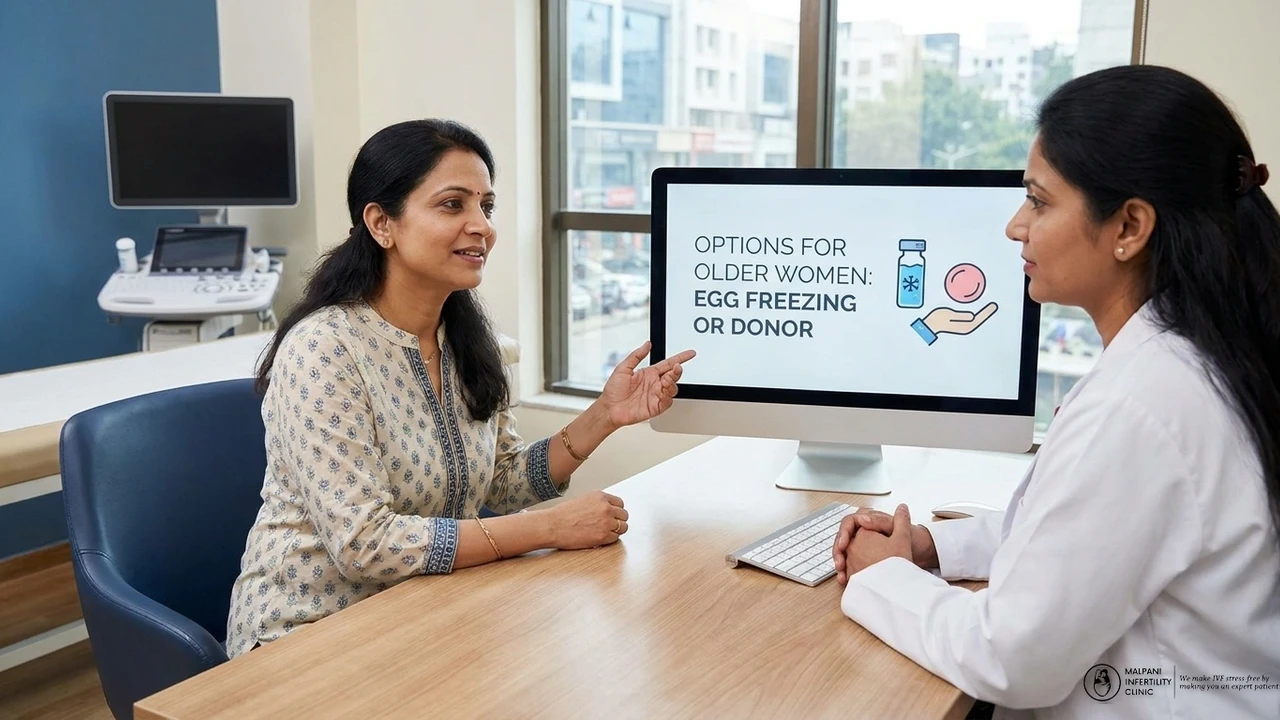
If you are not ready to start your family yet but want to keep your options open, egg freezing is now a reliable option thanks to new "vitrification" technology. This allows us to freeze and store your eggs when they are healthiest, ideally before age 35. When you are ready, these eggs can be thawed, fertilized, and transferred, giving you a much better chance of pregnancy with your own genetic material in the future.
Egg freezing is not a guarantee, but it is a powerful tool for women who want to plan ahead. At Malpani Infertility Clinic, we help women assess whether egg freezing is right for them, and explain the process openly, no misleading promises, just the facts you need to make the best decision for your future.
Making the Best Decisions for Your Journey
There are no shortcuts or magic fixes on this road. What matters most is getting honest advice, understanding your real chances, and choosing the option that gives you the best shot at the family you want. If you feel overwhelmed or unsure, talking openly with an expert who truly has your interests at heart can make all the difference. At Malpani Infertility Clinic, we pride ourselves on guiding couples through even the toughest conversations, helping you weigh every option and supporting you at every step, without sugarcoating the realities or pushing you into anything you are not ready for.
Frequently Asked Questions
Q: Can I still get pregnant with my own eggs after age 40?
A: Some women do conceive with their own eggs after 40, but the chances are much lower. The success rate per IVF cycle is often below 10%. For many, using donor eggs offers a much higher chance of success.
Q: Are donor egg pregnancies safe for women over 45?
A: Many women have healthy pregnancies with donor eggs, even after 45, but there are higher risks of complications like high blood pressure or gestational diabetes. It is important to have a full health check and discuss risks with your fertility doctor.
Q: Will the child feel like mine if I use a donor egg?
A: For most women, bonding happens naturally during pregnancy and after birth. The child will grow in your womb, be born by you, and you will be their mother in every way that matters except genetics.
Q: What is the process for egg freezing at Malpani Infertility Clinic?
A: After an initial assessment, you will take medications to stimulate egg production. Eggs are retrieved in a short procedure, then frozen using advanced vitrification for future use. Learn more here.
Q: Are there any ways to improve my egg quality?
A: While some supplements and lifestyle changes may help overall health, there is no proven way to reverse age-related egg decline. Early diagnosis and the right treatment choices are key.
Q: How do I know if donor eggs are right for me?
A: If you have had repeated failed IVF cycles, very low ovarian reserve, or genetic concerns, donor eggs may be the best chance for pregnancy. An honest conversation with a fertility expert can help you decide.