
Ectopic Pregnancy : The Time Bomb in the Tube
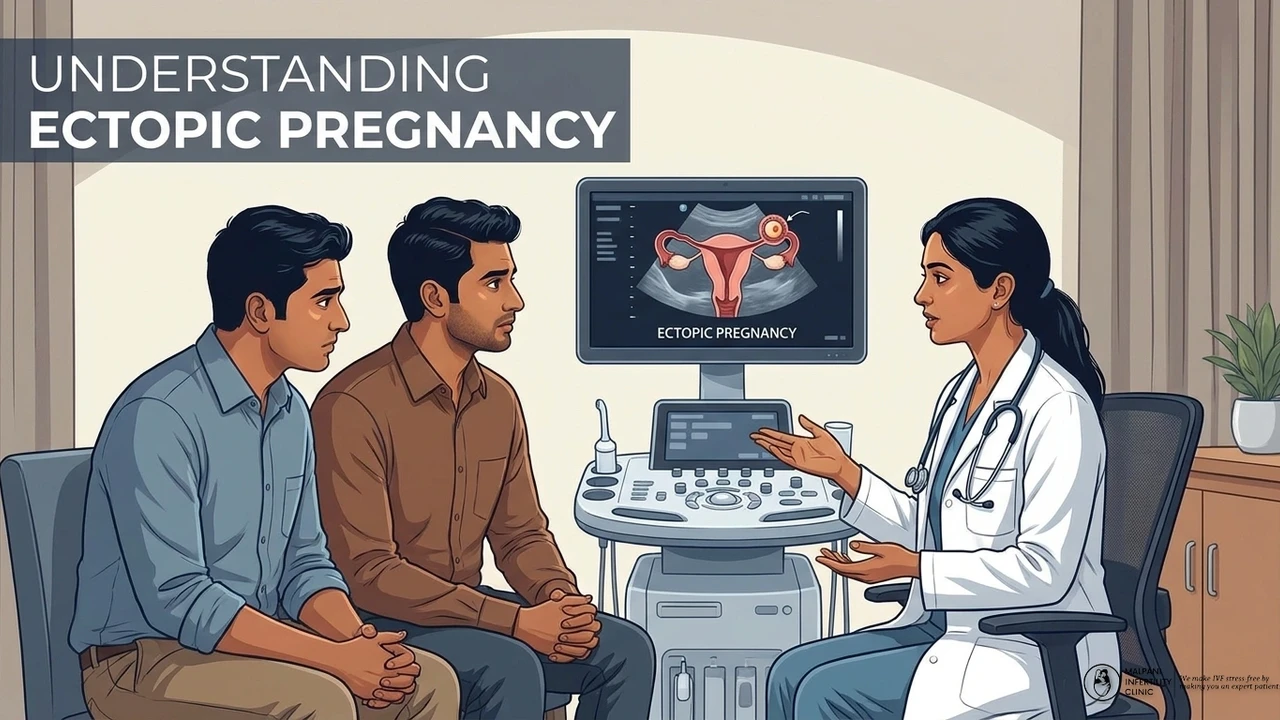
You have just found out you are pregnant, and instead of the happiness you expected, there is fear and confusion. You are told the pregnancy is not where it should be. Your doctor mentions an "ectopic pregnancy." Your mind races with questions: "Why me? What does this mean for my future? Will I ever be able to have a baby?" If any of this sounds like what you are experiencing right now, know that you are not alone, and you are not to blame. Ectopic pregnancy is one of the toughest hurdles many hopeful parents face. At Malpani Infertility Clinic, we believe you deserve clear answers, honest guidance, and genuine support, not false hope or sugarcoated stories.
What is an ectopic pregnancy?
How is ectopic pregnancy diagnosed?
How is ectopic pregnancy treated?
How does an ectopic pregnancy affect future fertility?
What is an Ectopic Pregnancy?
An ectopic pregnancy happens when a fertilized egg implants and begins to grow outside the uterus. In most cases, about 95 percent, the embryo attaches itself inside one of the fallopian tubes. This is why you may hear the term "tubal pregnancy." The fallopian tube is not designed to stretch and nurture a growing pregnancy. If not caught in time, the tube can rupture, causing severe pain and internal bleeding. Less commonly, ectopic pregnancies can occur in the ovary, cervix, or even the abdominal cavity. Each of these locations brings its own set of challenges and risks.
Normally, after the egg is fertilized by the sperm in the tube, it travels gently towards the uterus, guided by tiny hair-like structures called cilia. If the tube is damaged or partially blocked, sometimes by a previous infection, endometriosis, or earlier surgery, the embryo can get stuck and start growing in the wrong place. Many women who have experienced infertility are at higher risk, even if the exact reason is not always clear. Sometimes, subtle damage to the tube goes unnoticed until something like this happens. And yes, even after fertility treatments like IVF, there is still a small risk, because embryos can sometimes move back into the tube after transfer.
- Previous pelvic infections (like chlamydia or gonorrhea)
- Earlier surgeries on the tubes or pelvis
- History of endometriosis or appendicitis
- Use of an intrauterine device (IUD) at conception
- Previous ectopic pregnancy
- Fertility treatments (like IVF or ovulation induction)
- Smoking or age over 35
How is Ectopic Pregnancy Diagnosed?
One of the most difficult things about ectopic pregnancy is that the symptoms can be subtle or confused with a normal early pregnancy or even a delayed period. Some women have no idea anything is wrong until they develop pain or unusual bleeding. The classic signs include:
- Abnormal vaginal bleeding (sometimes mistaken for a late or odd period)
- Lower abdominal pain, often on one side
- Shoulder tip pain or a feeling of lightheadedness (if bleeding is severe inside the abdomen)
- Fainting or shock if the tube ruptures (this is an emergency)
In the past, ectopic pregnancies were often diagnosed only after the tube had ruptured, a true emergency. Today, with proper monitoring and awareness, we can usually catch them earlier, before life is at risk.
Diagnosis is a step-by-step process:
- Blood tests for pregnancy hormone (beta HCG): In a normal pregnancy, this hormone doubles every 48 hours. If your levels rise too slowly, plateau, or fall, this raises suspicion for ectopic pregnancy or miscarriage.
- Transvaginal ultrasound: This is a special scan that looks directly inside your uterus and pelvis. If your HCG levels are higher than 2000 mIU/ml and there is no pregnancy seen inside the uterus, doctors become concerned about an ectopic pregnancy. Sometimes, a gestational sac is seen outside the uterus, confirming the diagnosis.
- Serum progesterone: Lower levels (less than 15 ng/ml) can suggest an abnormal or ectopic pregnancy, but this is usually used together with other tests.
- Laparoscopy: If the diagnosis is unclear, a minimally invasive surgery called laparoscopy can help doctors see directly inside your abdomen and confirm where the pregnancy is growing.
Early diagnosis means you have more options and a better chance to protect your future fertility.
Sometimes, differentiating an ectopic pregnancy from a miscarriage is not straightforward. If needed, a gentle scraping of the uterus (curettage or D&C) may be done; if no pregnancy tissue is found in the uterus, ectopic pregnancy is suspected.
How is Ectopic Pregnancy Treated?
Hearing you have an ectopic pregnancy is overwhelming. But the good news is that, with early detection, it is possible to save your fallopian tube and protect your chances of having a healthy baby in the future.
Treatment depends on how early the pregnancy is discovered, your symptoms, and your blood test results. At Malpani Infertility Clinic, we tailor every plan to your unique medical situation and future fertility wishes.
- Expectant management: For very early, small ectopic pregnancies with low and falling HCG levels, sometimes all that is needed is careful observation. Your body may absorb the pregnancy naturally. This option is only safe if you have no symptoms and can come for regular check-ups.
- Medical treatment: An injection of methotrexate (a medicine that stops cells from dividing) is given to dissolve the ectopic pregnancy tissue. This works very well for early cases, and most women do not need surgery. After the injection, blood tests monitor the HCG level until it drops to zero, confirming the pregnancy has ended. Methotrexate is safe for most women, though you will need to avoid alcohol and certain vitamins while on this medicine, and you may feel mild side effects like mouth ulcers or stomach upset.
- Ultrasound-guided injection: In some cases, especially when the ectopic is easy to see on ultrasound and has not ruptured, a medicine (like potassium chloride) can be injected directly into the pregnancy to stop its growth.
- Surgical treatment: If the tube has ruptured or if you have severe pain or internal bleeding, emergency surgery is needed. Most surgeries today are done using laparoscopy (keyhole surgery), which is less painful and allows you to recover faster. If the tube can be saved, doctors may remove only the pregnancy (salpingostomy). If the tube is badly damaged, it may need to be removed (salpingectomy). Losing a tube can feel like a double blow, grieving both the pregnancy and your fertility. Let yourself process these emotions, and do not hesitate to seek support.
At Malpani Infertility Clinic, we always aim to preserve your fertility wherever possible, and you are encouraged to ask us about the safest, most effective treatment for your unique situation.
How Does an Ectopic Pregnancy Affect Your Future Fertility?
After an ectopic pregnancy, it is normal to worry about whether you will be able to conceive again. The reality is, having one ectopic pregnancy does increase your risk of another, and sometimes both tubes are affected by the same underlying issue. However, there is hope: about 60 percent of women who have had an ectopic pregnancy will go on to have a healthy pregnancy in the uterus the next time, without needing any further treatment.
of women with a previous ectopic pregnancy will have a successful, normal pregnancy in the future.
If you do not get pregnant within a year of trying after an ectopic, further tests are recommended. This may involve another laparoscopy to check the remaining tube, or exploring options like ovulation induction or IVF. The right path forward depends on what was done during your ectopic treatment and how healthy your remaining tube is.
Remember: the very fact that you had an ectopic pregnancy at all means that your eggs and sperm have already met, which is a sign that your reproductive system is working at least to some extent. With the right care and honest guidance, your chances of having a baby are still very real.
You are not defined by one setback, your journey is still yours to shape, and you have choices.
At Malpani Infertility Clinic, we understand that the emotional wounds left by an ectopic pregnancy can be as deep as the physical ones. We are here to support you, answer all your questions, and help you plan your next steps, whether that means trying again naturally, considering IVF, or simply giving yourself time to heal.
Frequently Asked Questions
Q: What are the signs that I might have an ectopic pregnancy?
A: The most common signs are abnormal vaginal bleeding, pain on one side of the lower abdomen, and sometimes faintness or shoulder tip pain. If you are pregnant and develop these symptoms, get checked immediately.
Q: Can an ectopic pregnancy move into the uterus if caught early?
A: No. Unfortunately, once the pregnancy has implanted outside the uterus, it cannot be moved. The best option is to treat it early to avoid complications and protect your fertility.
Q: Will I lose both my tubes if I have an ectopic pregnancy?
A: Not always. If the ectopic is caught early and the tube is not badly damaged, it can often be saved. Even if a tube is removed, many women can still conceive with one healthy tube, or with fertility treatments if needed.
Q: How soon can I try to get pregnant again after an ectopic pregnancy?
A: Most doctors recommend waiting at least three months to allow your body to heal, especially if you received methotrexate. Your fertility specialist can help you plan the right timing based on your personal situation.
Q: Does having an ectopic pregnancy mean I am infertile?
A: Not necessarily. Many women go on to have healthy pregnancies after an ectopic. However, your risk of another ectopic is higher, and if both tubes are affected, you may need fertility treatments.
Q: What can I do to lower my risk of another ectopic pregnancy?
A: Managing infections early, avoiding smoking, and getting early care if you suspect pregnancy can help. Regular check-ups with a fertility expert are crucial if you have a history of ectopic pregnancy.