

Embryo Transfer - the climax of the IVF treatment !
If you are reading this, you may be approaching the day of your embryo transfer with a mix of hope, anxiety, and a hundred unanswered questions. Maybe you have been through failed cycles, or perhaps this is your very first attempt at IVF. The anticipation is overwhelming. You might find yourself lying awake at night, wondering: Will this time be different? Did I do everything right? Am I somehow the reason things have not worked so far? You are not alone in these worries. Every patient who walks into Malpani Infertility Clinic with dreams of parenthood carries the same burdens, and the same courage.
What Really Happens During Embryo Transfer?
Embryo transfer is the much-awaited moment in an IVF cycle, the point where science, hope, and nature meet. At Malpani Infertility Clinic, we treat this as not just a routine procedure, but the culmination of your journey so far. The process itself is gentle and typically does not require anesthesia, though a mild sedative can be given if you feel especially anxious.
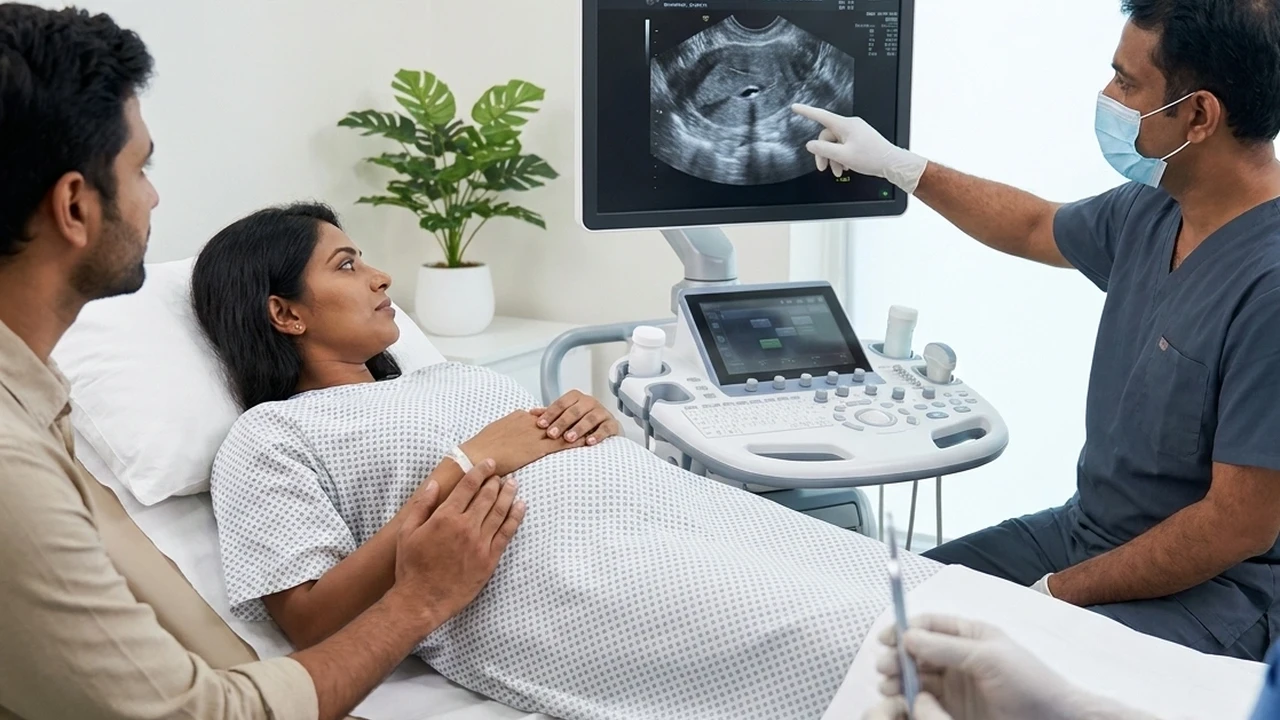
On the day of transfer, you lie comfortably, no hospital gowns or intimidating machines, just a calm, focused environment. The doctor uses a vaginal speculum to gently visualize your cervix. Then, using a thin, soft catheter, embryos suspended in a nourishing culture medium are loaded up. Under ultrasound guidance, the catheter is skillfully threaded through the cervix and into the uterus, where the embryos are placed exactly where they need to be. The entire process usually takes about 10 to 20 minutes, and most women describe it as similar to a pap smear: a little pressure, a little discomfort, but not pain.
 Fig 1. Ultrasound guided embryo transfer. The air bubble echo confirms accurate placement of the catheter in the uterine cavity
We believe in transparency and empowerment. That is why at our clinic, you always receive photographs of your embryos before transfer. This is your right as a patient and an important part of your IVF documentation. If your clinic ever hesitates to provide these, consider it a red flag about the quality of care.
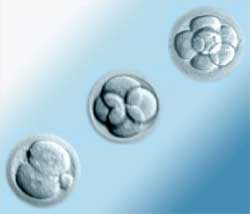 Fig 2. 3 Grade A embryos. These have 2-cells, 4-cells, and 8-cells respectively
Embryos are graded according to how they look and how well they divide. The best embryos, called Grade A, have between 4 and 8 evenly-sized cells, clear cytoplasm, and very few fragments. Lower grades have more fragmentation, but if they implant, the babies are just as healthy. If you only have poor-quality embryos for transfer, it can be disheartening, but remember: if a pregnancy results, your child will be completely normal.
How Many Embryos Should Be Transferred?
Deciding how many embryos to transfer is one of the most sensitive, and confusing, decisions you will face. Many assume that transferring more embryos guarantees a higher chance of pregnancy. While that is partly true, there is a catch: the risk of twins, triplets, or even higher-order multiples goes up, bringing potential complications for both mother and babies.
Some countries have strict rules, like the UK, where only two embryos can be transferred. Scandinavian countries often recommend single embryo transfer (SET), especially for younger women. In India, there are no set limits, and some clinics might suggest transferring four or even six embryos. At Malpani Infertility Clinic, we tailor the number based on your age, embryo quality, and past IVF history, always encouraging you to make a choice you will not regret later.
Transferring more embryos can increase your chances, but it also increases the risk of multiple pregnancies. There is no perfect answer, only the decision that feels right for you.
If your clinic offers embryo freezing, you can safely transfer fewer embryos and store the rest for future use. This gives you more options and reduces the risk of multiples, while keeping your chances of pregnancy high.
What Happens After Embryo Transfer?
You have made it through the procedure. Now comes the stage everyone dreads: the "two-week wait," or as many call it, "the longest 14 days of your life." During this time, the world feels like it is on pause. Every twinge, every cramp, every mood swing becomes a possible sign, or a cause for worry.
After the embryo transfer, most clinics, including ours, recommend "luteal phase support" using estrogen tablets and progesterone suppositories to help your uterine lining support the embryos. But beyond medication, the hardest part is simply waiting. You will only know for sure if you are pregnant after a blood test for beta HCG, done about 10 to 14 days after transfer. Until then, no symptoms or lack of symptoms can give you a definite answer.
- Do not use tampons or douche
- Avoid swimming or tub baths for 48 hours after transfer
- Refrain from intercourse or orgasms until your pregnancy test
- No heavy lifting or strenuous exercise
- Return to light activity after 24 hours of rest, normal work is safe
- Travel is safe 2-3 days after transfer
Many patients worry that everyday activities, coughing, sneezing, walking, might "dislodge" the embryo. This is a myth. Once inside, embryos are snugly in place and cannot "fall out." The uterus is designed to keep them safe, regardless of whether conception happened naturally or through IVF.
You may experience spotting or bleeding before your test. Do not let this dismay you, go ahead with your blood test anyway, as bleeding does not always mean your period has started or that you are not pregnant.
Why Doesn't Every Embryo Become a Baby?
This is the question most couples struggle with, especially after a failed cycle. If the embryos looked perfect, why did implantation not happen? Did my body "reject" them? Am I somehow at fault?
The truth is, even with all our scientific advances, we still cannot control or fully understand the process of implantation. The embryo must reach the blastocyst stage, "hatch" from its shell, and then undergo a series of steps, apposition, adhesion, and invasion, before it can embed itself in the uterine lining.
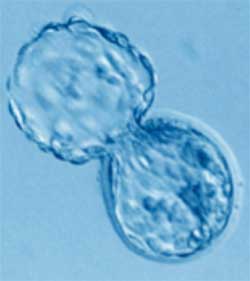 Fig 3. Hatched blastocyst.
Implantation depends on a perfect dialogue between the embryo and the endometrium (uterine lining), involving countless molecular signals. Sometimes, even good-looking embryos are genetically abnormal, something we cannot always see or test for. Research shows that only about 10 percent of transferred embryos will implant and become a baby.
Only 10 percent of transferred embryos implant and result in a live birth after IVF.
So if you do not become pregnant after transfer, it is not your fault. It is not because you did not rest enough, or ate the wrong food, or felt stressed. Implantation is a complex, unpredictable process, and most failures are due to issues beyond your control, such as embryo genetics or subtle endometrial factors.
How Can You Maximise Your Chances of Success?
While there is no magic formula, there are practical steps you and your partner can take to give yourselves the best chance:
- If you need to take any medications during these two weeks, do not worry, they will not harm the embryos at this stage, as the embryo has not yet established a blood supply from your body.
- Avoid smoking, alcohol, and more than two caffeinated drinks per day.
- Eat a balanced, healthy diet; avoid fad diets or sudden weight changes.
- No intercourse until your pregnancy test is done.
- Continue normal, gentle exercise unless you feel discomfort.
- Avoid hot tubs or saunas.
For men, avoid smoking, drugs, and alcohol. If you are providing a sperm sample for IVF, abstain from intercourse for 3-7 days beforehand. (For ICSI, even a single sperm is enough, so abstinence period is less critical.)
The Cost of IVF at Malpani Infertility Clinic
We believe in honest and upfront pricing. The cost of a single IVF treatment cycle at Malpani Infertility Clinic is US $4000. This is an all-inclusive fee, but costs can vary depending on the program and what is included. Always ask for a detailed, itemized estimate so you know what you are paying for. Some clinics may exclude certain services (like ultrasound scans), which can add up quickly.
We also offer options like Natural Cycle IVF, which uses no ovulation-enhancing drugs, this lowers the cost but also typically results in fewer eggs and a lower pregnancy rate per cycle. Our team will discuss which approach makes the most sense for you, always keeping your long-term goals and comfort in mind.
Frequently Asked Questions
Q: Is embryo transfer painful?
A: Most patients experience only mild discomfort, similar to a pap smear. Sedation is rarely needed but can be provided if you are anxious.
Q: How long do I need to rest after embryo transfer?
A: About 24 hours of rest is usually enough. You can return to work or normal activity after that. Strict bed rest is not necessary and does not improve your chances.
Q: Can daily activities cause the embryo to fall out?
A: No. Once the embryos are placed in the uterus, they cannot "fall out" with activity, coughing, or sneezing.
Q: How many embryos should I transfer?
A: This depends on your age, embryo quality, and history. Transferring more increases chance of pregnancy but also risk of twins or higher multiples. Discuss your options with your doctor.
Q: What if my embryos are poor quality?
A: Even poor-quality embryos can implant and result in healthy babies. If they do, the children are completely normal.
Q: How soon can I take a pregnancy test after transfer?
A: A blood test (beta HCG) is accurate 10-14 days after transfer. Testing earlier can give misleading results.
Q: What does IVF cost at Malpani Infertility Clinic?
A: The cost of a single cycle is US $4000. For details on what is included, see our cost breakdown.
Q: What can I do to improve my chances after embryo transfer?
A: Take prescribed medications, avoid smoking/alcohol, eat well, and try to stay positive. Rest is good, but overdoing it is not necessary.