

Are Blood Tests and Ultrasound Scans of any use for Testing the Infertile Man ? The Testis Biopsy
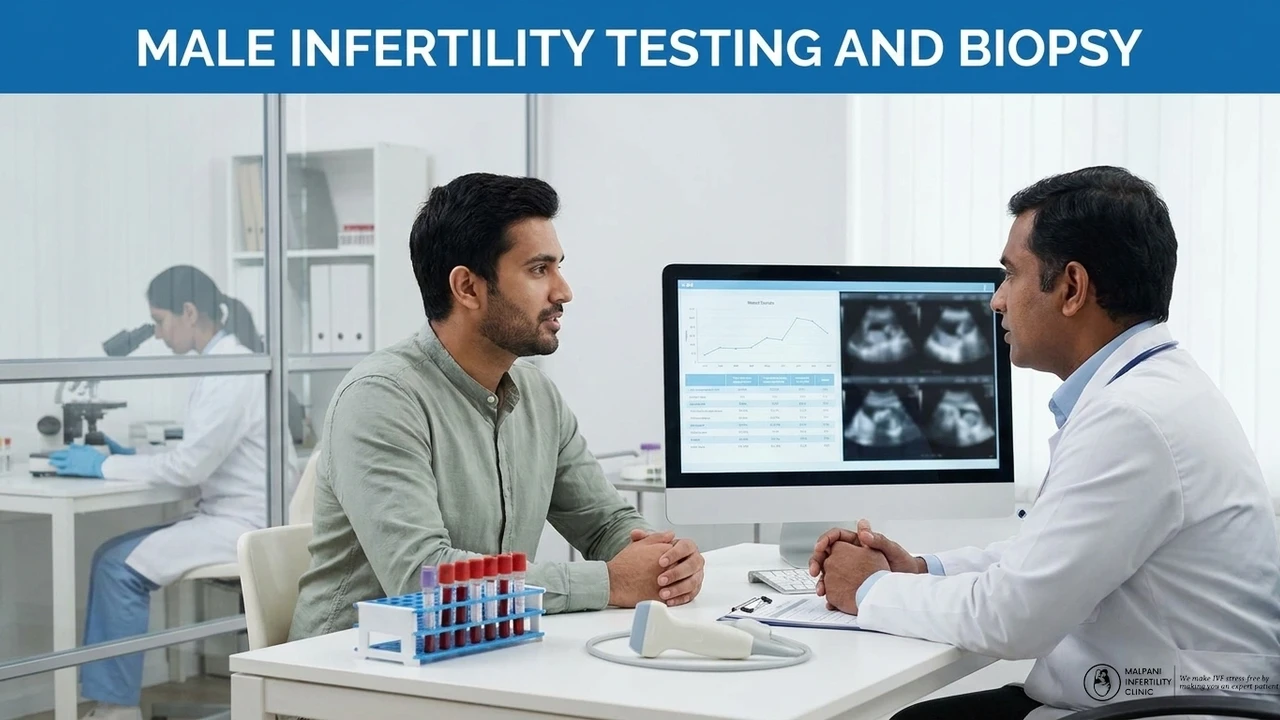
When you and your partner are struggling to conceive, every test, every appointment, and every answer, or lack of one, can feel like a turning point. If you are a man who has faced confusing semen analysis reports, heard technical terms like azoospermia, or been told to do "more blood tests and scans," you are not alone. So many men walk into our clinic feeling anxious, frustrated, and desperate for clarity. Often, what they really need is someone to cut through the noise and guide them with honesty and empathy.
What blood tests can be done for infertile men?
Of what use is an ultrasound exam in evaluating an infertile man?
Of what use is a testicular biopsy?
Blood Tests: When Are They Actually Useful?
For most men who are having trouble conceiving, the only test that really matters at first is the semen analysis. If sperm are present, even in low numbers, it usually means your body is still producing sperm, so extra blood tests rarely change the plan. Still, many labs and clinics will suggest an entire panel of hormone tests, including FSH, LH, testosterone, and prolactin. Most of the time, these only add confusion and cost, without offering real answers.
So, who actually needs these blood tests? The answer is: men with azoospermia. If your semen analysis repeatedly shows zero sperm, checking your hormone levels, especially FSH (follicle-stimulating hormone), can help pinpoint whether your testicles are struggling to make sperm at all, or if there’s a blockage somewhere along the way.
- High FSH: Usually means the testicles themselves are not producing sperm normally. This is called primary testicular failure. But even here, hope is not lost, sometimes small pockets inside the testicle are still making sperm, which can be used for advanced treatments like TESA-ICSI.
- Normal or low FSH: May suggest a blockage or a hormone signal issue (hypogonadotropic hypogonadism), which can sometimes be treated or bypassed using medical therapy.
- Prolactin and Testosterone: These are checked in specific cases, like if you have symptoms of low libido or erectile issues, or if your doctor suspects an uncommon hormonal problem. Most men with infertility have normal testosterone levels.
It is important to repeat abnormal blood test results to confirm them, and always do them when you are off any fertility medications, as some drugs can confuse the results.
For most men, a clear semen analysis is more valuable than a long list of hormone numbers.
Ultrasound Scans: Do They Really Show What Matters?
Ultrasound scans of the testicles and scrotum have become routine in infertility evaluations. But is this always necessary? The truth is, for most men, a careful physical examination tells us more about testicular size and health than an ultrasound can. Doctors sometimes order scrotal ultrasounds or Doppler scans to look for varicoceles (enlarged veins), but treating these surgically rarely changes fertility outcomes for most men. The risk is that you might be pushed into unnecessary procedures that do not help.
There are, however, some situations where targeted ultrasound is valuable:
- Transrectal ultrasound (TRUS): This special scan, done through the rectum, is helpful if your doctor suspects a blockage deeper inside, such as at the level of the seminal vesicles or ejaculatory ducts. It is not a routine test, only needed for men with azoospermia where a blockage is likely.
- Scrotal ultrasound: Sometimes used to check for cysts, masses, or very unusual anatomy, but rarely changes the game plan.
What about MRI or CT scans? These are almost never required when evaluating male infertility, unless there is a specific concern about cancer or a complex anatomical problem, which is rare.
Testicular Biopsy: When, Why, and How?
If you have been advised to do a testicular biopsy, you are probably feeling anxious. Is it painful? Will it give answers? Will it actually help you become a father? These are fair questions, and you deserve honest answers.
The testicular biopsy is a minor surgical procedure, usually done under local anaesthetic. The doctor removes tiny pieces of testicular tissue to check under a microscope if sperm are being produced inside, even if they are not reaching the semen. The procedure itself takes about 5-10 minutes and can be done in an operating room or a well-equipped clinic. Afterward, you might have a dull ache for a few days, but this is usually managed with simple painkillers.
Most importantly, not everyone needs a testicular biopsy. The only men who benefit from this test are those with azoospermia (no sperm in the semen). If you have any sperm at all, even a few, doing a biopsy is unnecessary, because by definition your testicles are making sperm.
In the past, biopsies were done only to diagnose the cause of infertility. Today, they also allow us to retrieve sperm directly from the testicle, which can then be used for ICSI (intracytoplasmic sperm injection). At specialized infertility clinics like ours, we can also freeze the retrieved sperm, so you do not need to go through the biopsy again during future treatments.
Interpreting the Biopsy: Why Expertise Matters
Getting a testicular biopsy is only half the story. The real challenge is in interpreting the results. The tissue must be examined by an experienced pathologist who knows what to look for. Sometimes, sperm production is patchy, some areas of the testicle make sperm, others do not. That is why good clinics will take samples from at least four different spots, not just one.
The biopsy can show:
- No sperm production at all: This is called absent spermatogenesis or maturation arrest. It usually means the testicle is not making sperm, and current medicine has no cure.
- Normal sperm production but no sperm in semen: This strongly suggests a blockage in the reproductive tract. In this situation, a biopsy is extremely helpful, as it proves that sperm are being made and can be retrieved for assisted reproduction.
Unfortunately, badly done biopsies or poorly interpreted reports can leave couples in limbo, not knowing whether to pursue further treatment or give up hope. It is crucial to choose a clinic with experience and transparency. At Malpani Infertility Clinic, we walk every couple through the findings and discuss what they truly mean for your next steps.
of men with severe testicular failure have microdeletions on the Y chromosome, a genetic cause that can be identified with advanced testing.
If a genetic cause is suspected (like Klinefelter’s syndrome or Y chromosome microdeletions), your doctor may recommend a karyotype study or genetic tests. While there may be no direct fix, these answers can bring closure and help you make informed decisions about family-building options.
What You Need to Ask Before Any Test
Before agreeing to any blood test, scan, or biopsy, always ask your doctor: "How will this result change my treatment?" If it will not change your plan, it may not be necessary. Too many men undergo expensive, uncomfortable, or pointless tests because no one stops to ask this question.
Good care means doing the right tests for the right reasons, not just ticking boxes.
If you are feeling overwhelmed, remember: You are not alone, and you deserve care that is honest, focused, and respectful of your hopes. At Malpani Infertility Clinic, our approach is simple: We do what helps, skip what does not, and always explain why. If you are struggling with confusing test results or want a second opinion, reach out to us. Sometimes, just one honest conversation can make all the difference.
Frequently Asked Questions
Q: Do I need hormone blood tests if my semen analysis shows a low sperm count?
A: Usually not. In most cases, extra blood tests for hormones do not change the treatment plan unless you have zero sperm (azoospermia).
Q: When is an ultrasound scan of the testicles necessary?
A: Only in selected cases, such as when a blockage or unusual anatomy is suspected. Routine ultrasounds rarely provide useful information for most infertile men.
Q: What is a testicular biopsy, and who needs it?
A: It is a minor procedure to check if sperm are being made inside the testicles. Only men with azoospermia (no sperm in semen) should have this test.
Q: Is a testicular biopsy painful or risky?
A: It is done under local anaesthetic and usually causes only mild discomfort for a few days. Serious risks are rare if done by an experienced specialist.
Q: What should I ask before agreeing to a new test or scan?
A: Always ask if the result will change your treatment path. If not, it may not be necessary.
Q: Can sperm be used for IVF/ICSI if found in the testicle during a biopsy?
A: Yes. Testicular sperm can be used for advanced fertility treatments like TESA-ICSI, and can even be frozen for future use at specialized clinics.
Q: What genetic tests might be needed for male infertility?
A: In some cases, karyotype studies or Y chromosome microdeletion tests can help identify genetic reasons for sperm production problems.