

Everything you need to know about ICSI - Intracytoplasmic Sperm Injection
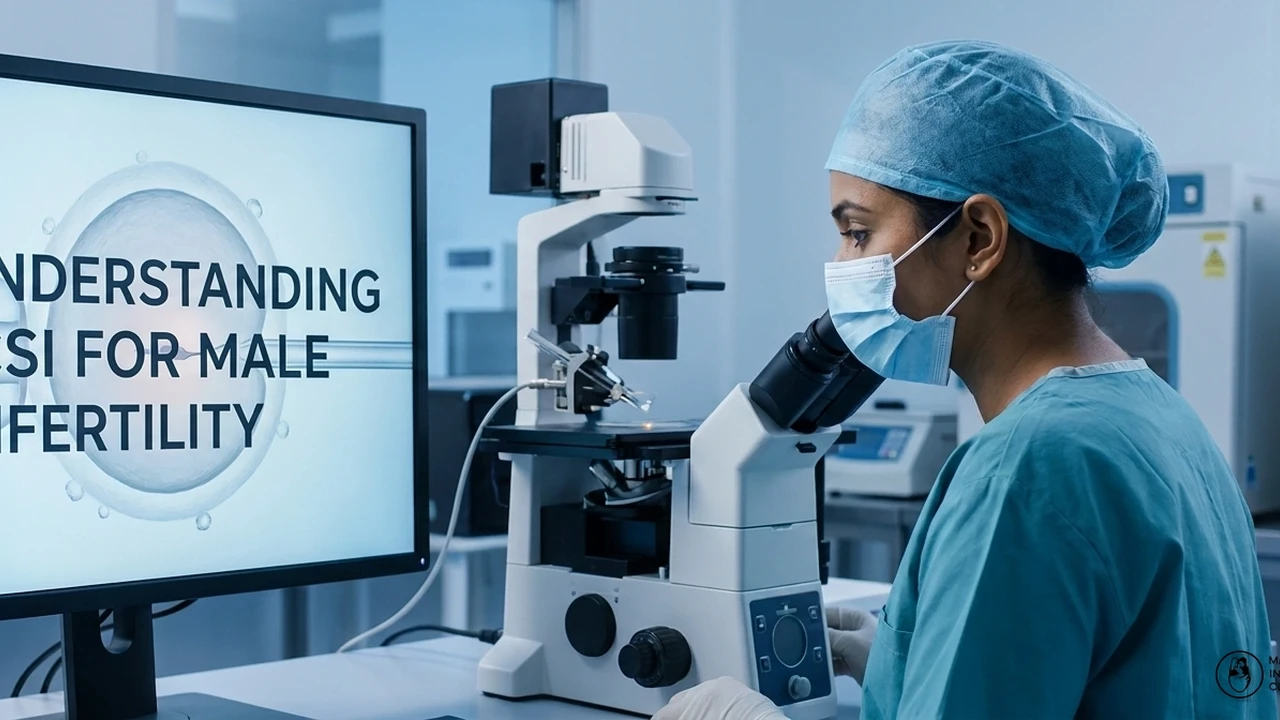
It is impossible to forget the feeling: sitting in a consultation room, clutching a report with words like “low sperm count” or “failed IVF,” wondering if parenthood will ever happen. If you are reading this, you may be there right now. Maybe you have tried everything, and every month’s disappointment feels heavier. Maybe you have heard of ICSI, but the science sounds intimidating. Or perhaps you are simply desperate for answers and some genuine, no-nonsense guidance. You are not alone in this struggle. At Malpani Infertility Clinic, we see hundreds of couples facing these exact fears. Let’s break down what ICSI really means, how it works, what you should know, and how you can take charge of your next steps.
How is a single sperm injected into the egg for ICSI in the IVF laboratory?
What are the risks of doing ICSI?
What recent advances have taken place in ICSI?
What Happens During ICSI?
The heart of ICSI (Intracytoplasmic Sperm Injection) is surprisingly simple: it is about giving the sperm a helping hand when it cannot do the job itself. For many couples, especially those facing severe male infertility, ICSI is the only way to create an embryo using their own eggs and sperm.
Once eggs and sperm have been collected, the embryologist prepares for a highly skilled procedure. Imagine a scientist working beneath a super-powered microscope, able to see details 400 times larger than life. Using finely-tuned instruments, the embryologist selects a single healthy sperm. This is done in a special laboratory environment, on a heated stage, using a high-precision inverted microscope. Every detail matters: from the temperature to the lighting to the sharpness of the glass pipettes used.
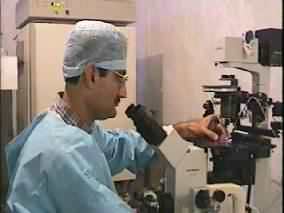 Fig 1. A view of the micromanipulator
The sperm is first slowed down in a thick solution (polyvinyl pyrrolidone or PVP) so it can be handled. Its tail is gently immobilized, think of it as pausing the sperm’s movement, not harming it. This one sperm is then gently sucked into a slender glass needle (the injection pipette), which itself is thinner than a strand of human hair. The mature egg is steadied with another glass pipette, and the sperm is injected directly into the center of the egg’s cytoplasm. This step requires exceptional skill. The entire process is watched incredibly closely, because the health of your future embryo depends on it.
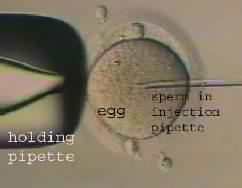 Fig 2. A single sperm is being injected into an egg during an ICSI procedure
Once the sperm is inside the egg, the pipette is withdrawn, and something truly remarkable happens: the egg seals itself, returning to its original shape within about a minute. In essence, the embryologist is giving the sperm a “piggyback ride” straight into the egg, bypassing all the obstacles it could not overcome on its own. This is what makes ICSI such a game changer for male infertility.
If you have been told your sperm count is low, or your sperm are not moving well, remember: for ICSI, all you need is one live sperm for each mature egg.
After all the eggs have been injected with their chosen sperm, they are placed in a warm, controlled incubator. About 14 hours later, the team checks if fertilization has succeeded. If fertilization has happened, you will have embryos ready to be transferred into the uterus in 2 to 3 days, just like in regular IVF.
of mature eggs typically fertilize after ICSI in experienced hands at our clinic.
The success of ICSI does not depend on how many sperm you have, but on the number and quality of your eggs. The wife’s age and egg health are far more important than her husband's sperm count at this stage. That is why in many cases, young couples with unexplained infertility or even men with zero sperm in their semen (but found in a biopsy) can still build their family with ICSI.
Who Should Consider ICSI?
ICSI was originally developed for men with severely low sperm counts, poor sperm movement, or abnormally shaped sperm. But its use has expanded. Today, ICSI is often recommended if you have:
- Very low sperm count, poor motility (movement), or abnormal shape
- Previous IVF cycles with total fertilization failure
- Obstructive azoospermia (blockages in the ducts, so sperm are obtained surgically)
- Unexplained infertility, especially after failed attempts with regular IVF
- Eggs that have been frozen and thawed (which can be more fragile)
It is also used when sperm must be retrieved directly from the testis or epididymis (for example, after a vasectomy or in cases of congenital absence of the vas deferens), or when using preimplantation genetic testing (PGT) to check embryos for genetic health.
What Are the Risks of ICSI?
When you are putting your hopes and money into a treatment, it is natural to worry about risks. More than 100,000 babies worldwide have been born after ICSI. Decades of research show that ICSI does not increase the risk of birth defects or genetic anomalies compared to natural conception or regular IVF.
There is a subtle but important point, though. If the underlying cause of male infertility is genetic, such as microdeletions in the Y chromosome, then boys born via ICSI may inherit the same issue and could be infertile when they grow up. This is not caused by ICSI itself, but by passing on the same genes. For couples with known genetic problems, we offer detailed counseling and, if needed, genetic testing before proceeding.
- ICSI does not increase the risk of miscarriage, birth defects, or developmental delays.
- Women still face normal IVF-related risks: ovarian stimulation, multiple pregnancies if more than one embryo is transferred, etc.
- For men with no sperm at all, advanced options like injecting immature sperm precursor cells are experimental and not yet reliable.
At Malpani Infertility Clinic, we focus on honest, evidence-based guidance. We believe in being upfront about what is possible, what is not, and what science really says. No hype, just facts and empathy.
What Advances Are Happening in ICSI?
ICSI technology is always improving. Some laboratories now use even higher-powered microscopes to pick the healthiest-looking sperm (IMSI), or new ways to select sperm based on how they bind to certain substances. There are experimental techniques for men with extremely severe testicular failure, such as injecting immature cells (spermatids) into eggs, but results are still disappointing and not offered as routine care.
For men with no testicular tissue at all, the only theoretical solution would be cloning. While this is a topic for science fiction, and some animal studies, cloning is not available or ethical for human reproduction.
The gold standard, and what we offer at Malpani Infertility Clinic, is classic ICSI using your own eggs and sperm (even surgically retrieved). This method has stood the test of time and delivers real results for couples who thought their dream of a baby was out of reach.
What Is the Real-World Experience Like?
Many couples walk into our clinic after years of hearing “no” or “nothing can be done.” The moment they learn that even a single, weak sperm can lead to fertilization, with the right technology and expertise, often brings genuine relief.
ICSI gives hope to couples who have been told their only option is donor sperm or adoption. If there is even one healthy sperm and one healthy egg, parenthood with your own genes is possible.
The procedure itself is painless for the woman (eggs are collected under anesthesia), and most men can provide a sperm sample on the same day. If sperm are not present in the semen, minor procedures can often retrieve them from the testis or epididymis. The rest is handled by our embryologists, who are trained to global standards in micromanipulation techniques.
The biggest challenge for most couples is not the technology, but the emotional rollercoaster. Waiting for fertilization results, embryo updates, and the pregnancy test can be nerve-wracking. That is why we believe in complete transparency, clear communication, and empowering you to be part of every decision. We are here to guide, not to push you into anything you are not comfortable with.
ICSI is more expensive than conventional IVF because of the advanced technology and expertise involved. However, it is now widely available in India, and as more clinics offer it, costs are gradually coming down. At Malpani Infertility Clinic, we are committed to keeping treatments as affordable as possible without compromising on quality or safety.
Frequently Asked Questions
Q: How is ICSI different from regular IVF?
A: In regular IVF, thousands of sperm are placed with each egg in the lab, and fertilization happens naturally. In ICSI, a single sperm is chosen and injected directly into each egg, bypassing barriers that might prevent fertilization.
Q: Who needs ICSI?
A: ICSI is ideal for couples facing male infertility (low count, poor motility, abnormal shape), previous IVF failures, or when sperm is retrieved surgically. Sometimes, it is used for unexplained infertility.
Q: Does ICSI increase the risk of birth defects?
A: Large studies show that ICSI does not raise the risk of birth defects or genetic diseases. However, if the father’s infertility is genetic, his sons may inherit the same issue.
Q: How successful is ICSI?
A: In experienced clinics, 60-80 percent of mature eggs fertilize after ICSI, and the pregnancy rate per cycle is around 35 percent. Success depends mostly on the woman’s age and egg quality.
Q: What can I do to improve my chances with ICSI?
A: Focus on egg health, manage stress, and follow your doctor’s advice on lifestyle factors. If you are older or have a lower egg reserve, consider starting treatment sooner rather than later.
Q: Is ICSI painful?
A: The egg collection is done under anesthesia, so you feel no pain. The sperm collection is usually by masturbation, or by a minor surgical procedure if needed.
Q: How many embryos will I get from ICSI?
A: It depends on the number of mature eggs collected and their quality. Not all eggs will fertilize or develop into embryos, but fertilization rates are high when ICSI is performed well.