
How Does an Early Pregnancy Scan Work?

It is hard to describe the intense mix of relief, fear, and hope that surges through you once you see that positive pregnancy test—especially if you have been struggling to conceive. For so many couples, especially those who have gone through IVF or faced repeated disappointments, every sign, symptom, and scan can feel overwhelming. If you are anxiously counting the days to your first early pregnancy scan, your mind likely races with questions: Will the scan show a healthy pregnancy? Will I finally see a heartbeat? Is it too soon to hope?
What Is an Early Pregnancy Scan and Why Is It Important?
After you get that long-awaited positive test, your doctor will recommend a series of tests to confirm that your pregnancy is progressing normally. Among these, early pregnancy scans—also called viability or dating scans—are crucial in the first few weeks. At Malpani Infertility Clinic, we understand how much emotional weight these scans carry for patients who have fought so hard for this moment.
Early pregnancy scans use ultrasound to check for key signs that the pregnancy is developing inside the uterus, not elsewhere, and that growth is on track for your gestational age. Most often, a vaginal ultrasound is performed between 6 and 8 weeks after your last period, as it provides clear images at this early stage. However, there is no benefit in scanning too early—if your beta HCG is less than 500 mIU/ml, the pregnancy sac will be too small to see, so it is better to wait until the timing is right.
What Happens During the Scan? What Will You See?
Sitting in the waiting room before your scan, you may run through every possibility in your mind—especially if you have had symptoms like cramps or spotting. These feelings are perfectly normal, and you are not alone in your worries. The scan itself is usually quick and painless. The doctor will gently insert a small ultrasound probe into your vagina to get the best view, explaining each step as they go along.
The images may look like mysterious black-and-white shadows, but your doctor is looking for specific milestones at each week:
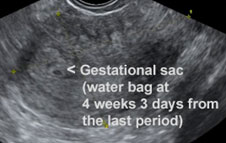
- 4-5 weeks: The first sign is the gestational sac, a small fluid-filled bubble that shows a pregnancy is beginning inside your uterus.
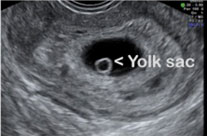
- 5 weeks: The yolk sac appears inside the gestational sac. This tiny circle is the first visible structure that nourishes your embryo.
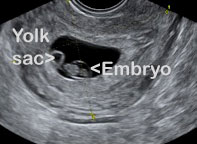
- 6-7 weeks: The embryo becomes visible next to the yolk sac, and you may see a flicker—your baby’s heartbeat—on the screen.
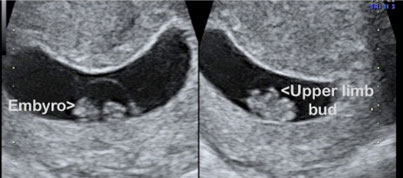
- 8 weeks: The embryo grows, and limb buds (the beginnings of arms and legs) may be visible. The heartbeat is usually clear by now.
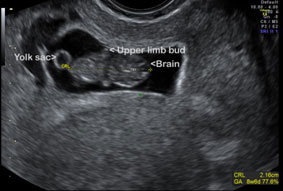
Your doctor will also check that the pregnancy is inside the uterus and not an ectopic pregnancy (which is when the embryo implants outside the uterus, a dangerous situation that needs urgent attention).
If you have struggled to get pregnant, every scan can feel like a test you must pass. But remember: pregnancy develops at its own pace, and small delays are often completely normal.
What If Something Looks Unusual? Understanding Normal and Abnormal Findings
We know that every pregnancy is unique. Sometimes, ultrasound findings may seem to lag behind what you expected, especially if your cycle is irregular or you conceived later than you thought. That does not always mean there is a problem. Serial scans—repeating the scan after a week—give a clearer picture than a single snapshot.
However, scans may sometimes show abnormalities, such as:
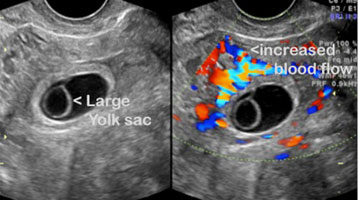
- Abnormal or nonviable pregnancy: For example, an unusually large yolk sac or lack of a heartbeat at a stage when one should be visible.
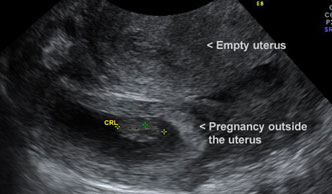
- Ectopic pregnancy: The uterus appears empty, and the pregnancy is located outside the uterus.
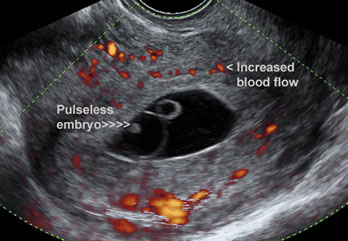
- Intrauterine fetal death: No heartbeat is seen, even though the embryo is present.
Even in cases of bleeding, most early pregnancies continue normally. Bleeding often comes from the uterus and may not harm the baby, but it is always wise to check with your doctor.
At Malpani Infertility Clinic, we believe in honest guidance. We will never rush you into unnecessary scans or give you false hope, but we will also never leave you alone in the dark. Our approach is to explain everything you see on the screen, compare images from different weeks, and help you understand what is happening inside your body.
of women with early pregnancy bleeding go on to have a healthy pregnancy.
Practical Advice: How to Make the Most of Your Early Pregnancy Monitoring
While modern ultrasound is incredibly helpful, it is not magic. Sometimes, the scan cannot provide all the answers right away. Here is what you can do to ease your anxiety and stay informed:
- Do not insist on scans before your beta HCG reaches 500 mIU/ml—earlier scans will not show anything meaningful.
- Keep all your scan images and reports. Comparing them over time is much more valuable than focusing on a single result.
- Do not compare your scans with others. Each pregnancy is unique, and normal variation is common.
- If you experience severe pain, heavy bleeding, or feel unwell, do not wait—consult your doctor immediately.
If you want to see more real-life examples of early pregnancy scans, check out our ultrasound scan image gallery for early pregnancy.
Support and Guidance: You Are Not Alone
The uncertainty of early pregnancy is something no one can truly prepare you for—even less so after fertility challenges. It is normal to swing between joy and fear, to check for symptoms obsessively, or to worry about not feeling pregnant enough. At Malpani Infertility Clinic, we have seen hundreds of patients walk this path. We know that sometimes, you just need clarity and facts, not just comforting words. That is why Dr. Malpani takes the time to explain what is happening, what each scan means, and why waiting another week can sometimes be the best thing you can do for yourself and your baby.
There is no such thing as a silly question. Whether you want to understand your scan, need advice on what to do next, or simply want a straightforward explanation without sugarcoating, our team is here to guide you every step of the way.
Frequently Asked Questions
Q: When is the earliest an ultrasound can confirm a pregnancy?
A: Around 5 weeks after your last period, a vaginal ultrasound can typically detect the gestational sac. Waiting until your beta HCG is above 500 mIU/ml improves the chances of seeing something meaningful.
Q: What do doctors look for in an early pregnancy scan?
A: They look for the gestational sac, yolk sac, embryo, and heartbeat, and confirm that the pregnancy is located inside the uterus.
Q: Is it normal to feel anxious before an early pregnancy scan?
A: Yes. Many women, especially those who have faced infertility or miscarriage, feel intense anxiety before scans. This is completely natural.
Q: Can early scans harm the baby?
A: No. Ultrasound uses safe sound waves and has been used for decades. There are no known risks to mother or baby when performed by a trained professional.
Q: What if my scan shows the pregnancy is not developing as expected?
A: Sometimes, pregnancies develop slower than average or may have dating errors. Your doctor may repeat the scan after a week for a clearer picture. Sometimes, unfortunately, it may indicate an abnormal pregnancy, in which case your doctor will discuss your options and next steps.
Q: How often should I have early pregnancy scans?
A: Usually, one scan is done between 6-8 weeks unless there are specific concerns like pain or bleeding. Too many scans in a short period are not helpful as changes take time to appear.
Q: What if I see bleeding during early pregnancy?
A: Light bleeding is common and often harmless, but always report any bleeding to your doctor. A scan can help reassure you and check for potential problems.