

Post Coital Test: What You Need to Know
You stare at another negative pregnancy test and feel the familiar wave of disappointment. Maybe your doctor has recommended a post coital test (PCT) or you found yourself Googling late at night: Do I need this old-fashioned test? Will this finally reveal why we are struggling to conceive? If you are feeling overwhelmed, confused, or even a bit skeptical about whether the PCT really matters anymore, you are not alone. Many couples find themselves on a winding fertility path, full of outdated advice, conflicting opinions, and so many questions nobody else seems willing to answer honestly. Let's break down what the post coital test is, why it's rarely used today, and what actually helps you move forward with hope and clarity.
What Exactly Is the Post Coital Test?
The post coital test—sometimes called the Sims-Hühner test—has been around for more than a century. It was once a staple in fertility workups, designed to answer a basic question: Can sperm survive and swim through your cervical mucus after intercourse? In the days before advanced fertility science, this test seemed like a logical way to see if the sperm were making it past the first hurdle on the way to your egg.
Think of it as a microscopic checkpoint. After you and your partner have intercourse during your fertile window, your doctor takes a sample of your cervical mucus to see if healthy, moving sperm are present. It’s the only test that directly observes how sperm and your body’s natural fluids interact.
If you want to learn more about the role of cervical mucus in fertility, we have a detailed article here.
How Does the Post Coital Test Actually Work?
The PCT is all about timing and preparation. For the results to mean anything, it must be done when your cervical mucus is at its most receptive—right before ovulation, when it is clear, stretchy, and slippery. Here’s what you can expect if your doctor asks you to do a PCT:
- Use an ovulation predictor kit to find your fertile window.
- Have intercourse on the day your doctor recommends (usually just before ovulation).
- Avoid lubricants, douching, or taking a bath after sex (showers are fine).
- Come in for the test—usually 6 to 12 hours after intercourse, but timing is not absolutely rigid.
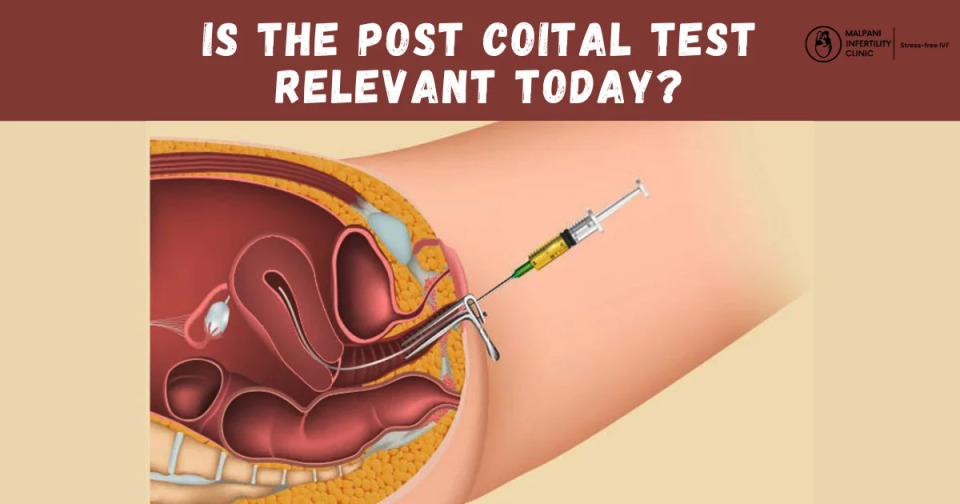
At the clinic, your doctor will gently collect a small sample of mucus from your cervix during a pelvic exam. Most women find this no more uncomfortable than a regular Pap smear.
- The sample is examined under a microscope to look for live, actively swimming sperm.
- Your doctor also checks the quality of your mucus: is it clear, stretchy, abundant, and showing the characteristic "fern pattern" when dried?
For many couples, this process can feel awkward or inconvenient. Having to plan intimacy around clinic schedules and then rush in for an exam can sometimes make the experience emotionally taxing, especially when you are already feeling vulnerable.
Making Sense of Your PCT Results: What Do They Really Mean?
If your post coital test is positive, that’s generally a good sign:
- Your partner’s sperm are present and moving well.
- Intercourse is happening at the right time and semen is being deposited correctly.
- Your cervix is producing enough healthy mucus.
- You have good estrogen levels and are likely ovulating normally.
- Your cervical mucus is not “hostile” to sperm.
A positive result means the pathway for sperm is open—at least at the cervical level. But it does not guarantee pregnancy, and there can still be other factors elsewhere in the reproductive tract.
If your PCT is negative (few or no moving sperm found), don’t panic. There are several possible explanations:
- Wrong timing: The most common reason. The test may have been done too early or too late in your cycle.
- No ovulation: Sometimes the stress of scheduling sex for a test can delay or suppress ovulation.
- Sperm issues: Low sperm count or poor movement.
- Cervical issues: Chronic infections, scarring, or after cervical surgery (such as cone biopsy).
- Antibodies: Rarely, your mucus may contain antibodies that attack sperm.
- Medication effects: Fertility drugs such as clomiphene, tamoxifen, progesterone, or danazol can alter mucus quality.
It’s important to know: One negative PCT does not mean you are infertile or that sperm and mucus are always the problem. Many results are inconclusive or simply reflect timing errors.
Sometimes the test says more about the day’s circumstances than about your actual fertility.
Why Do Most Doctors Hardly Use the Post Coital Test Anymore?
Despite its long history, the PCT is now rarely recommended by modern fertility experts, including at Malpani Infertility Clinic. Here’s why:
- Unreliable results: The same couple can get different results on different days. Studies show poor consistency and predictiveness.
- No standardization: There is no universal definition for a “normal” result. Different doctors interpret the same findings differently.
- Better alternatives: Advanced semen analysis, hormone tests, and ultrasound monitoring provide much more useful information.
- No impact on treatment: Even if results are abnormal, it rarely changes what doctors recommend. The PCT does not help choose the right fertility treatment.
- Emotional and logistical stress: The need for perfectly timed intercourse and clinic visits just adds unnecessary anxiety for couples who are already under enough pressure.
Are There Situations Where a Post Coital Test Still Makes Sense?
Although the PCT is largely a thing of the past, there are rare exceptions where it might be considered:
- If there is no other way to get a semen sample (for personal or religious reasons).
- As a basic screen in a setting where advanced testing is not available.
- To decide if moving to intrauterine insemination (IUI) could be helpful.
However, even in these niche cases, most fertility specialists—including our team—prefer to use more reliable, non-invasive, and evidence-based tests to guide you.
If Your Cervical Mucus Is a Problem, What Are Your Real Options?
If tests (including a PCT, if done) suggest your cervical mucus is poor and not friendly to sperm, there are still good options:
- Your doctor may suggest low-dose estrogen therapy for two weeks before ovulation to improve mucus quality.
- Many specialists now prefer to skip cervical barriers altogether and use intrauterine insemination (IUI). In IUI, prepared sperm are placed directly into the uterus, bypassing the cervix entirely.
What Should You Do Next?
If you are still searching for answers, feeling lost in a maze of tests, or worried about whether you are missing something important, please know: You do not have to figure this out on your own. At Malpani Infertility Clinic, we believe couples deserve honest, science-based guidance and gentle reassurance, not outdated routines or unnecessary stress.
Our approach is simple: Understand your unique situation, explain the real value (or lack thereof) of each test or treatment, and empower you to make the best decisions for your future. If you are considering a post coital test, or if you have questions about what steps to take next, speak with our expert fertility advisors for personal guidance. Sometimes, the best next step is just a conversation with someone who truly understands and cares.
Frequently Asked Questions
Q: Is the post coital test painful?
A: No, the test is not painful. It is similar to a regular pelvic exam or Pap smear, where a small sample of cervical mucus is gently collected.
Q: How soon after intercourse should I have the test done?
A: The ideal window is 6 to 12 hours after intercourse, during your fertile days. Your doctor will give you specific instructions based on your cycle and clinic schedule.
Q: What does it mean if my post coital test is negative?
A: A single negative result is not definitive. It could be due to timing, ovulation issues, or even stress. Your doctor may suggest repeating the test or moving to more advanced fertility evaluations for clearer answers.
Q: Do medications affect the post coital test?
A: Yes, drugs like clomiphene and progesterone can make cervical mucus thicker or reduce its quantity. Always inform your doctor about any medications you are taking before the test.
Q: Why is the post coital test rarely recommended now?
A: Modern tests provide more detailed and reliable information about sperm quality, ovulation, and fertility. The PCT is outdated because it often does not impact treatment choices or improve outcomes for couples trying to conceive.