
Why the ART Act Has Medical Guidelines
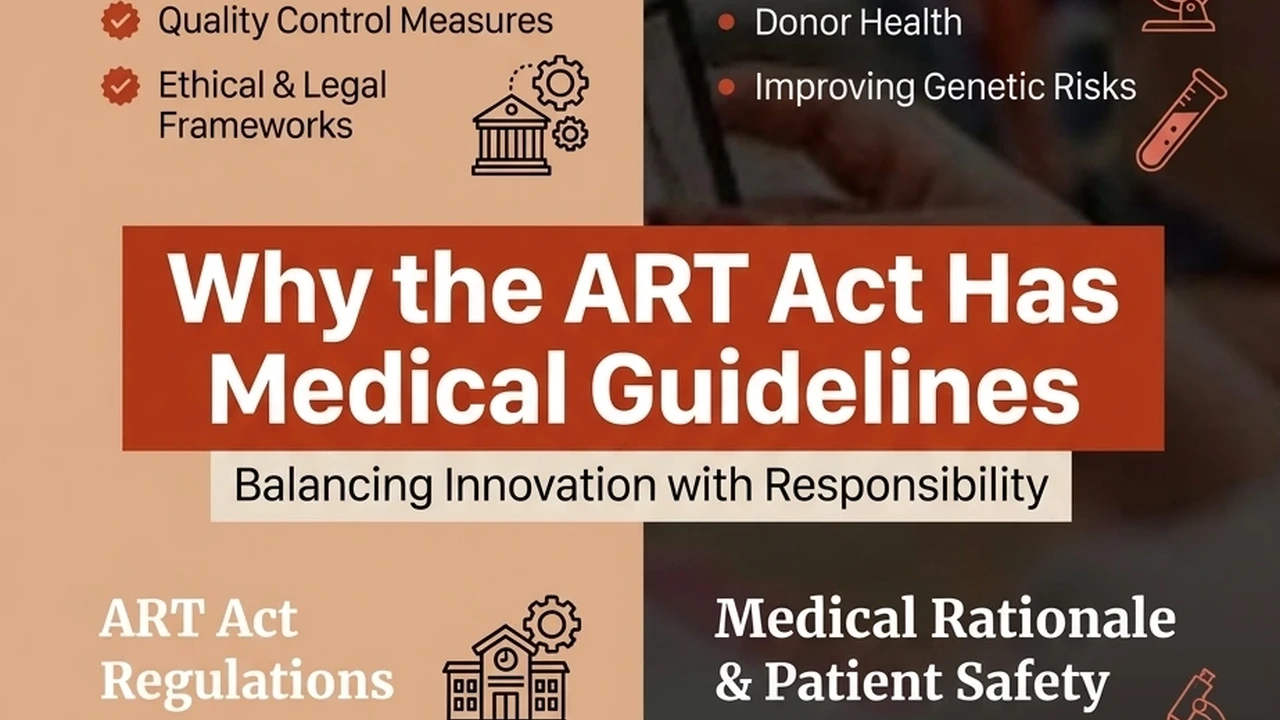
When you first hear about the strict rules in the ART (Assisted Reproductive Technology) Act, it can feel like the universe is playing another cruel joke on you. You have already faced so many hurdles just trying to build your family, and now here are more limits: age cutoffs, embryo caps, restrictions on donors. It is natural to wonder if anyone writing these laws has ever sat in a waiting room, hoping for a miracle. If you are reading this and feeling boxed in or worried that the law will take away your chance, you are not alone. These rules are not meant to punish or judge anyone — they exist because real people, just like you, have suffered in the past when there were no boundaries at all. At Malpani Infertility Clinic, we believe you deserve to know the full story behind these guidelines, and how they are designed to protect you.
Why Do These Rules Exist?
Let us be honest: the world of fertility treatment was once a bit of a wild west. Before the ART Act, some clinics pushed boundaries with little regard for what was truly safe for patients. Laws were created because families paid the price for reckless shortcuts, not because bureaucrats wanted to make things harder for you.
The ART Act puts guardrails in place so that everyone — patients, donors, and children — are protected. It was not about limiting your hope, but about making sure hope is pursued safely, transparently, and ethically. These laws are grounded in real medical risks and hard-learned lessons, not just paperwork.
Understanding Age Limits
One of the most emotional questions we hear at Malpani Infertility Clinic is about age restrictions. Section 21(g) of the ART Act says women can receive ART treatment between 21 and 50 years of age, and men between 21 and 55. If you are using a donor, there are different age bands: sperm donors must be 21 to 55, and oocyte (egg) donors must be 23 to 35. And a woman can donate eggs only once in her lifetime, with a maximum of seven eggs collected.
Why is there a limit for women at 50? The answer is not about worthiness or social judgement. After 50, the risk of serious pregnancy complications — like gestational diabetes, high blood pressure, and even ICU admissions — rises sharply. These are not just numbers on a chart. We have seen patients who tried to push past these limits, and unfortunately, some landed in life-threatening situations. The law draws the line at the point where risk outweighs hope, because protecting your health must come first.
For egg donors, the 23–35 age window is chosen because eggs are healthiest then, and the physical strain on the donor is lowest. The one-time-only rule and cap on egg retrievals are there because, in the past, donors were quietly sent for repeated procedures at different clinics — sometimes without their full knowledge or consent. The law stops this from happening again.
Every guideline was written after someone got hurt, not before.
Embryo Transfer Limits: More Than Just a Number
This is the rule that frustrates many couples the most: Section 24(b) caps the number of eggs or embryos placed in the uterus at three per treatment cycle. If you have ever been told “the more embryos we transfer, the higher your chances,” then three can feel like someone is putting a ceiling on your hope. But the truth is, transferring more embryos can do more harm than good.
Multiple pregnancies — twins, triplets, or more — sound wonderful in theory, but they bring real dangers. For mothers, the risks include preeclampsia, bleeding, and premature birth. For babies, it means a higher chance of low birth weight, NICU stays, and life-long health challenges. In the past, some clinics transferred four, five, or even six embryos just to boost their “success” rates, without warning families about the real risks. The law now forces everyone to put patient safety first, not just clinic statistics.
of high-risk pregnancies from IVF are due to multiple embryo transfers — a risk now dramatically reduced by the embryo cap.
- Transferring more than three embryos increases the chance of multiples, but not live births.
- Single or double embryo transfer is now the worldwide gold standard for safety.
- Malpani Infertility Clinic always discusses these risks openly, so you can make informed choices.
If a clinic ever tries to convince you these rules are just “red tape,” ask yourself: whose interests are they really serving?
Other Critical Guidelines You Should Know
The ART Act goes beyond age and embryo limits. For example:
- No mixing eggs or sperm from more than one donor in a single cycle. This helps trace any issues and ensures clear biological parentage.
- Semen from different men can never be mixed for any procedure. This protects both child and parents from confusion and medical risk.
- It is illegal to split embryos just to create more for transfer. Safety and transparency come first.
- Pre-implantation Genetic Testing (PGT) can only be used to screen for real, diagnosed genetic diseases — not as a shortcut for selecting preferred traits, and absolutely never for sex selection.
All these details may seem overwhelming, but they are there to protect families from being misled or exposed to unnecessary risks. At Malpani Infertility Clinic, we make sure you understand not just what the law says, but why it exists — so you can make truly informed decisions about your care.
What If Your Case Is Not “Textbook”?
No law can capture every unique situation. There are always edge cases: someone just past the age cutoff, or a donor who is especially close to the family. The right clinic will be honest with you about where your case fits the guidelines and when there is room for discussion or a second opinion. What matters most is transparency. If a clinic cannot explain why a rule exists or how it protects you, that is a red flag.
Good clinics explain the “why” behind the rules. If you get only the “what,” ask more questions.
At Malpani Infertility Clinic, our job is not just to follow the letter of the law, but to help you understand your options, your risks, and your rights. We believe patients are strongest when they are fully informed — and that is how you make the best decisions for your family.
If you want to read the full ART (Regulation) Act for yourself, you can find it here: https://www.indiacode.nic.in/bitstream/123456789/17031/1/aA2021-42.pdf
Frequently Asked Questions
Q: Why is there an age limit for women and men undergoing ART treatment?
A: The age limits (21-50 for women, 21-55 for men) exist because medical risks for both mother and baby rise sharply as parents get older. These are based on health data, not personal judgement.
Q: Why can only three embryos be transferred per cycle?
A: Transferring more than three embryos increases the risk of dangerous multiple pregnancies, which can harm both the mother and the babies. The cap keeps you safer while still giving a good chance of success.
Q: Can I use more than one egg or sperm donor in a single treatment?
A: No. Using multiple donors in one cycle is not allowed, to ensure traceability and protect everyone involved — including the child.
Q: Why are there restrictions on how many times a woman can donate eggs?
A: A woman can donate eggs only once in her life, with up to seven eggs. This is to prevent exploitation and protect her health, since repeated egg retrievals can be physically demanding and risky.
Q: Is Pre-implantation Genetic Testing (PGT) allowed for choosing a baby’s sex or other traits?
A: No. PGT can only be used to screen for known, inherited medical diseases. It is illegal to use PGT for sex selection or for picking traits that are not related to health.
Q: What should I do if my clinic dismisses the ART Act rules as pointless bureaucracy?
A: Be cautious. These rules are there to protect you. Any clinic that cannot explain the reasons behind them or seems to work around them is not putting your safety first.