

Tubal Microsurgery : Reversal of Sterilization . Repairing Blocked Fallopian Tubes
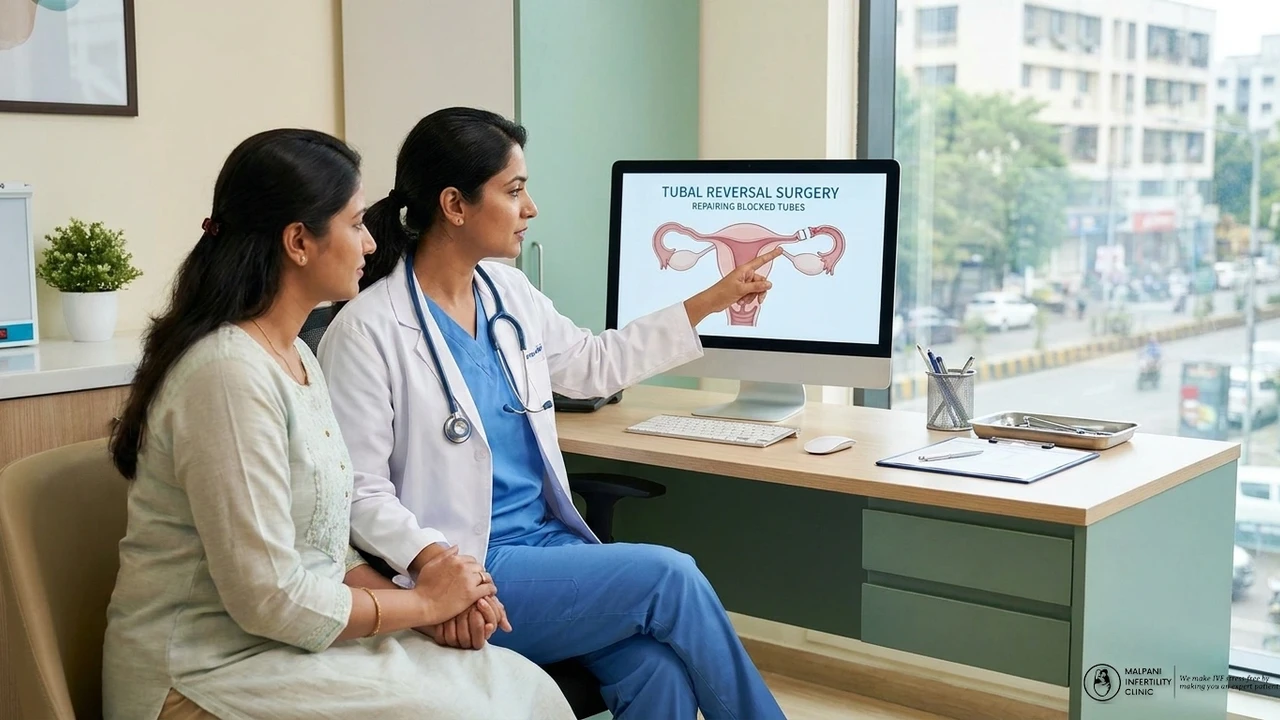
If you have ever sat in a waiting room clutching a report that reads “blocked fallopian tubes,” or you regret a decision to have your tubes tied in the past, you are not alone. The fear, the regret, and the worry about your future as a parent can be overwhelming. Most couples never imagine they’ll face the heartbreak of infertility, and yet here you are, searching for answers and wondering if surgery might be able to restore your hope.
Tubal Blockage: When Surgery Makes Sense
When you first hear that your tubes are blocked, your mind races with questions: Can surgery fix this? Should you try IVF instead? Will you ever have a baby naturally? The truth is, there is no one-size-fits-all answer, and what works for one couple may not work for another. At Malpani Infertility Clinic, we strongly believe that you deserve the full picture, no false promises, just honest advice tailored to your unique situation.
In the past, surgery was often the first choice to repair blocked tubes. Today, the picture has changed. IVF (in vitro fertilization) is now the gold standard for most types of tubal infertility, especially when the tubes are badly damaged or blocked in more than one place. But there are important exceptions:
- If your tubes are blocked by external factors, such as adhesions from previous surgeries or endometriosis, removing those adhesions can sometimes restore fertility.
- If the blockage is caused by a mucus plug or a small area of scarring near the uterus (called a cornual block), minimally invasive techniques might open the tube.
If your tubes are blocked due to tuberculosis, are severely scarred, or are blocked at several points, surgery is rarely effective. Unfortunately, if the delicate inner lining of your tube is destroyed, no surgery can bring it back to life. And if only one tube is blocked, the healthy tube may be enough to allow pregnancy, though your chances may be lower, and surgery carries a risk of making things worse by causing new scarring.
Even a single healthy tube can give you a real chance at pregnancy, but unnecessary surgery can sometimes do more harm than good.
Microsurgical Techniques: How Surgery Is Done
When surgery is appropriate, it is performed using specialized microsurgical techniques designed to minimize trauma and protect your fertility. This isn’t just any surgery, it’s a meticulous process that requires tremendous skill and experience.
- Surgeons use microscopes or strong magnifying glasses to see the tiny structures clearly.
- Only the finest surgical tools and sutures are used to prevent further injury to the tissues.
- Every movement is gentle, and every stitch is precise, ensuring minimal bleeding and reducing the risk of new scar tissue (adhesions) forming.
The operation usually takes one to four hours under anesthesia and is often done through a “bikini cut” incision. Most women spend three to seven days in the hospital. Sometimes, a second look with a laparoscope is performed a week later to check that the tubes remain open and to remove any small adhesions before they can become a problem.
Types of Tubal Damage and What Can Be Repaired
Not all blockages are the same. Understanding the location and type of blockage is key to choosing the right treatment.
Proximal (Near the Uterus) Blockages
Blockages near the uterine end (cornual block) are sometimes caused by debris or mucus plugs. In these cases, a procedure called balloon tuboplasty or cornual recanalisation can be performed. A very fine guide wire or balloon is passed through the uterus into the tube to clear the blockage. This can be done with ultrasound or X-ray guidance and often avoids the need for major surgery, with some women achieving a pregnancy rate of around 50% if the rest of the tube is healthy.
Mid-Tubal Damage
When a section of the tube in the middle is damaged (for example, after some sterilization procedures), tubal reanastomosis, removing the damaged part and sewing the healthy ends together, is possible. Success rates depend on the amount of healthy tube left but can range from 20% to 50%. If the injury is in the middle and the surgeon is skilled, the chances are higher.
Distal (Fimbrial) and Severe Tubal Damage
If the far end of your tube (fimbriae) is stuck together or closed off with fluid (hydrosalpinx), the results of surgery are less encouraging. While a neosalpingostomy (creating a new opening) can be done, only about 20% of women will conceive, since the essential functions of the tube are often lost. If only mild scarring is present, cleaning the ends (fimbrioplasty) can sometimes restore about a 50% chance of pregnancy.
 Fig 4. Schematic showing damaged fallopian tubes because of pelvic inflammatory disease (PID). The left tube has formed a hydrosalpinx; and the right is engulfed in peritubal adhesions.
 Fig 5. Operative laparoscopy, during which an adhesion is being divided (adhesiolysis)
Risks: What You Need to Know Before Deciding
It is natural to hope that surgery will solve everything, but every operation carries risks. The biggest is the chance of an ectopic pregnancy (where the embryo implants in the tube instead of the womb), which is higher after tubal surgery because the tube’s function may still be impaired. That is why, if you have had tubal surgery and miss a period, you should get a pregnancy test and a checkup immediately, early diagnosis can save your life in case of an ectopic pregnancy.
The best results happen after the first surgery, and repeated attempts rarely work. Success depends on the extent of the damage and, just as importantly, on the skill and experience of your surgeon. There is no substitute for expertise. If pregnancy does not occur within a year after surgery, further testing is needed to check if the tubes have remained open. If not, IVF is usually the next step.
Reversing Tubal Ligation: Is It Right for You?
Sometimes, women who have had their tubes tied for family planning reasons later wish to have another child. The reasons are deeply personal, loss of a child, remarriage, or simply a change of heart. No matter the reason, the longing for another baby is real and deserves honest discussion.
If enough healthy tube remains, especially after ligations done with rings or clips (which cause minimal damage), tubal microsurgery to reconnect the tubes can offer hope. Reviewing your original surgical notes and a careful laparoscopy help determine your chances. In the best cases, pregnancy rates can be as high as 75% after reversal, but only if a substantial length of healthy tube is left.
If your tubes were removed completely or severely damaged, surgery cannot help. In these cases, IVF is the only realistic option.
Most pregnancies after reversal happen within the first year. If you have not conceived after that, it is time to discuss IVF and other options.
When Is IVF a Better Option?
With today’s technology, IVF success rates are impressive, especially for women under 35. It is the best option when:
- Both tubes are badly damaged or blocked in several places
- Previous surgery has failed
- Tubal disease is due to severe infection (like tuberculosis)
- You are over 35 and time is precious
Average IVF pregnancy rate per cycle for women under 35 (varies by individual factors)
What matters most is making an informed choice, not just following what others say or hope for.
Making the Best Decision for Your Fertility Journey
Facing tubal infertility or considering reversal of sterilization is never easy. The choices are complex and sometimes the information is overwhelming. At Malpani Infertility Clinic, we believe in empowering you with clear, honest advice, so you can choose the path that is right for you. From explaining the latest minimally invasive procedures to guiding you through IVF, our team is here to support you, answer your questions, and help you navigate this emotional journey with confidence and hope.
For more information, you may also find these resources helpful:
- Fallopian Tubes: HSG Test, Procedure & Infertility. The Tubal Connection
- Tubal Surgery: Procedure, Risks, Reversal of Sterilization The Tubal Connection (Page 2)
Frequently Asked Questions
Q: Can surgery always fix blocked fallopian tubes?
A: No. Surgery can help in some cases, especially if the blockage is minor or due to adhesions, but if the tube’s inner lining is badly damaged or multiple areas are blocked, surgery is unlikely to restore fertility.
Q: How do I know if I need surgery or IVF?
A: The best approach depends on your type of tubal damage, your age, your overall fertility health, and your personal goals. A detailed evaluation at a specialized clinic is essential to make the right decision.
Q: What are the risks of tubal surgery?
A: The main risk is an increased chance of ectopic pregnancy. There are also general surgical risks, including the possibility of new adhesions forming, which can further reduce fertility.
Q: What are the chances of getting pregnant after tubal reversal?
A: Success rates vary from 20% to 75%, depending on how much healthy tube is left, the method used for the original sterilization, your age, and the surgeon’s experience.
Q: How soon can I try to conceive after surgery?
A: Most women can begin trying after two normal menstrual cycles, but your doctor will give you specific advice based on your recovery.
Q: What if I do not get pregnant after surgery?
A: If you have not conceived within one year after surgery, it is usually time to consider IVF or further testing to check if the tubes are still open.
Q: Is IVF always better than surgery?
A: IVF offers higher success rates for most women with severe or multiple blockages, but in select cases with minimal damage, surgery could still be considered. Your doctor can help you weigh the pros and cons for your situation.