
The chocolate cyst trap: why surgery can cost you the baby you're trying for
You sit in the doctor’s office, waiting for your scan results, hoping for answers. The doctor walks in, points at a shadow on the ultrasound, and says the words: “You have a chocolate cyst.” Your heart sinks. The name sounds almost comical, but you are not laughing. If you are struggling to get pregnant, you are likely wondering: Is this why? Will this ruin my chances? Do I need surgery right away? The truth is, so many women with fertility struggles have stood exactly where you are now—scared, overwhelmed, and not sure who to trust. Let’s talk honestly about what a chocolate cyst really means, and what nobody tells you when you are rushed toward the operating table.
What Is a Chocolate Cyst?
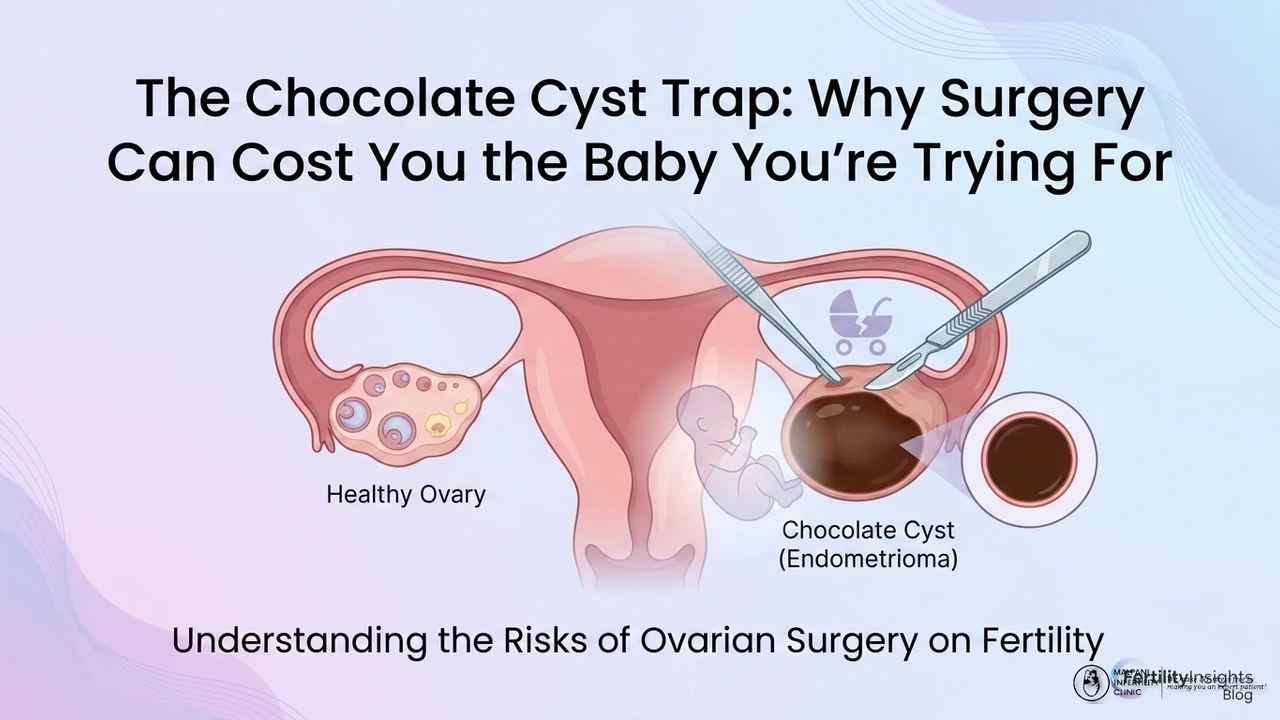
A chocolate cyst is a type of ovarian cyst linked to endometriosis. The medical name is endometrioma. It happens when tissue similar to the lining of your uterus grows inside your ovary and forms a cyst filled with old, dark blood. This “chocolate” inside is what gives it the name—though for patients, there is nothing sweet about it.
Some women with chocolate cysts have pain, especially during periods or sex. Others have no symptoms and only discover the cyst during a scan for infertility or another issue. The size can range from tiny to several centimeters, and sometimes both ovaries are affected.
Chocolate cysts are common in women who cannot conceive, but just because you have one does not mean it is stopping you from getting pregnant.
Do Chocolate Cysts Always Cause Infertility?
Here’s the truth most women never hear: finding a chocolate cyst does not automatically mean it is the reason you cannot conceive. It is like finding a stain on your shirt—yes, it is there, but it may not be the thing ruining your day. Many women with chocolate cysts go on to conceive naturally. Infertility and endometriosis often walk hand-in-hand, but they are not always cause-and-effect.
Chocolate cysts are sometimes simply “bystanders.” They are picked up during fertility workups because doctors look carefully at the ovaries. Being present on a scan is not the same as being the culprit behind your fertility struggles.
Why Surgery Can Do More Harm Than Good
When a chocolate cyst is spotted, the usual reflex is surgery—specifically, laparoscopy to remove the cyst. It sounds logical: cyst found, cyst removed, problem solved. But the reality is much more complicated, and here is where patients often get hurt, quite literally.
A chocolate cyst is not like a grape you can just pluck out. Its wall is fused to your ovary, like a stubborn stain soaked deep into fabric. Removing it surgically almost always means removing part of your healthy ovarian tissue as well. Here’s the cruel math: your ovaries contain all the eggs you will ever have, and you cannot make more. Every bit of tissue lost in surgery is eggs lost forever.
This is how women with no fertility problems walk into the operating room, and come out with fewer eggs—and sometimes, with infertility that was not there before. It is not the cyst, but the treatment, that can hurt your chances.
The surgery meant to help you have a baby can sometimes be the very thing that takes away your chance.
When Is Surgery Really Needed?
There are cases where surgery is necessary: if the cyst is very large (usually over 5-6 cm), causes severe pain, looks suspicious for cancer, or is growing rapidly. But many smaller cysts, especially those found during routine scans in women trying to conceive, do not need to be removed.
- If your chocolate cyst is small (under 3 cm), and you have no pain, it is often safest to leave it alone and simply monitor with regular scans.
- If your cyst is larger or causing pain, discuss all your options—not just surgery.
- Always check your ovarian reserve (egg supply) before considering surgery. Simple blood tests like AMH and antral follicle count can give you and your doctor important clues about how much healthy ovarian tissue you have left.
Fertility-Friendly Alternatives to Surgery
If the goal is to protect your chances of having a baby, there are options besides cutting:
- Aspiration: A needle is used to drain the cyst, shrinking it without removing ovarian tissue. It is not a cure—the cyst can refill—but it can buy you time to proceed with fertility treatments like IVF, keeping your eggs safe. This is quick and does not touch your ovarian reserve.
- Sclerotherapy: After draining the cyst, a solution (like alcohol or tetracycline) is used to wash out and destroy the cells lining the cyst, making it less likely to come back. This can be done with a needle under ultrasound guidance, with no cutting at all. Fertility is preserved, and the risk of recurrence drops.
The downside: not all doctors are skilled in these techniques. Many stick to what they know—surgery—even when safer, less invasive alternatives exist. At Malpani Infertility Clinic, we prioritize treatments that protect your fertility above all. If your doctor only offers surgery, it is not “difficult” to seek a second opinion—it is wise.
Making the Right Decision for Your Fertility
Protecting your future fertility means having all the facts and not being rushed into surgery without understanding the consequences. Ask your doctor:
- What is my ovarian reserve?
- Will this surgery harm my egg supply?
- Are aspiration or sclerotherapy possible in my case?
- Can we wait and monitor the cyst instead?
If you feel pressured to “operate now,” pause. Your eggs are precious, and your ovaries do not grow back. A cyst can be drained again if needed, but lost eggs are gone forever.
Risk of chocolate cyst recurrence after surgery. Repeat surgeries increase the risk of losing more ovarian tissue.
At Malpani Infertility Clinic, we believe in no BS advice. We will walk you through every option, explain every risk in plain language, and help you make decisions that put your future fertility first. Sometimes, the best treatment is to do nothing. Sometimes, a gentle approach is all you need to keep your dream of a family alive. If you are unsure, seek a second (or third) opinion—you are not alone or “difficult” for wanting to protect your body and your chances.
Frequently Asked Questions
Q: Is it always necessary to remove a chocolate cyst if I want to have a baby?
A: No, many chocolate cysts do not need to be removed, especially if they are small and not causing pain. Removing them can lower your ovarian reserve and harm your fertility. Always ask about alternatives like monitoring, aspiration, or sclerotherapy.
Q: What are the risks of chocolate cyst surgery for fertility?
A: The biggest risk is losing healthy ovarian tissue, which contains your eggs. Once these eggs are lost, they cannot be replaced. Multiple surgeries increase this risk.
Q: Can a chocolate cyst go away on its own?
A: Chocolate cysts usually do not disappear on their own because they are formed from endometriosis tissue. Regular monitoring is important, but spontaneous resolution is rare.
Q: What is sclerotherapy and how does it help?
A: Sclerotherapy is a procedure where, after draining the cyst, a solution is used to destroy the lining that causes the cyst to refill. This reduces recurrence and protects your ovarian tissue and eggs.
Q: Should I get a second opinion before agreeing to chocolate cyst surgery?
A: Yes. Always get a second (or even third) opinion, especially if surgery is the only option offered. Protecting your fertility is worth the extra effort.
Q: How can I check my ovarian reserve?
A: Blood tests like AMH (Anti-Müllerian Hormone) and an ultrasound to count your resting follicles (antral follicle count) can give a good idea of your egg supply.