
Ovarian Cyst vs Follicle: What's the Difference?

Does this sound familiar? You are sitting across from your doctor, nervously clutching your ultrasound report, and you hear terms like "follicle," "cyst," and "dominant egg sac" thrown around. You want to ask: Is this normal? Is something wrong? Is this why my cycles are irregular or why I am not getting pregnant? The more you read online, the more confused you get. If you are trying to conceive and feel anxious every time words like "follicle" or "ovarian cyst" appear in your reports, you are definitely not alone. This confusion is incredibly common, but it does not have to leave you feeling helpless or lost.
Understanding Follicles: Your Ovary’s Egg Nurturing Chambers
Think of your ovaries as orchards, and the follicles as the tiny protective shells where eggs grow and mature. Every month, your body selects a group of these follicles to start developing. Usually, one follicle gets picked as the “leader,” grows a bit bigger than the rest, and eventually releases its egg in a process called ovulation. This is how nature keeps the dream of pregnancy alive each cycle.
The presence of follicles on an ultrasound is actually a good sign. It means your ovaries are doing what they are supposed to do: making eggs available for fertilization. In fact, when fertility specialists check your ovarian reserve, they count these small follicles to get a sense of how many eggs you might have left. So, seeing follicles is usually a sign your body is following its natural rhythm.
What Exactly Is an Ovarian Cyst? Why Does It Happen?
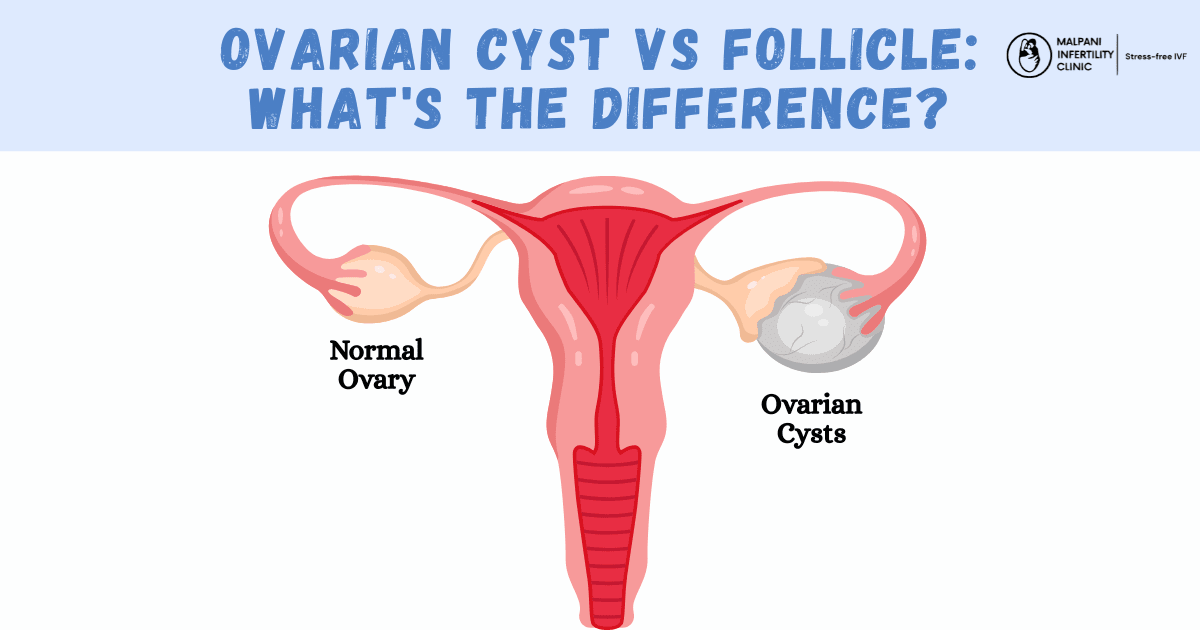
Here’s where things get tricky. Sometimes, a follicle does not follow the script. It might not release its egg, or after releasing the egg, it might not shrink away like it is supposed to. Instead, it keeps growing, fills with fluid, and turns into what we call an ovarian cyst. In simple words, a cyst is just a follicle that forgot to exit the stage.
Both follicles and cysts look like dark, round bubbles on an ultrasound scan. Even experienced doctors can sometimes mix up the two, especially when explaining the scan quickly to a worried patient.
Follicle vs. Cyst: How Are They Different?
Let’s break down the differences clearly. This can help you feel less anxious the next time you see those black circles pop up on your scan:
| Feature | Follicle | Cyst |
|---|---|---|
| Contents | Usually contains a developing egg | Usually does not contain an egg (mostly fluid-filled) |
| Function | Normal part of ovulation cycle | Forms when ovulation is disrupted or incomplete |
| Size | Usually under 25 mm | Often larger than follicles (can exceed 30 mm) |
| Timing | Appear during the cycle, especially before ovulation | Can persist for weeks or months, unrelated to cycle timing |
| Clinical significance | Healthy, expected part of fertility | May need monitoring if persistent or causing symptoms |
The real catch: eggs are microscopic. Even with the best ultrasound machine, nobody can see the actual egg. What you see is the follicle or cyst – the “bubble” supposed to contain it.
Why Do Follicles Sometimes Become Cysts? The Real Causes of Confusion
If your cycles are unpredictable or you are struggling to conceive, you might wonder why this is happening in the first place. The root cause is often anovulation – when your ovaries do not release an egg as expected. Here is why this happens:
- PCOD (Polycystic Ovarian Disease): The most common cause of irregular cycles and anovulation. Multiple small cysts form because eggs do not get released.
- Hormonal imbalances: When your body’s hormones are not in sync, the ovary’s normal process gets derailed.
- Stress: High stress can throw your reproductive hormones out of balance, making ovulation unpredictable.
- Weight issues: Being significantly underweight or overweight can interfere with regular ovulation.
The “cyst” your doctor mentions is usually just a follicle that did not finish ovulating this month.
When a Patient Feels Lost: A Real-World Scenario
Let us share the story of a 29-year-old woman who wrote to us after four years of trying to conceive:
“My ultrasound showed dominant follicles on both ovaries. I took my medications, but my period did not come this month. Pregnancy test is negative. Where did my follicles go? Should I have gotten pregnant or at least gotten my period?”
This kind of worry is so common, and it is absolutely valid. Here’s what’s likely happening: sometimes, the dominant follicles grow well but do not rupture at ovulation. Instead, they persist and become “functional cysts.” These cysts keep producing hormones like estrogen, which can delay your period by preventing the drop in hormones that normally triggers menstruation. The result: no pregnancy, no period, and lots of confusion and anxiety.
In such situations, checking hormone levels (like progesterone) and getting follow-up ultrasounds are important. Sometimes, simply giving your body time is enough. But if this keeps happening, a deeper look at your hormone health and ovulation pattern is needed. This is exactly where a fertility specialist’s honest, no-nonsense guidance becomes invaluable.
Types of Ovarian Cysts: What Should You Really Worry About?
Most cysts are what doctors call “functional” – they form during your cycle when something doesn’t go as planned. Here’s what you need to know:
- They look just like follicles on ultrasound, but are usually bigger.
- They are harmless and usually disappear within a few months on their own.
Common examples include:
- Corpus luteum cysts: The follicle releases its egg, but instead of shrinking, it fills with fluid or blood and produces hormones longer than it should. This can delay your period.
- Follicular cysts: The follicle does not release its egg and keeps growing, interfering with normal ovulation.
In rare cases, a mature follicle does not release its egg but still starts making hormones – a situation called LUF syndrome.
How Do You Know If a Cyst Is a Problem?
Most women have no idea they even have an ovarian cyst unless it gets picked up on a scan. But you should definitely get in touch with your doctor if you notice:
- Sudden, sharp, or severe pelvic pain
- Pain with fever or nausea
- Bloating that does not go away
- Changes in your menstrual cycle that persist for months
- Pain during intercourse
These symptoms, especially if they come on suddenly or are severe, may indicate a ruptured cyst or something more serious. Do not ignore them.
What Tests Might a Fertility Specialist Recommend?
If you have irregular cycles or your doctor suspects your ovaries are not ovulating properly, you will likely be advised to get:
- Blood tests for key reproductive hormones, including:
- Vaginal ultrasound to measure:
- Ovarian volume
- Antral follicle count (the number of small follicles visible)
- Uterus shape and size
- Endometrial thickness (lining of the womb)
If you have PCOD, your test results might show high AMH, a high LH:FSH ratio, and multiple small cysts on the ovary edges – all classic signs.
Treatment: What Happens If You Do Have a Cyst or Anovulation?
It is normal to feel worried, but most cysts do not need aggressive treatment. Here is what is usually done:
- Functional cysts: Most disappear on their own in 2-3 months. Your doctor might just keep an eye on them with repeat ultrasounds.
- Persistent cysts: Sometimes birth control pills are recommended to prevent new cysts from forming and help your cycle settle down.
- Large or painful cysts: Surgery is rarely needed, but may be considered if the cyst is very large or symptoms are severe.
- PCOD or anovulation: The focus is on correcting hormonal imbalances, restoring ovulation, and sometimes improving insulin sensitivity. Medicines and lifestyle changes are often enough.
Most cysts, even those that look scary on a scan, are just a sign that your cycle hit a speed bump.
Feeling Overwhelmed? Here’s the Honest Truth
Do not let medical jargon or ultrasound images add to your stress. The truth is: follicles are normal, cysts are usually just follicles that did not finish their job, and most of the time, both are harmless.
If you have been trying to conceive and notice irregular cycles, the real question is not “Do I have a cyst or follicle?” but instead “Why is my ovulation off track, and what is the best way to get it back on course?”
At Malpani Infertility Clinic, we believe you deserve honest, clear answers – not confusion or fear. Whether you want to double-check your reports, understand your next steps, or talk through your concerns, our team is here to guide you with real facts and plenty of empathy. You do not have to walk this path alone, and you do not have to accept generic advice. Get expert support that puts you in control of your fertility journey.
Frequently Asked Questions
Q: Can a follicle turn into a cyst?
A: Yes. When a follicle does not rupture to release an egg, it can keep growing and become a cyst. This is especially common in functional cysts.
Q: Are ovarian cysts dangerous?
A: Most ovarian cysts are harmless and resolve by themselves within a few cycles. Cysts that cause severe pain or persist for months should be checked by a doctor.
Q: Can cysts be a sign of cancer?
A: This is a common fear, but less than 1% of ovarian cysts in women of reproductive age are cancerous. Most are simply part of your normal cycle. Your doctor can reassure you based on your individual case.
Q: Can I get pregnant if I have ovarian cysts?
A: Many women with cysts conceive without issues. Some cysts (like corpus luteum cysts) actually show that ovulation has happened. If cysts are part of PCOD, you might need treatment to optimize your fertility.
Q: Why do some doctors call follicles “eggs” in ultrasounds?
A: The egg itself is too small to see, so doctors often refer to the follicle (the fluid-filled sac) as the “egg” for simplicity. Knowing the difference helps you better understand your reports.
Q: How do I know if my cyst needs urgent attention?
A: Seek immediate help if you have sudden, severe pelvic pain, fever, vomiting, or fainting. These could signal a ruptured cyst or twisted ovary, both of which are emergencies.
Q: What is the difference between PCOD and a regular ovarian cyst?
A: PCOD involves many small cysts and hormonal imbalance affecting ovulation. A regular ovarian cyst is usually single and often harmless.
Q: What is a functional ovarian cyst?
A: It is a cyst that forms as part of the normal cycle but does not dissolve as it should. Most disappear on their own.