
What to Expect from a Hysterosalpingogram?
If you have ever found yourself dreading the next step in your fertility testing because you have heard the word "HSG," you are not alone. The uncertainty, the anxiety about pain, and the hope that this test will finally give you some answers: these are emotions nearly every patient at Malpani Infertility Clinic has felt. If you are sitting with a doctor’s note in hand for a hysterosalpingogram, wondering what exactly will happen and whether you will be able to handle it, this guide is for you.
Why Do Doctors Recommend a Hysterosalpingogram?
When getting to the root of fertility struggles, your doctor needs to check every part of the reproductive system. An HSG, or hysterosalpingogram, is a specialized X-ray test that looks inside your uterus and fallopian tubes. Doctors order it to see two things: whether the inside of the uterus looks healthy and whether the fallopian tubes are open so eggs and sperm can meet.
To put it simply: if your tubes are blocked, sperm cannot reach the egg, and pregnancy cannot happen naturally. If the uterine cavity has polyps, fibroids, or scar tissue, it might prevent an embryo from implanting. The HSG gives us a clear image of these critical structures.
What Happens During the HSG Procedure?
Let’s walk through the procedure so you know exactly what to expect.
- Timing: The HSG is done just after your period stops, usually on days 6 to 10 of your cycle. This ensures the uterine lining is thin and there is no risk of an early pregnancy being affected.
- Preparation: Many doctors, including at Malpani Infertility Clinic, recommend taking a painkiller like ibuprofen 30 to 60 minutes before the procedure. Sometimes an antibiotic is also given to reduce infection risk, especially if there is any suspicion of previous tubal issues.
- During the test: You lie down on an X-ray table, much like a regular pelvic exam. A speculum is inserted (like during a Pap smear), and the cervix is cleaned. A thin plastic tube or a special soft balloon catheter is gently placed through the cervix into the uterus. Then, a special contrast liquid is slowly injected. This liquid shows up on X-ray images, tracing its way through your uterus and tubes.
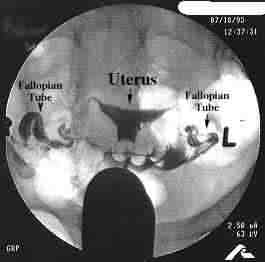
- Imaging: As the dye flows, X-ray pictures are taken. If your tubes are open, the dye will spill out into your pelvic cavity, showing up as a gentle clouding on the image. If there is a block, the dye will not pass through, giving clear information about where the problem is.
Usually, at least three images are taken: one to see the shape of the uterus, one to track the dye through the tubes, and one after a short delay to confirm the dye has spilled freely.
For most women, the actual procedure takes less than 10 minutes, but the information gained can be life-changing.
What Does a Normal or Abnormal HSG Look Like?
A normal HSG image shows a bright triangular shape (the uterine cavity) with two thin lines (the fallopian tubes) extending from its sides. The dye spills out at the ends if the tubes are open. If there is a problem, the image might show:
- Block at the start of the tube: Dye does not enter the tube at all.
- Block at the end of the tube: The tube fills up but the dye does not spill out. Sometimes, the tube may look swollen if there is a hydrosalpinx (fluid-filled, blocked tube).
- Irregular filling in the uterus: This might indicate polyps, fibroids, or adhesions (scar tissue) inside the uterine cavity.
Sometimes, the HSG can give misleading results. For example, the entrance to the tube may go into spasm from anxiety or discomfort, making it seem blocked when it is not. Conversely, a very thin-walled tube might tear when the dye is injected under pressure, making it look open when it is actually not functioning properly.
Does the HSG Hurt? What Side Effects Should I Expect?
This is the question everyone wants answered honestly. At Malpani Infertility Clinic, we do not sugarcoat it: most women feel cramping, especially when the dye is injected. The pain is usually short-lived, lasting a few minutes, and feels similar to strong period cramps. Some women feel only mild discomfort, while others may have more intense pain—especially if there is a blockage.
After the procedure, you might notice:
- Crampy or achy feeling in your lower abdomen for a few hours
- Some spotting or watery discharge for a day or two (using a sanitary pad, not a tampon, is recommended)
Severe pain, heavy bleeding, fever, or foul-smelling discharge are rare but important to watch for. If you have any of these, you should contact your doctor.
What Are the Risks and Limitations of HSG?
Like any medical test, HSG has some risks:
- Infection: The biggest concern is that a hidden infection in the cervix may spread upwards. That’s why antibiotics are often prescribed around the time of the procedure.
- Allergic reaction: Rarely, some people may be allergic to the iodine-based contrast. Always inform your doctor if you have any allergies to iodine, X-ray dyes, or shellfish.
- False results: Sometimes a tube may look blocked when it is actually open (because of spasm), or may seem open when it is not truly functional.
The HSG is excellent for checking if the tubes are open, but it does not tell us how well they work. Also, it cannot show us if there are adhesions (scar tissue) around the tubes that might stop them from picking up an egg, even though they look open on the X-ray.
If the HSG shows blocked tubes, your doctor may suggest repeating the HSG or doing a laparoscopy (a keyhole surgery with a camera) for confirmation. Laparoscopy is considered the “gold standard” for actually seeing the outside of the tubes and checking for other problems.
 Laparoscopy shows a large hydrosalpinx on the right side
How Does the HSG Fit Into Your Fertility Journey?
For many couples, getting an HSG can feel overwhelming, especially if it sounds painful or scary. But knowing the results can be empowering: it helps you and your doctor decide what to do next. Sometimes, just having a clear diagnosis lifts a huge weight off your shoulders and helps you move forward with IVF, IUI, or other treatments with a real plan.
At Malpani Infertility Clinic, we believe that every patient deserves honest answers and support at every step. We will talk you through your results, explain what they mean for your chances of pregnancy, and help you make decisions about what comes next. If you are unsure whether to go ahead with an HSG, or need guidance on your test results, you can always speak to Dr. Malpani for personalized advice.
Frequently Asked Questions
Q: Is an HSG really necessary for everyone struggling with infertility?
A: For most women, an HSG is a key test to check the health of the uterus and fallopian tubes. It is usually recommended early in the fertility workup unless you have already had a recent laparoscopy or other imaging that provides similar information.
Q: How long does the HSG procedure take?
A: The actual test usually takes less than 10 minutes, but you may spend about 30 to 60 minutes at the clinic including preparation and recovery.
Q: Can I go to work or drive home after an HSG?
A: Most women feel well enough to drive themselves home and return to normal activities, but it is perfectly fine to take the rest of the day off if you feel crampy or tired.
Q: When is the best time in my cycle to schedule the HSG?
A: Schedule your HSG after your period ends but before ovulation starts—usually between days 6 and 10 of your cycle. Count day 1 as the first day of your period.
Q: Are there any special preparations needed before the test?
A: Your doctor may ask you to take a painkiller and, sometimes, an antibiotic before the procedure. Bring a pad for after the test, and let your doctor know if you have any allergies or medical conditions.
Q: What happens if the HSG shows a blocked tube?
A: Your doctor may recommend repeating the test or doing a laparoscopy to confirm. Blocked tubes often mean IVF is the best option, but every situation is unique.
Q: Can an HSG improve my chances of getting pregnant?
A: Sometimes, simply flushing the tubes during HSG can help clear minor blockages. Some women do conceive naturally after a normal HSG, but the main goal is diagnosis.